What a Rs 10 Ice Cream Means for Premium Brands
Reliance's Bombay Creamery starts at Rs 10 and calls itself premium. Here's why India's ice cream brands now need more than price to justify trade-up.
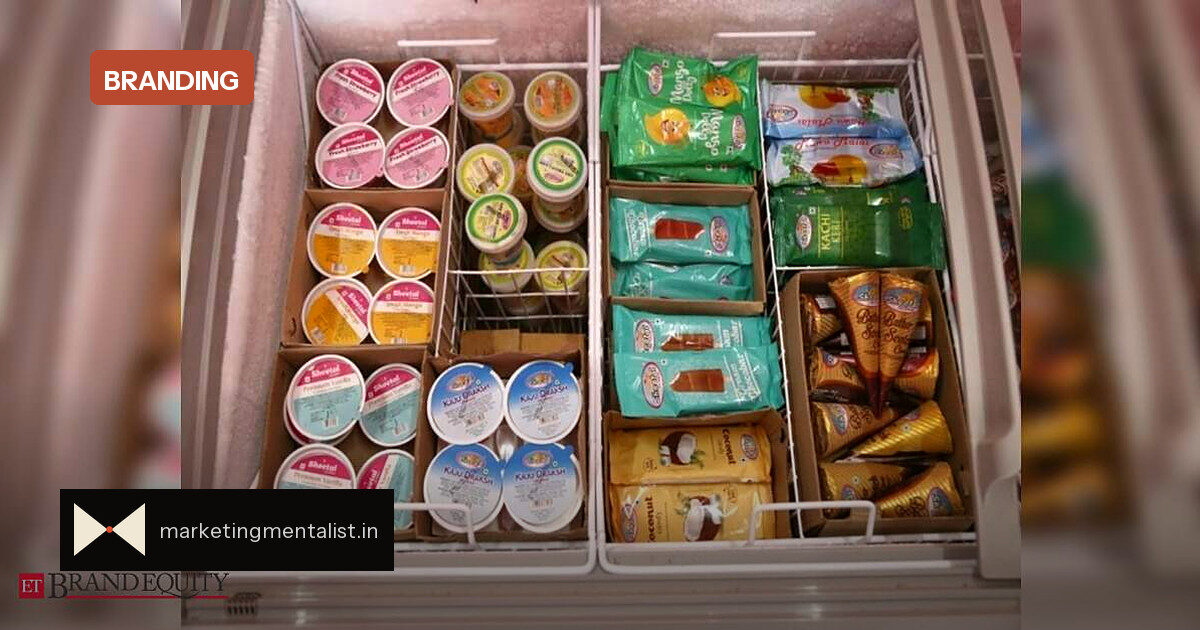
For years, premium ice cream mostly meant a bigger tub, a richer flavour or a more indulgent format. Reliance Consumer Products is testing that assumption with Bombay Creamery, an “accessible premium” dairy range that starts at Rs 10 and spans cones, cups, tubs, bars and sticks. It is made with real dairy cream, backed by Reliance’s distribution and retail scale, and rolling out first in western India.
The market read it as a competitive signal: Kwality Wall’s shares fell as much as 3% to Rs 43 after the launch. Euromonitor estimates Amul’s 2026 retail value share at 19%, Kwality Wall’s at 9%, with players such as Mother Dairy, Vadilal and Havmor at 4–6% each. The category is fragmented enough for differentiation, but not enough for a comfortable premium territory.
The quick-commerce shelf compresses the trade-up decision
Quick commerce has turned ice cream into an impulse purchase. In one session, a shopper can compare a Rs 10 single serve, a Rs 50–100 premium stick, a family tub and a health-oriented product. The digital shelf shortens the journey from craving to cart, so brands need a proposition, not just a price.
Mother Dairy MD Jayatheertha Chary says desirability is now as important as visibility. Mother Dairy has increased quick-commerce investment up to four times this year, focused on search-led visibility. Milky Mist CEO K Rathnam notes the category has grown around 15% annually over five years and is expected to grow 15–18% through 2030. He adds that freezer placement and cold chain for 15–30 minute deliveries are part of what makes impulse consumption work.
Premium is becoming a reason, not a tag
Tetra Pak’s September outlook says flavours such as Alphonso Mango, Paan, Kesar Pista and Tender Coconut are gaining premium acceptance, with chocolate expected to be the fastest-growing flavour through 2033. Havmor points to its Guava Chilli format as value beyond the product. Baskin-Robbins CEO Mohit Khattar says premiumisation will be about giving consumers a compelling reason to trade up rather than simply putting a premium price on a product.
That shifts the brand task:
- Make the incremental value legible. Show the ingredient, format, flavour or experience cue that justifies the delta.
- Win the digital shelf. Invest in search-led visibility and manage reviews, because comparison happens in seconds.
- Protect the point of impulse. Freezer placement, availability and cold chain are part of the premium promise.
The Rs 10 question is about repeat, not trial
Bombay Creamery does not force established brands to compete at Rs 10. It does force them to make their extra value obvious. Grapes Worldwide co-founder Shradha Agarwal argues that brand equity is becoming the tie-breaker as quick commerce makes price comparison instant. The decision, she says, is shifting from “which is cheaper?” to “which brand do I trust?”
Distribution expert Yash Agarwal adds a caution: getting trial is only the first step. Taste, consistency, availability and the overall experience decide whether that trial becomes repeat demand. Premium, then, is less about justifying every rupee and more about building a brand experience that feels consistently worth paying for.
Source: ETBrandEquity.com