Jio’s Human Story: Data Saver, Binger, Kirana, Dadi
A consumer-behaviour reading of Jio's decade through the data saver, the midnight binger, the kirana owner and Dadi's first video call.
Jio’s story is usually told in scale: launch offers, subscriber counts, a stack of apps. But the more interesting version runs through a day in ordinary Indian life—the data saver who no longer toggles mobile data off, the midnight binger who treats 2 a.m. as prime time, the kirana owner who takes orders on a screen, the first-generation creator building a living from a phone, and Dadi on her first video call.
This is not a telecom story. It is a consumer behaviour story: what happens when a daily constraint is removed and people quietly rebuild their habits around abundance.
The welcome offer reset the frame
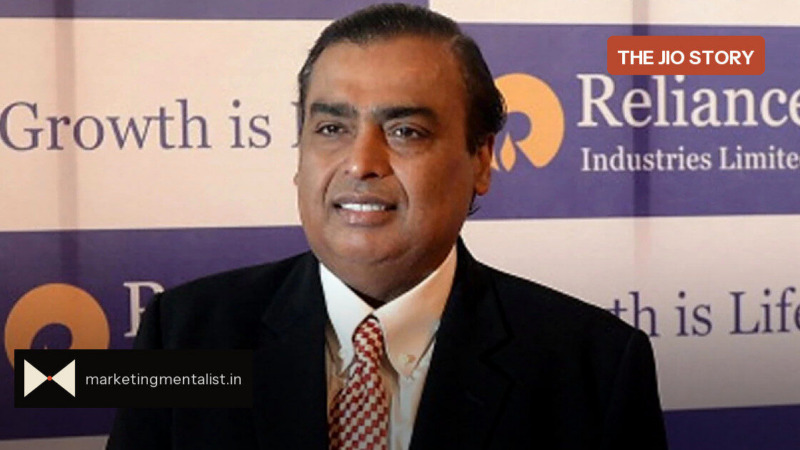
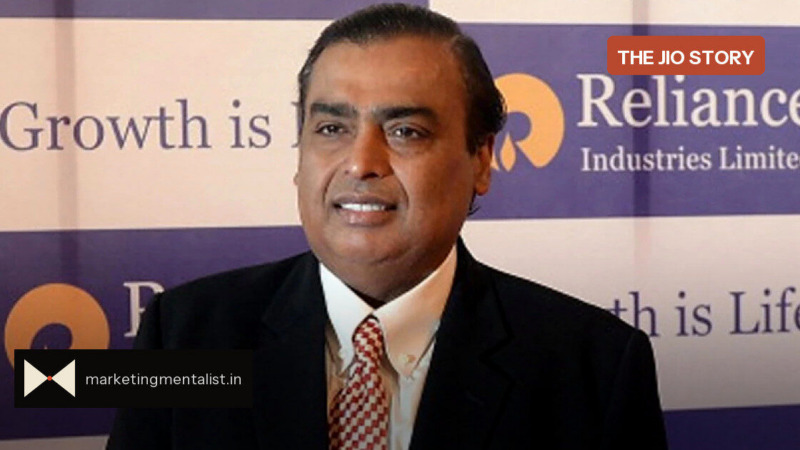
In 2016, Jio launched with the Welcome Offer: unlimited 4G data, voice, video and apps (Reliance Industries). The early scale was fast: 100 million subscribers within 170 days, company-reported. But the behavioural shift mattered more. Data stopped being a cost people carefully allocated and became a background condition—like electricity or water in a city.
The question India asked moved from “How much does data cost?” to “What can we do with data?” That is a change in mental accounting. When a resource is scarce, people make small, effortful trade-offs. When it feels unlimited, they stop calculating and start exploring.
Five people, one shift
Each archetype shows a different part of the habit loop:
- The data saver used to switch off mobile data between uses. Once scarcity cues disappeared, the habit toggled from saving bytes to saving attention.
- The midnight binger turned waiting time into streaming time. Low friction plus unlimited access made late-night viewing feel normal, not indulgent.
- The kirana owner went digital not because of a campaign but because payments, orders and customer conversations moved to the same device. Jio’s stated priority to digitise businesses (Reliance Industries 48th AGM, August 2025) is really about removing the friction of being offline.
- The first-generation creator found an audience without a studio. Distribution became the product.
- Dadi crossed the final barrier: trust. A clear, stable video call did more for adoption than any explainer.
These are not five separate stories. They are the same story at different stages of habit formation: trigger, action, reward, repeat.
Why this matters for brand builders
Jio’s ecosystem today spans connectivity, entertainment, commerce, payments, devices, cloud and AI (Reliance Industries 48th AGM, August 2025). Its stated priorities are to connect every Indian, bring digital services home, digitise businesses, and work toward “AI Everywhere for Everyone” (Reliance Industries 48th AGM, August 2025). Behind those broad goals are small, observable behaviours that give them meaning.
The habit lens also explains why adoption spread unevenly at first. Early users were not necessarily the most tech-savvy; they were the people whose daily friction was highest—someone waiting for a download, a shopkeeper losing a customer, a family separated by distance. When the reward became immediate and the effort fell, the new behaviour stopped feeling like a decision.
For marketers, the lesson is not about telecom. It is about what people do when a barrier disappears. They do not just do more of the same. They create new routines, new identities and new markets.
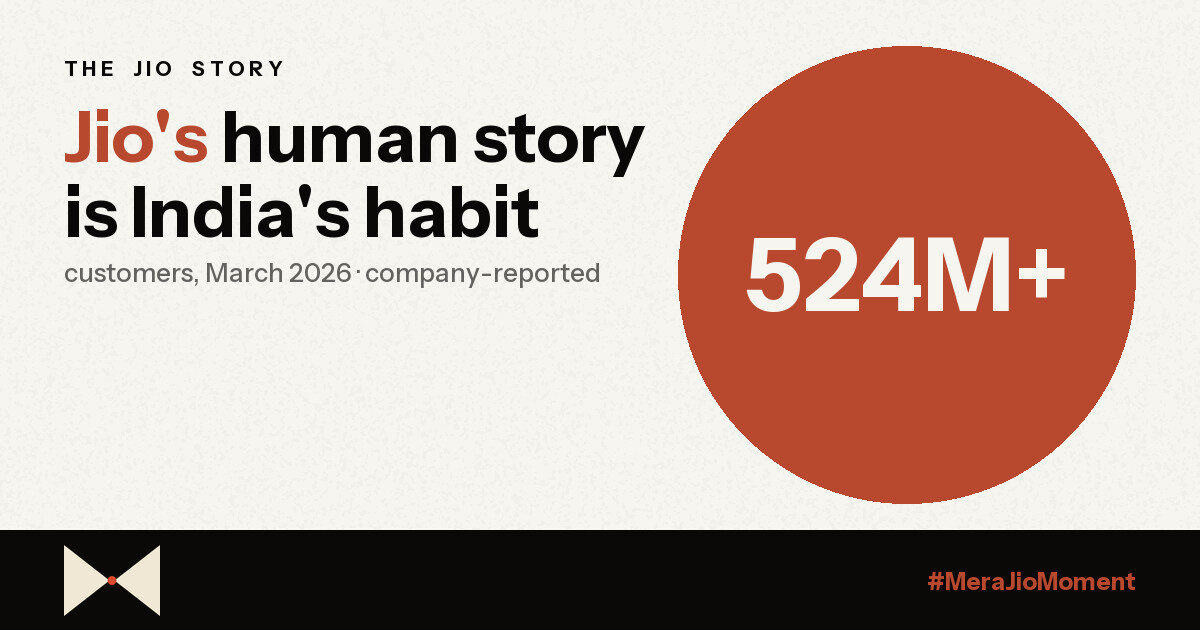
Jio now serves 524 million+ customers (Reliance Jio Infocomm, March 2026; company-reported). But the number that matters in daily life may be smaller: one data saver who stopped checking the meter, one kirana owner who accepted a first digital payment, one Dadi who saw a face on a screen and said the name twice.