Jio Story: The Quiet Shift from Rationing to Reflex
In 2016, data was rationed. Today, it is an always-on reflex. Read the everyday psychology of Jio's shift from meter to background.
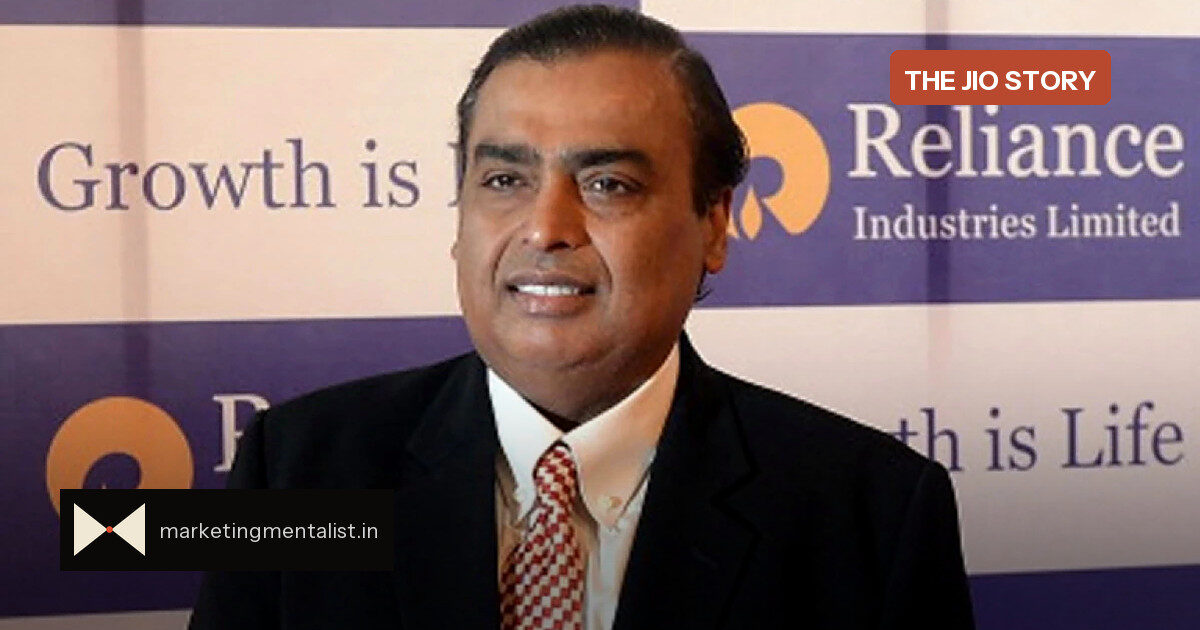
In 2016, before the Welcome Offer, data behaved like a metered utility. You checked the balance. You waited for Wi-Fi. You rationed. Then Jio launched with unlimited 4G data, voice, video and apps (Reliance Industries), and the meter began to disappear from daily decisions.
The Rationing Mindset
Scarcity changes how people choose. When data is finite, every megabyte becomes a small negotiation: download this song or save it for maps? Stream the match or wait for the cyber cafe? The cost is not just money; it is attention and hesitation.
The meter did not just get cheaper; it stopped being part of the decision.
That mental load is what made 2016 feel like a break. Unlimited data did not merely lower a bill. It removed a recurring calculation. The user did not become a heavier data consumer overnight; they became a less anxious one.
The Reset That Became a Reflex
Jio reached 100 million subscribers within 170 days of launch (company-reported; Reliance Industries Integrated Annual Report 2016-17). That early burst is remembered as a pricing moment. Psychologically, it was a reframe: if data is no longer the scarce part, behaviour moves to the next question.
Today Jio serves 524 million+ customers (Reliance Jio Infocomm, March 2026; company-reported). Its ecosystem spans connectivity, entertainment, commerce, payments, devices, cloud and AI (Reliance Industries 48th AGM, August 2025). The stated priorities are to connect every Indian, bring digital services home, digitise businesses, and make ‘AI Everywhere for Everyone’ (Reliance Industries 48th AGM, August 2025). The question India asked moved from ‘How much does data cost?’ to ‘What can we do with data?’
Small Shifts, Large Habit Change
The 2016-to-today story is visible in ordinary routines:
- From the cyber cafe queue to the phone in the pocket.
- From rationing data to streaming by default.
- From one shared screen to several personal screens.
- From waiting for a download to expecting it instantly.
- From asking about cost to asking about possibility.
None of these is a technology feature alone. Each is a change in expectation, and expectation is where brands do their strongest work.
Why the Disappearing Product Wins
When a constraint vanishes, the product becomes infrastructure. People stop noticing the thing that works and start building their day on top of it. That is the consumer-behaviour shift behind Jio’s arc: first data was the product, then access was the product, now the default is an always-on layer that hosts work, entertainment, commerce and care.
For marketers, the lesson is not to chase utility only. It is to study which daily calculations you can remove. The strongest positioning is the one people stop consciously choosing because the alternative no longer makes sense. That is the quiet shift from 2016 to today: not from scarce to abundant, but from deliberate to automatic.