Jio Story: Shared Memory as Brand Architecture
The first video call home is no longer an individual story. It's a shared memory—and that changes how brands build and grow.
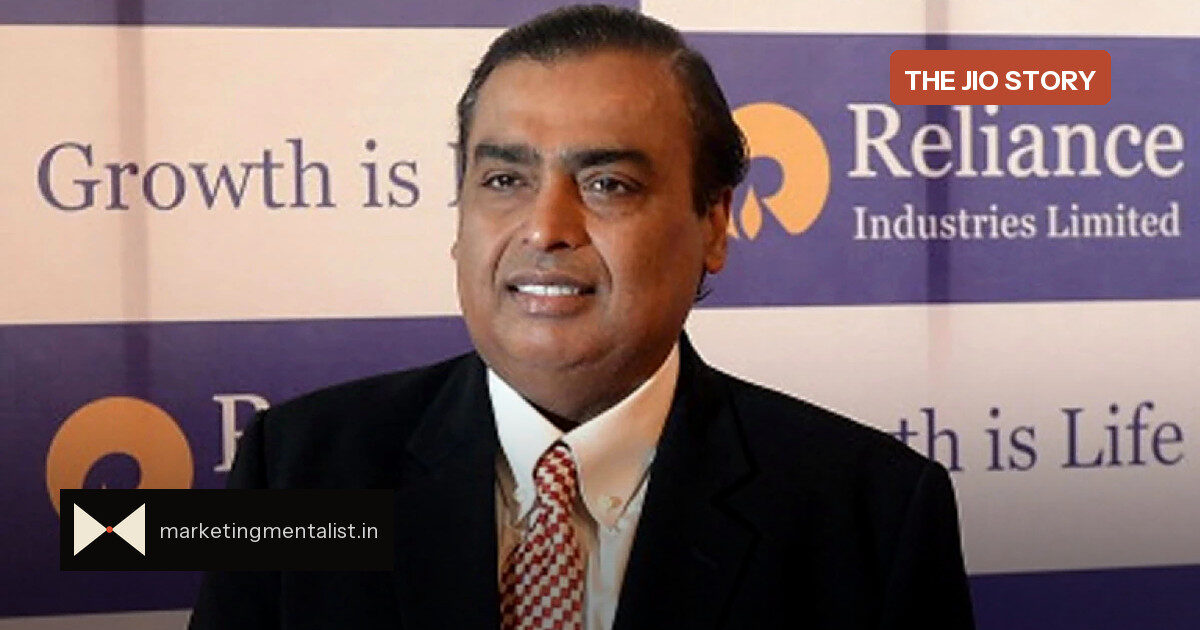
Every marketer wants a campaign to be remembered. But some of the strongest brand memories are not made by campaigns. They are made when a large number of people cross the same threshold at the same time, and then spend years retelling it.
In India, one of those thresholds arrived in 2016. Jio launched with the Welcome Offer: unlimited 4G data, voice, video and apps (Reliance Industries). The offer reset the everyday question from “How much will this cost?” to “What can we do with this?” The first video call home became one of the small rituals of that shift.
Jio reached 100 million subscribers within 170 days of launch (company-reported; Reliance Industries Integrated Annual Report 2016-17). The speed matters less as a business metric and more as a memory mechanic. When millions of people experience the same firsts in the same season—first unlimited video call, first long call without watching the clock—the private milestone turns into a shared one.
The memory is the product layer
A first video call home is not remembered as a network feature. It is remembered as a boundary: before this, distance felt expensive; after this, presence felt ordinary. That emotional timestamp is collective nostalgia—an affectionate group memory of a shared transition.
Collective nostalgia works differently from brand nostalgia. It does not require a logo or a jingle. It requires a visible change in everyday life, witnessed by enough people that the memory becomes a reference point: “Do you remember when we first called home on video?”
The retelling does the brand work. Every time someone narrates their first call, they are not recalling a tariff. They are recalling belonging to a moment. The brand becomes a bookmark in a personal timeline.
Why brands build on shared memories
Shared memory is a shortcut. It reduces the need to explain what a brand is, because the audience already has a story with the brand in the background. That is rare and difficult to manufacture.
- Shared timing turns private moments into social glue: millions crossed the same threshold within months.
- Emotional milestones outperform feature claims: the first call home is retold, while speed claims are not.
- Consumer narration extends memory: people retell it as their own, which keeps the brand present without advertising.
Today Jio serves 524 million+ customers (Reliance Jio Infocomm, March 2026; company-reported). The base has grown, but the shared memory does a different job: it makes the brand feel like a familiar part of personal history.
What to do with the memory
The lesson for brand managers is not to chase nostalgia. It is to look for the real behaviour shift your product enabled, then let customers narrate it. Shared memory is built from lived change, not from a campaign line.
That may be why the 2016 data moment still works. It is not a claim. It is a common memory. And common memories are among the quietest, stickiest assets a brand can hold.