Jellycat’s 50% Margin Shows How to Beat a Commodity Trap
Jellycat grew 43% to £450 million and passed a 50% margin while plush grew 2%. The lesson: change the buyer, the product and the pricing rhythm.
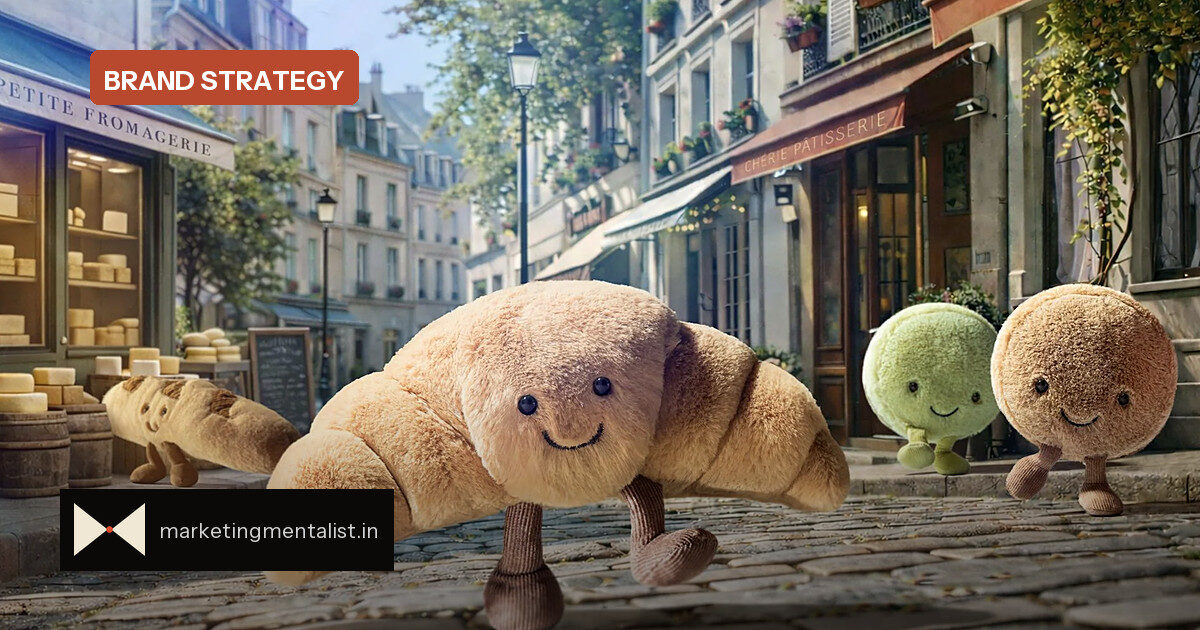
A teddy bear is one of the oldest consumer products in the world. Soft toys are crowded, price-sensitive and full of lookalikes, so plush should be where brand power quietly disappears.
Jellycat has rewritten that assumption. TIME put the London company on its 2026 list of the 100 most influential businesses. In 2025, Jellycat grew revenue 43 percent to £450 million, pre-tax profit rose 98 percent to £240 million, and the margin passed 50 percent. The contrast was even sharper in the first half of 2024 in the United States: Jellycat’s sales rose 41 percent while the stuffed-animal category grew only 2 percent.
That twentyfold gap means Jellycat was not simply winning share. It changed what was being sold and who was buying.
The buyer shifted, not the toy
The easy story is the kidult. Circana figures show buyers aged 15 and over now account for almost 20 percent of global toy sales, and their spending has more than doubled since 2020. Every toy maker could see that wave. Jellycat converted it into luxury-style margins because it priced for an adult comfort purchase rather than a child’s pocket-money gift.
Its 2024 catalogue stretched from an £18 bunny ornament to a £275 oversized Christmas tree. Adult buyers also keep the relationship alive long after a child would have moved on.
Four moves that reinforce each other
- Make the product carry the brand. Jellycat repeats simple faces, stitched smiles and tactile softness across bunnies, croissants, dragons and aubergines. Recognition lives in the object, not just on a tag. The company has gone to court over alleged lookalikes, saying more than 11 million Amuseables pieces have sold in the UK, though the allegations remain unproven.
- Change the customer, then the price. Adult buyers justify a different budget. Paris gets a patisserie, London fish and chips at Selfridges, Shanghai a theatrical café, and New York a diner where staff cook plush burgers.
- Borrow luxury’s rhythm. Collections land through the year, designs retire, rare pieces resell for multiples. It is the sneaker-drop model applied to plush.
- Sell a character, not just a product. The Amuseables Croissant has a job at the Patisserie, a crush on the head chef and weekend trips timing the Eurostar at Gare du Nord. The company even tells its origin as a storybook family legend.
Why the system matters
Any one of these moves can be copied. The moat is the agreement between them. The face makes the character recognisable, the character makes scarcity meaningful, and scarcity gives people something to film in a themed café. Every layer says the same thing: comfort you can hold and love.
Most mature brands change one piece, a premium product inside discount packaging or a clever story alongside old pricing, and the signals cancel out.
Questions for finished categories
Before calling your market mature, ask who your category assumes the buyer is, which product feature could work as a logo, which buyer you are underpricing, which rhythms from luxury or fashion fit you, and whether your product, story, store and price all say the same thing.
Jellycat did not wait for plush to become a growth category. It redefined who a soft toy was for.
Source: Branding Strategy Insider