Ganeshotsav 2026 Ads: The Psychology of Festive Relevance
How the best Ganeshotsav 2026 campaigns used ritual, local context and real needs to turn festive advertising into participation.
On Anant Chaturdashi 2026, Afaqs! rounded up the campaigns that kept brands inside India’s Ganeshotsav conversation for 11 days. The standouts did more than decorate their logos. They borrowed a gesture, a material, a local joke or a real need and made the product part of the ritual.
Ritual gives products a second meaning
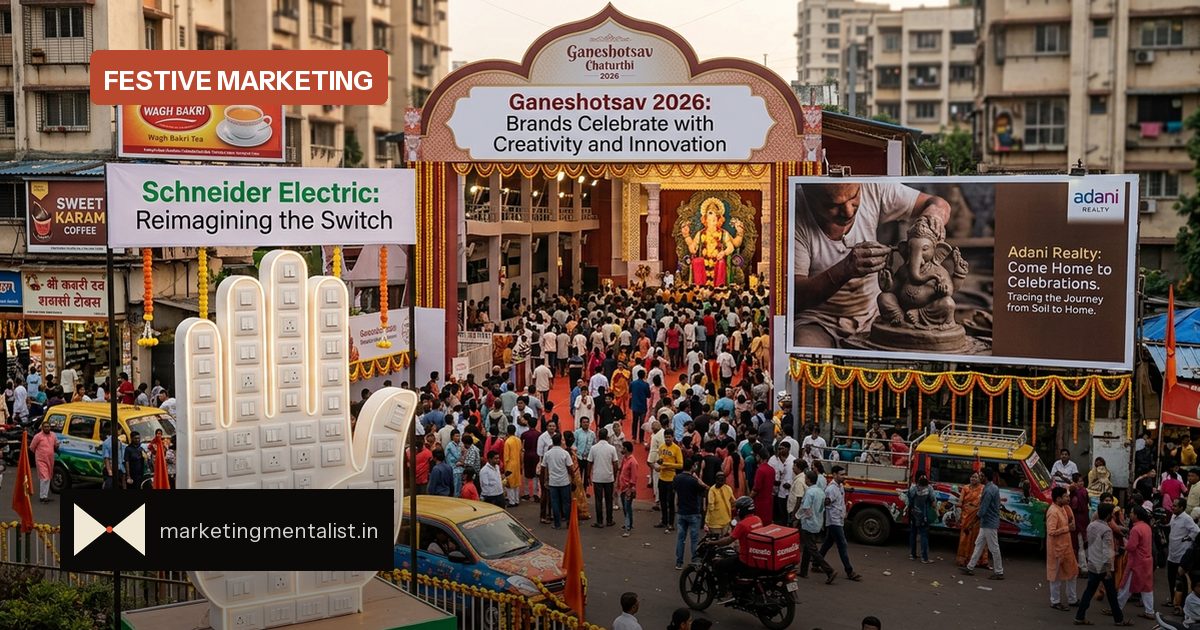
Schneider Electric turned its electrical switches into a Ganpati blessing hand, an abhaya mudra installation in Pune, under the tagline “Nirantar, Nirvighna Raha”. The everyday switch became a cultural symbol of protection and home upgrade. That is ritual branding at its sharpest: the product keeps its function but gains emotional weight from the festival. Kalyan Jewellers worked the same lever, showing women across generations welcoming Bappa with gold and temple jewellery instead of garlands.
The patterns behind the noise
The round-up shows a spread from emotion to utility:
- Story through material: Adani Realty and 22feet followed Shadu Mati clay from artisan hands to Bappa, linking that transformation to “house becomes home”.
- Comedy in the everyday: Flipkart Minutes set its ad in the conference room of Shree Ganesh Builders, where employees accidentally create the Jai Dev melody with body percussion and the boss orders real cymbals on demand.
- Hospitality and participation: Wagh Bakri Tea served workers and helpers who enable the homecoming, while Sweet Karam Coffee made a DIY Modak Pack the centre of a kids’ animated ad.
- Real-world utility: Zee TV installed clean, safe washrooms near major Mumbai pandals so women devotees did not have to limit hydration or make forced cafe purchases for sanitation.
Zomato’s “Bappa Banter” outdoor campaign added hyper-local, neighbourhood-specific copy—context-aware humour that rewards attention and feels like local conversation.
Why this matters
Festive advertising is high-emotion, low-attention competition. Consumers may be distracted, but rituals are deeply learned scripts. When a brand inserts itself into an existing script, it borrows mental availability it did not have to build from scratch. That is why a switch can mean protection and a cup of tea can carry hospitality: the festival supplies the meaning, and the brand supplies the product form.
A practical lens for marketers: take one familiar ritual element, attach it to the brand promise, then solve a real need or add surprise. Schneider started with the blessing hand; Zee started with the pandal visit; Zomato started with local banter. That is how festive work moves from interruption to participation.
Before launching next season, ask: if your logo were removed, would the campaign still mean something? If the ritual disappears, all that is left is decoration.
Source: Afaqs!