Why Food Brands Are Winning in the Shower
Food brands are moving into the shower. Ipsos says the smartest extensions migrate rituals, not categories, and win by owning feelings.
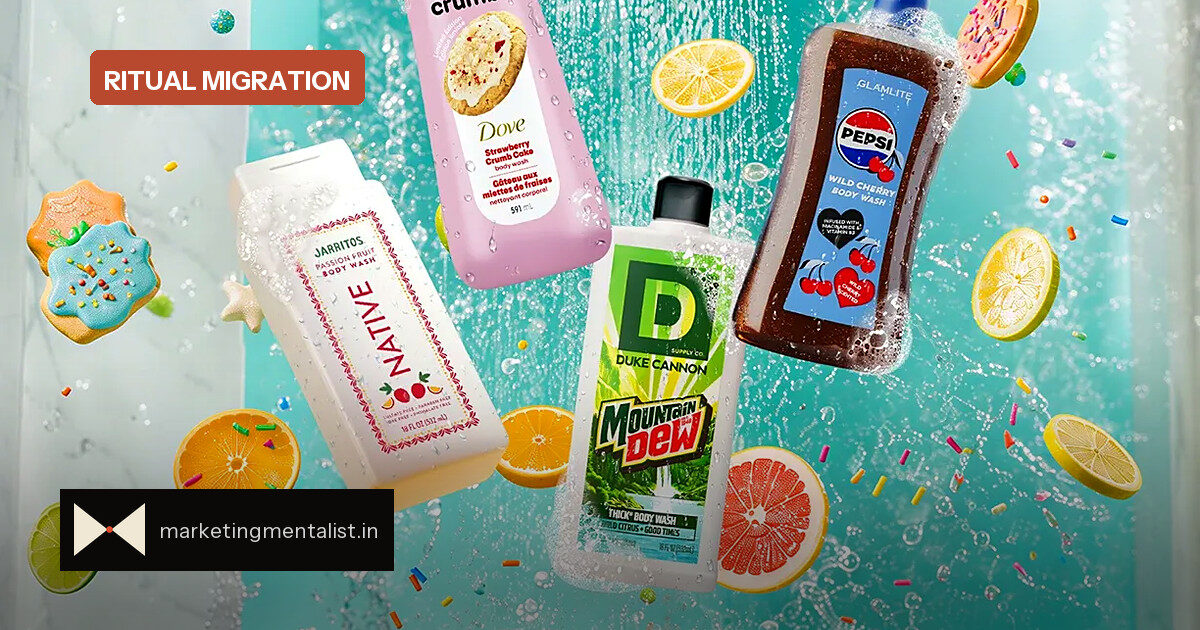
Mountain Dew has started selling body wash. Crumbl’s cookie scents now live in a Dove line. On their own, these look like novelty stunts. Ipsos argues something larger is happening: food brands are migrating from products into everyday rituals.
The context, in Ipsos’s Global Trends 2026 and Macro Forces work, is fragmentation. Consumers are organising around niche identities, values and lifestyles while hunting for everyday comfort, enjoyment and self-expression. That is both a brand problem and an opportunity. Growth increasingly comes from participating in moments and rituals that matter, not from defending the aisle you already sit in.
Four collabs, one pattern
Recent launches reveal the playbook:
- Mountain Dew x Duke Cannon moves an extreme-sports, gaming identity into the everyday shower.
- Native x Jarritos borrows decades of guava, mandarin and lime flavour equity and turns it into fragrance.
- Pepsi x Glamlite treats a soda as self-expression and fandom rather than a beverage.
- Dove x Crumbl imports treat culture into self-care with Tres Leches and Confetti Cake scents.
None of these is a clinical adjacency. A soda brand does not naturally sit beside shampoo. The adjacent thing is the moment: the shower, the treat, the small daily dose of reward.
Ritual migration, not category extension
The useful reframe is “ritual migration”. The category changes, but the emotional role stays the same. Jarritos does not need shoppers to imagine what guava smells like; they already know. Dove x Crumbl works because cookies and body care already play a similar emotional role: accessible comfort, reward and optimism.
That means the strategic question is not “Can we stretch into personal care?” It is “What feeling do we already own, and which daily moment can that feeling walk into?” Ipsos argues the brands with the greatest growth potential may be those that own a feeling rather than a category.
What to do with this
Start with a ritual audit, not an adjacency matrix. List the routines your buyers already repeat: their shower, commute, unwind, treat moment. For each, ask whether your brand’s sensory and emotional assets could migrate there without forcing the product category to move first.
Then pressure-test the idea: would a consumer miss it if you disappeared from that moment? If the answer is based on nostalgia, comfort or identity instead of functional need, you are likely closer to a ritual migration than a gimmick.
Source: Ipsos