Festive online sales to jump 29%, but shoppers stay picky
Indian festive demand is real but selective: YouGov sees shoppers holding budgets, Datum sees online orders rising 29%, and value now decides the cart.

The festive season is no longer a single opening of the wallet. It is a negotiation between celebration and calculation. New data from YouGov and Datum Intelligence show Indian shoppers are not cancelling their festive plans; they are re-prioritising them.
The 29% online jump hides a more careful cart
Datum Intelligence’s 2026 Festive Outlook estimates online festive sales at INR 1.50-1.55 lakh crore, up from INR 1.20 lakh crore in 2025. That is roughly 25-29% growth. But the growth is coming from more orders, not bigger baskets.
That is a crucial detail for marketers. It suggests shoppers are buying more often but keeping each transaction under control. Frequency is rising; average order value is not. You cannot read the headline number as a licence to push premium bundles.
What shoppers are actually doing with their budgets
YouGov’s India Festive Shopping Report 2026, based on 1,077 consumers, found 26% plan to keep their usual festive budget but shop smarter. Another 23% will cut non-essential purchases. Only 14% expect to spend more than last year.
- 49% say product quality matters when choosing between brands.
- 42% point to price or discounts.
- 27% expect to reduce clothing spend, even though fashion is a top festive category.
This is a value heuristic at work. The shopper is not asking “should I buy?” but “does this purchase earn its place?”
Fashion leads, but cautiously
Clothing remains the top category. A CMAI survey found 52% of manufacturers expect festive sales to beat last year, and 45% named Indian wear as likely to perform best. Amazon Fashion’s Nikhil Sinha said demand surged “4X in cities such as Chandigarh, Jaipur and Surat” with strong growth in Kochi, Patna and Nagpur. Online now accounts for around 12% of apparel sales.
Yet 54% of manufacturers are absorbing higher raw-material costs rather than raising prices. That is margin pressure, not pricing power. When the season’s optimism meets cost caution, brands that understand value win.
Autos show the base effect behind record numbers
FADA reported record September auto registrations of 25,36,920 units, up 31.82% year-on-year. SIAM data showed passenger-vehicle sales up 21.8% and two-wheeler sales up 13.5%. But FADA President Sai Giridhar cautioned that the 31.82% print is the most base-distorted of the year because buyers deferred purchases before GST 2.0 took effect on September 22, 2025.
Maruti Suzuki had more than two lakh pending bookings as of October 1, and M&M expects a strong festive season. The auto signal is genuine, but it is not a clean read of new festive appetite.
Jewellery is where caution shows up clearly
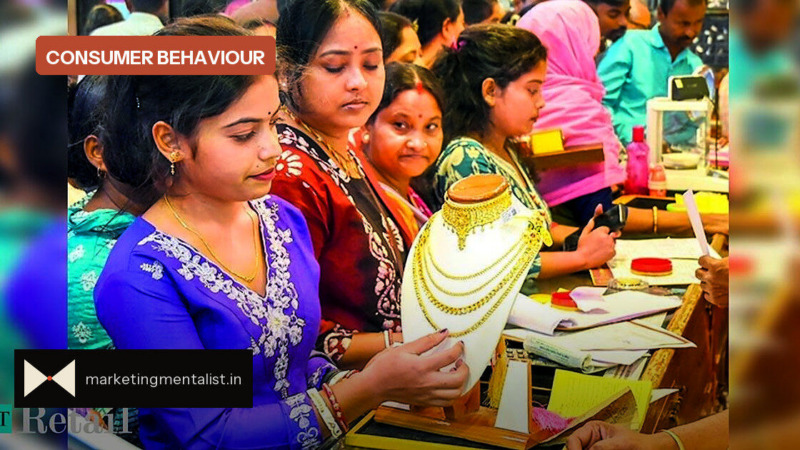
YouGov found 27% of consumers list jewellery among their top festive spends, but 38% plan to cut jewellery spending — the highest cutback among categories. Gold prices around INR 15,500 per gram, roughly 39% higher than a year earlier, help explain the hesitation. The India Bullion & Jewellers Association’s Surendra Mehta expects the government’s appeal to defer gold purchases could lead to a 10-12% fall in festive gold sales.
What to do about the selective festive shopper
The takeaway for brand managers is to stop selling festive as a package of indulgence. Divide offers into clear value layers: a hero utility item, a small upgrade, and a trade-up only where quality is visible. For fashion and FMCG, lead with quality cues; for discretionary categories, make the saving feel deliberate, not desperate.
Festive demand has not disappeared. It has become more thoughtful.
Source: ETBrandEquity.com