Why experience beats countdowns in pop-up stores
New research finds experiential exclusivity drives perceived uniqueness more than deadlines or limited stock—and the effect changes with social media use.
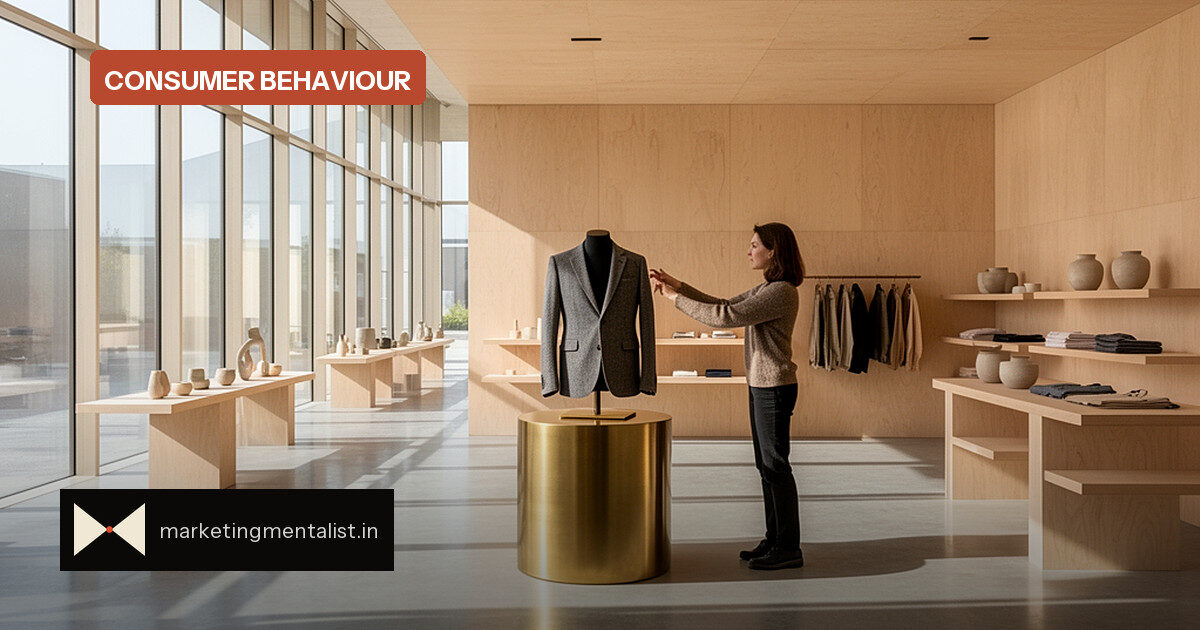
Every pop-up wants to feel like a moment. New research from the journal Fashion and Textiles suggests that what makes the moment feel rare is not the countdown clock or the ‘only 50 units’ sign. It is the experience itself.
Researchers Yu Jin Liu and Jin Hwa Lee studied 345 South Korean Millennial and Gen Z consumers, using written scenarios and video from a Gentle Monster experiential pop-up. They tested three scarcity levers: time limitedness, product quantity scarcity, and experiential exclusivity.
The scarcity hierarchy
All three cues lifted perceived uniqueness. But experiential exclusivity had the strongest effect, with a standardised path coefficient of 0.223, ahead of time limitedness at 0.170 and quantity scarcity at 0.163. In other words, an immersive, personalised, non-routine encounter does more psychological work than a deadline or a low-stock label.
What uniqueness buys
Perceived uniqueness then drove three behaviours. It had the biggest direct effect on electronic word-of-mouth at 0.279, followed by purchase intention at 0.233 and brand loyalty at 0.154. Pop-ups are excellent buzz machines and decent sales triggers, but they are weaker at automatic loyalty.
High versus low social media users
The more useful split came when respondents were divided by social media usage. Heavy users—193 respondents above a 3.57 sample mean—responded to all three scarcity cues and converted perceived uniqueness into eWOM and purchase intention, but showed no significant path to brand loyalty. Light users were influenced only by experiential exclusivity; for them, uniqueness predicted purchase intention and brand loyalty, not eWOM.
That maps neatly onto behaviour: frequent social platform users treat a pop-up as cultural currency for short-term social status. Less active users internalise a rare experience into durable brand attachment.
What brand managers should do
- Make the experience the scarce object, not just the product or the calendar.
- Give heavy social users a distinct and shareable moment, but don’t mistake likes for loyalty.
- For deeper brand relationships, design personalised, interactive elements that outlast the phone.
The findings are not a universal law. The sample is South Korean and scenario-based, so the sensory friction of a real store may shift the strength of each cue. Still, the cue is clear: when everything is a limited drop, the experience is the edge.