Cadbury 5 Star and the Ad That Sold Getting Lost
How Ramesh and Suresh turned a chocolate bar's distraction into a durable brand asset using absorption, incongruity and repetition.
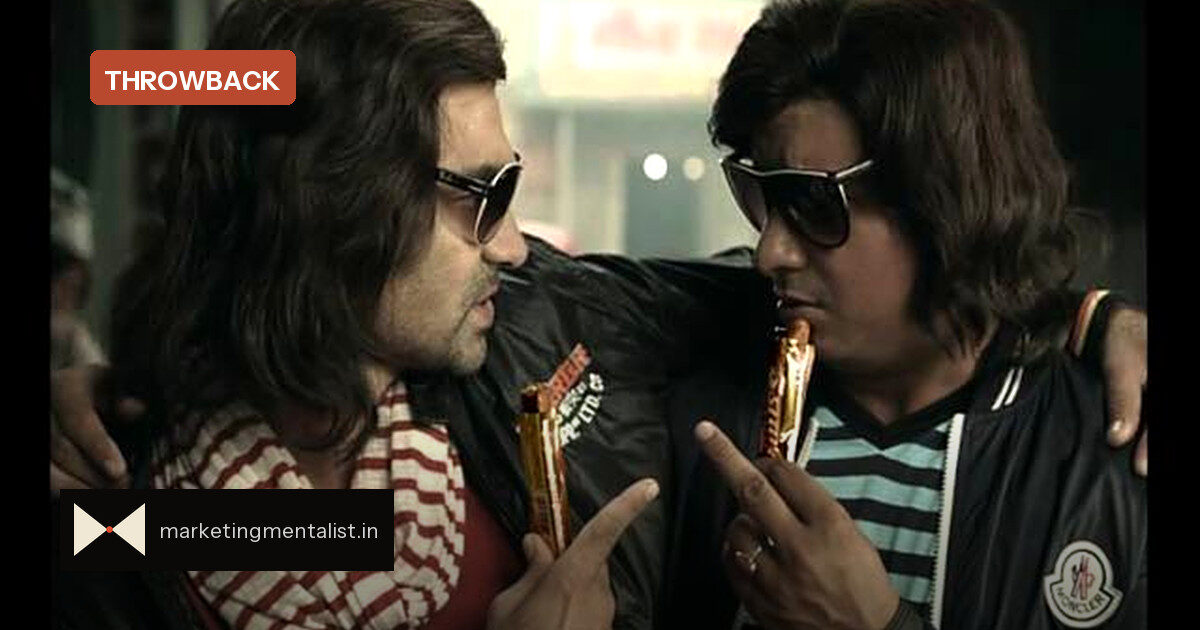
Some ads sell a promise. This one sold a disappearing act.
The ad and when it ran
Cadbury 5 Star had a strange brand problem: its bar was a chew, a mouth-filling, attention-taking chew. The Ramesh and Suresh campaign turned that product truth into a running joke. The tailor film, which aired across India as part of the long Hindi series through the 2000s, is a compact version of it. Ramesh takes a bite and mentally leaves the transaction. Suresh is left holding the real world.
That was the whole engine: the 5 Star does not just satisfy hunger. It captures attention so completely that the ordinary world stops landing. And the campaign said that with the tagline, Jo khaye, kho jaye.
The levers it pulled
The film worked because it showed, rather than claimed, how the mind behaves when a sensory experience takes over.
- Cognitive absorption. Ramesh is not distracted by his phone or lost in worry. He is absorbed. The ad dramatises a state where attention is so narrowly focused on the chocolate that the tailor’s cues fail to register. That is a behavioural demonstration, not a taste claim.
- Incongruity humour. A tailoring errand should be ordinary, low-stakes, predictable. The moment the exchange goes absurdly wrong, the brain flags the violation. Humour is the delivery system for memory.
- Distinctive assets. The recurring characters, the first-name duo and the tagline created a mnemonic that belonged to the brand. The more the films repeated the pattern, the easier the brand was to recognise and recall.
What it did for the brand and the culture around it
The campaign gave 5 Star a personality distinct from Cadbury’s more sweet-natured Dairy Milk work. If Dairy Milk was warmth and togetherness, 5 Star became mischievous, absurd, a little subversive. The phrase Ramesh and Suresh turned into shorthand for two friends where one has checked out.
In a market filling with more snacks and more chocolate choices, the campaign kept the brand culturally legible by giving people an inside joke to carry. It allowed the brand to own a specific moment: the point at which a bite becomes a loss of presence.
What still works today and what would not
The core lesson travels well: dramatise the product experience, not the product claim. A single-minded behavioural insight can outlast multiple taglines and formats. Brands in short-video markets can still use absorption, escape, or any product truth as a recurring comedic device.
What would not survive unchanged is the pacing. A slow television build-up feels heavy in the feed. Modern audiences expect a faster cut, a sharper payoff, and often a more diverse cast. The joke itself remains elastic, but the wrapper would need to be shorter, wider and quicker.
Watch the original: Cadbury 5 Star on YouTube