Premium is getting louder: 12 desi brands go maximalist
From poetry-book perfumes to truck-art snacks, Indian D2C brands are using loud desi visual codes to signal premium. Here's what it means.
For years, premium has looked like a muted mood board: black, white, beige. Global brands such as UNIQLO, New Balance, Birkenstock and IKEA have made understated design a sign of good taste. In India, a parallel set of home-grown brands is betting that premium can be loud, colourful and deeply desi.
A recent Afaqs! list names twelve brands turning truck art, matchbox labels, milk cartons and poetry books into premium packaging. The products are not cheap novelty items—they sit in clear premium price bands.
The desi premium shelf
Take the range of cues:
- Gully Labs sells culturally inspired premium sneakers in bold primary colours at Rs 4,290 to Rs 9,490.
- Khushburat puts every Rs 990 perfume bottle inside a poetry book.
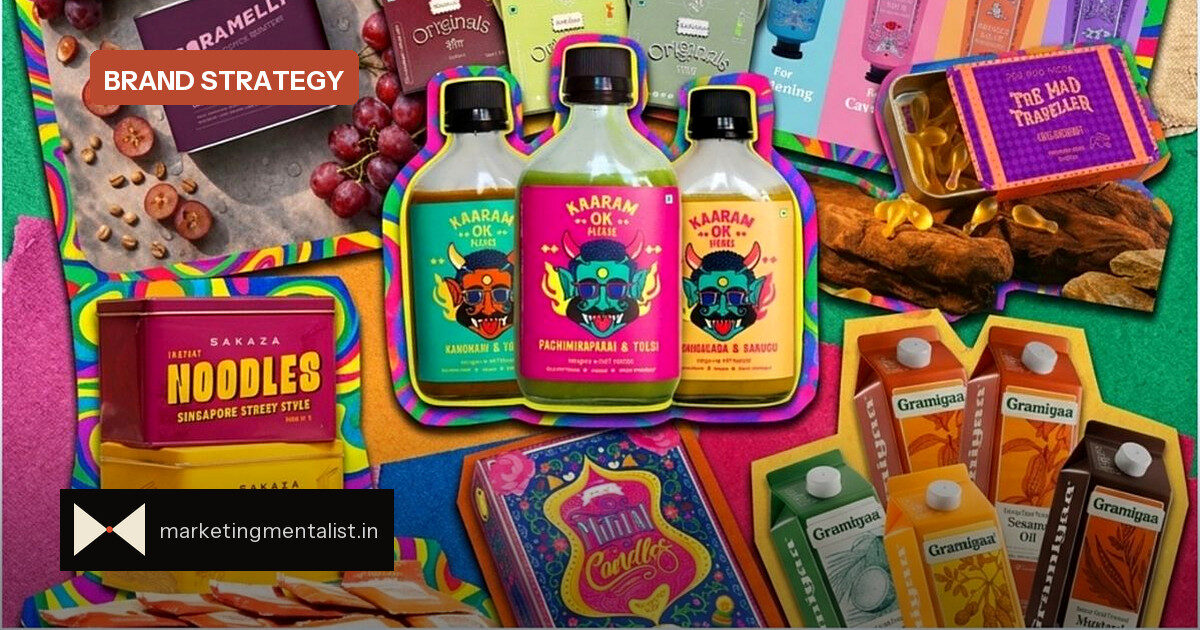
- Gramiyaa packages cold-pressed oils and A2 ghee in colourful milk-carton-style packs, priced from Rs 270 to Rs 1,570.
- Sakaza sells instant noodles such as Cheesy Thai Fire Blaze in tins, from Rs 495.
- Kaaram OK Please plays on the truck phrase “Horn OK Please” and bottles South Indian condiments like desi liquor, at Rs 199 to Rs 899.
The list also includes The Mad Nose’s perfume capsules in cold-relief-style tins, Brushers Co.’s design-forward toothpaste, Caramelly’s colourful coffee tins, Gud Gum’s plastic-free gum flavoured with dalchini, laung and saunf, and Biskutt’s nostalgic desk keepsakes.
Why it works
Premium is a promise, not a palette. These brands are building what strategists call distinctive brand assets: visual and verbal cues that make a product instantly recognisable without reading the logo. A tin of noodles, a poetry-book perfume pack or a toothpaste with Indian spice notes helps a new D2C brand claim memory space.
There is a second layer: familiar desi cues feel easy to process. When a pack borrows visual grammar from milk cartons, truck signage or eucalyptus-oil tins, it feels new and known at once. That mix of novelty and familiarity is a reliable way to win attention without making people work to understand the product.
What to do about it
For brand managers and founders, the takeaway is to find the visual memory your category has ignored and make it your code. A desi cue does not mean kitsch; it can carry premium when it is executed with conviction and repeated consistently. The brands in the list use one strong cultural reference each—not five at once.
Minimalism still works, but it is no longer the default route to premium in India. If your category is beige, colour can be the differentiation. If it is noisy, disciplined maximalism can still stand out.
Source: Afaqs!