Anmol Biscuits’ Diwali film turns distance into a gift moment
Anmol Biscuits' 'Rishton Ka Uphaar' film makes a son's absence the reason its Uphaar Box matters. Here's the psychology behind the campaign.
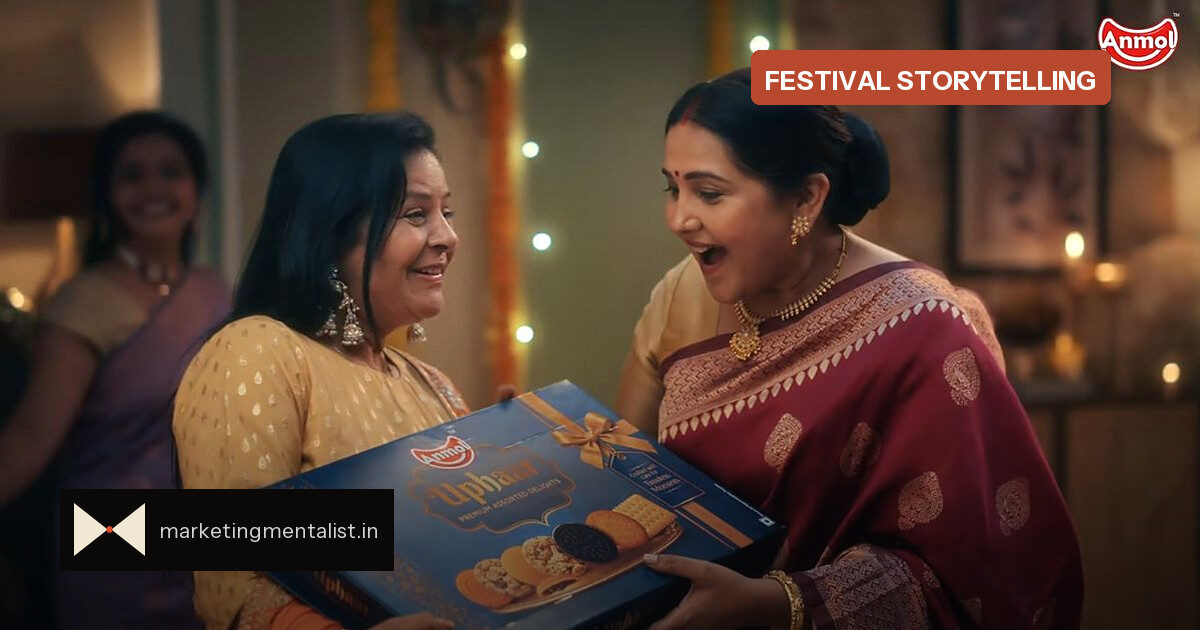
Diwali advertising tends to celebrate the family that finally gathers at one table. Anmol Biscuits has chosen the opposite: its new film, ‘Rishton Ka Uphaar’, starts with a son who cannot come home. Created with Meraqi Digital, the campaign makes a box of biscuits the emotional bridge across that distance.
The film follows parents who are learning to manage everyday life after their children move away. They feel lonely, yet they keep presenting a positive picture to their children. The son, away during Diwali, looks for a way to make the occasion special for them.
The product appears only as a gesture
That is where Anmol’s Uphaar Box enters. It is not introduced as a new snack; it is the son’s gesture of care. The box carries what he cannot deliver in person. This is exactly the ‘Har Pal Anmol’ philosophy brought into a story, not a tagline.
Aman Choudhary, executive director, and Abhishek Kumar, marketing head, Anmol Industries, put the strategy in one line: “a moment does not have to be grand to be precious.” Small, thoughtful gestures, they argue, are what remind people how valuable their relationships are.
Meraqi Digital founders Ankit Saraf and Snehja Sanganeria say the brief was to capture the emotions of celebrating away from loved ones—especially the longing of parents whose children cannot be home for Diwali. Creative leads Aastha Jhunjhunwala and Sakshi Shaw describe the goal as making the Uphaar Box “a natural expression of care and togetherness.”
Why absence is the stronger creative device
Most festival ads compete to show the biggest, warmest celebration. Anmol competes on a quieter feeling: missing someone. Psychologically, absence sharpens emotion. A gift sent across a distance signals both presence and separation at once, which tends to generate a more memorable emotional response than another crowded dinner scene.
This is ritual gifting in action. When a person cannot be physically present, an object can act as an emotional proxy—a stand-in for their care. The product gains meaning not from its taste cues but from the relationship it represents. For a price-conscious biscuit brand, that is a positioning play: the Uphaar Box becomes the token of “I am thinking of you,” not just a festive assortment.
What marketers can borrow
- Anchor the product to a cultural ritual, not a generic “festive season” claim.
- Show the feeling before the object, and let the product be the gesture that closes the gap.
- Use absence as the tension: the person who is missing gives the gift its meaning.
- Let the product name do the work—”Uphaar” makes the box literally the gift.
The harder test is after Diwali
Sentiment is easy to generate in a Diwali film; distinctive memory is harder. The campaign’s success will be measured by whether viewers recall Anmol’s Uphaar Box as a token of care once the festival ends, and whether the ‘Har Pal Anmol’ idea survives beyond the seasonal window. The film is available on YouTube, where the real test—earned viewing and shareability—begins.
Source: Afaqs!