Rajinikanth’s 50-year run is a masterclass in brand relevance
A 50-year film career, century-old medicines and the product lifecycle trap: what Rajinikanth teaches marketers about keeping legacy brands relevant.
The superstar and the spreadsheet
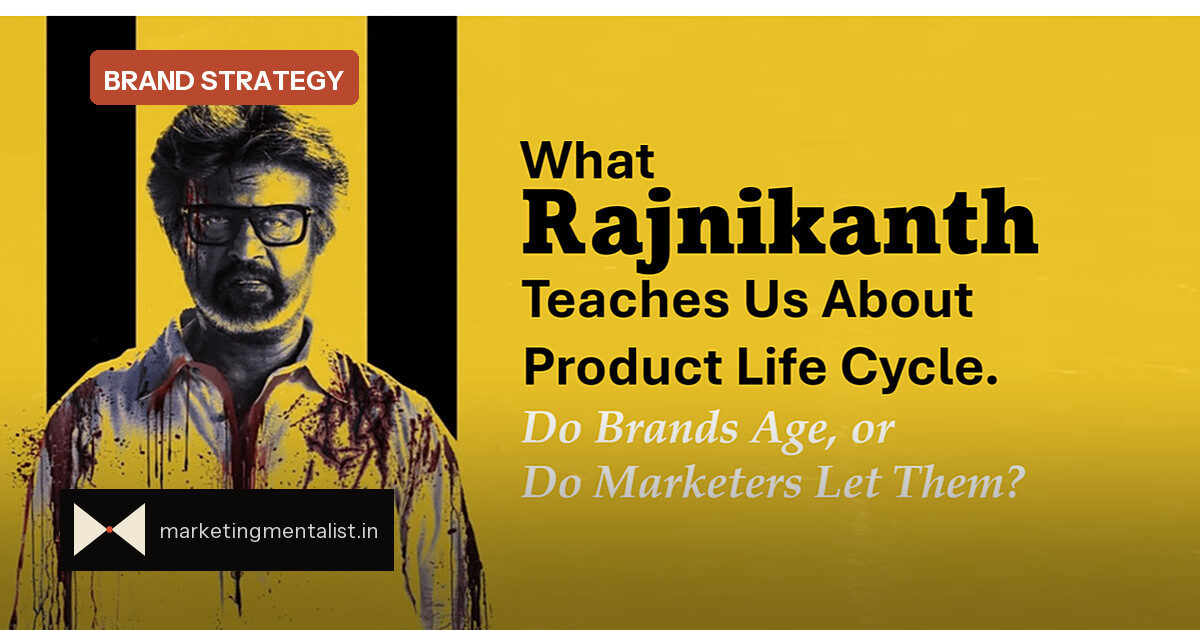
Rajinikanth made his Tamil cinema debut in 1975. More than 50 years later, he still headlines films, fills theatres and sets the cultural conversation. Generations of stars have risen and faded, and the entertainment business has moved from single screens to television, OTT platforms and smartphones. Yet his audience has never really abandoned him—even when individual films disappointed.
That is a strange thing to put on a product lifecycle chart. Many brand teams would have labelled a 20- or 30-year-old property as mature years ago, cut promotional investment and shifted attention to a younger launch. In a guest essay, brand strategy consultant Pawan V. Kulkarni argues that this is precisely the trap.
Old molecule, relevant role
Kulkarni uses pharmaceutical brands to make the point, but the logic travels well beyond pharma. Metformin has been in clinical use since the 1950s and is still a cornerstone of type 2 diabetes management, even after wave upon wave of newer drug classes. Insulin has passed a century of use. Amlodipine is more than 30 years old and remains a hypertension mainstay in India’s standard treatment protocols. Penicillin G still has a defined clinical niche.
These products did not survive on nostalgia. Their roles evolved as guidelines, formulations and patient needs changed. The same reframe applies to any legacy brand: ‘old’ is a fact, ‘outdated’ is a choice.
Why brands start to feel tired
The uncomfortable insight is that brands often decline not because they have run out of uses, but because the marketing has run out of ideas. Teams use the product lifecycle as cover for stale work: the same messages, the same segmentation, the same visual aid, year after year. Attention shifts to the next launch while the existing product that funds the business gets less strategic thinking.
Buyers change even when the product does not. A doctor who began practising in 1995 and one who graduated in 2025 may prescribe the same molecule, but their evidence sources, digital habits and patient expectations are completely different. A heritage brand must stay meaningful to both.
Keep the identity, rewrite the script
Rajinikanth did not stay relevant by playing the same character forever. He moved from supporting and negative roles to action hero, mass entertainer and then a star capable of working with directors across generations. The mannerisms stayed familiar; the stories, presentation and collaborators changed.
For brand managers, that distinction matters. A 25-year-old brand does not need another birthday cake or a cosmetic makeover. It needs a fresh understanding of how customers practise or buy today. Kulkarni suggests several moves:
- Refresh the evidence and message every six months, not just the packaging.
- Actively win the next generation of buyers; don’t assume they already know you.
- Find new conversations and clinically supported use cases around the same core asset.
- Investigate adherence, access, affordability or experience barriers before chasing novelty.
- Give mature brands a dedicated rejuvenation budget and a three-year growth target.
What the ranitidine episode shows
Even a familiar product’s future can turn on fresh science rather than age. Ranitidine, a 40-plus-year-old molecule, faced safety concerns over NDMA and was pulled from the American market in 2020. In November 2025, after reformulation and updated manufacturing standards, US regulators approved reformulated ranitidine tablets. The lesson: a legacy product can be revived or sidelined by evidence, quality and communication—not by a calendar.
The only question worth asking
The real question is not how old your brand is. It is whether the brand still has a real job to do tomorrow. Legacy earns attention; continuing value earns a place. Launching a brand is an achievement. Keeping it relevant across generations is brand building.
Source: Afaqs!