Nike turns finisher medals into everyday jewellery
Nike's 2026 After Dark Tour medal turns a finisher's keepsake into a necklace, bracelet or keychain—and a daily brand touchpoint.
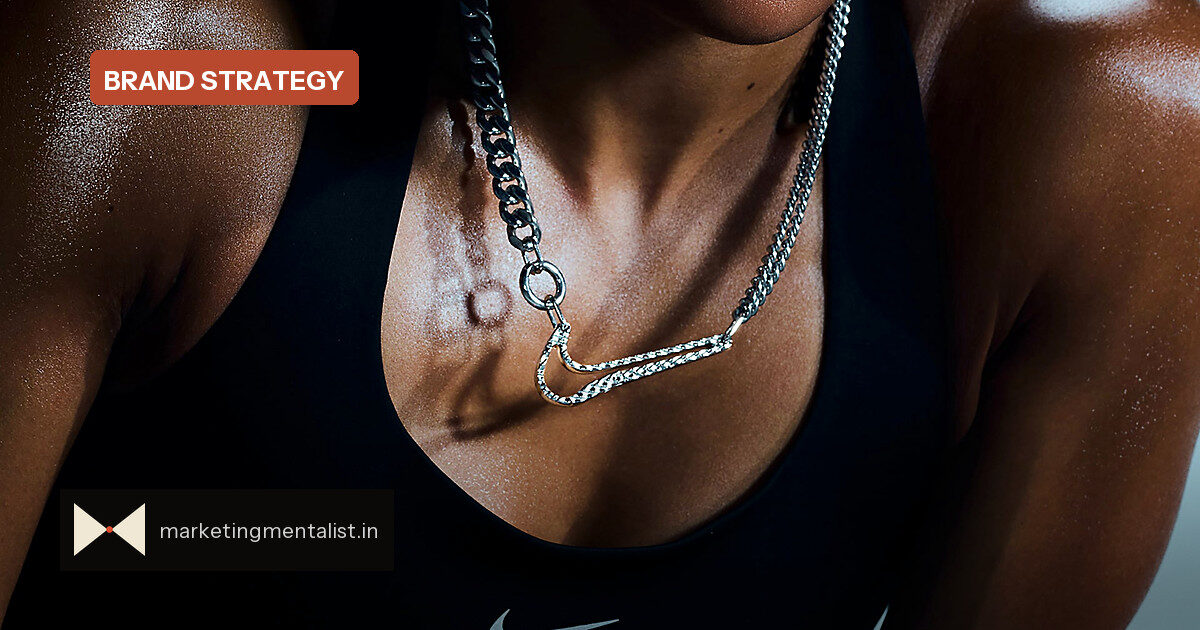
Most race medals end up in a drawer. Nike’s 2026 After Dark Tour—a nighttime women’s series of 10Ks and half-marathons—tries to change that with a finisher medal designed to be worn, not stored.
The medal converts into a necklace, bracelet, keychain loop or belt chain. A Swoosh and chain are covered with miniature laser-engraved Swooshes, and each medal comes with a city-specific carabiner for the tour’s stops: London, Shanghai, Los Angeles, Mexico City, Sydney, Manila and Mumbai.
Wearability as the design brief
Elizabeth Brock-Jones, Nike’s footwear development director, told Fast Company the tour isn’t a traditional race, “so the medal didn’t need to be traditional either.”
An all-woman team led the project and treated daily use as the standard. Brock-Jones says they tested details like “how it hangs when you move, whether it catches in your hair, whether you can open the clasp with longer nails.” The objective was simple: “We wanted something women would actually reach for, not just something that looked good on paper.”
The team got specific about the physical form:
- Refining the carabiner through about seven rounds
- Iterating the chain system at least five times
- Working directly with its Italian manufacturing partner to shorten the timeline
Why a medal is a brand asset
Nike has been expanding its women-focused push through NikeSkims, advertising and events. After a previous women’s race series from 2005 to 2015, the brand launched the After Dark Tour last year and described it as “designed to be the ultimate girls’ weekend.”
A medal in a drawer is private memory. Worn as jewellery, it becomes social proof—a repeat brand impression that travels with the customer. That is wearable brand asset thinking: make the object useful enough to keep appearing in daily life.
The psychology here is straightforward. A reward that fits into someone’s routine outlasts a one-day emotional peak. It changes the question from “will participants keep this?” to “when will they wear it next?”
What to do with this insight
Event keepsakes shouldn’t only capture emotion at the finish line. Ask what happens the week after. If the object fails a real-world test—snags hair, hard to clasp, no reason to wear it—it loses the chance to stay visible.
The design lesson is to optimise for reuse, not just for the photo. A souvenir that gets used earns attention long after the event budget is spent.
Source: Fast Company