Jio Story: The Everyday Habit Loop Data Now Powers
UPI at the chai stall, a study call, maps on a road trip—how data became the invisible cue, routine and reward of an Indian day.
The chai stall runs on a quick scan. A study group assembles on a video call. A family road trip follows a live map. None of this feels remarkable now, and that is exactly the psychological point.
Somewhere along the way, data stopped being a metered decision and became the quiet infrastructure of an ordinary day. The shift is not really about speed or coverage. It is about habit: when a utility becomes reliable enough, consumers stop weighing it and start depending on it.
A day, decoded as a habit loop
Behavioural science describes a habit loop as cue, routine and reward. In three very ordinary moments, the loop is already running below awareness.
- Chai stall: the cue is the order, the routine is a UPI scan, and the reward is no change and no friction.
- Study group: the cue is a shared deadline, the routine is a video call, and the reward is a screen that feels like a shared room.
- Family road trip: the cue is an unfamiliar turn, the routine is live maps, and the reward is less anxiety and fewer stops.
The technology is not the hero in any of these scenes. The relieved routine is.
From cost anxiety to utility memory
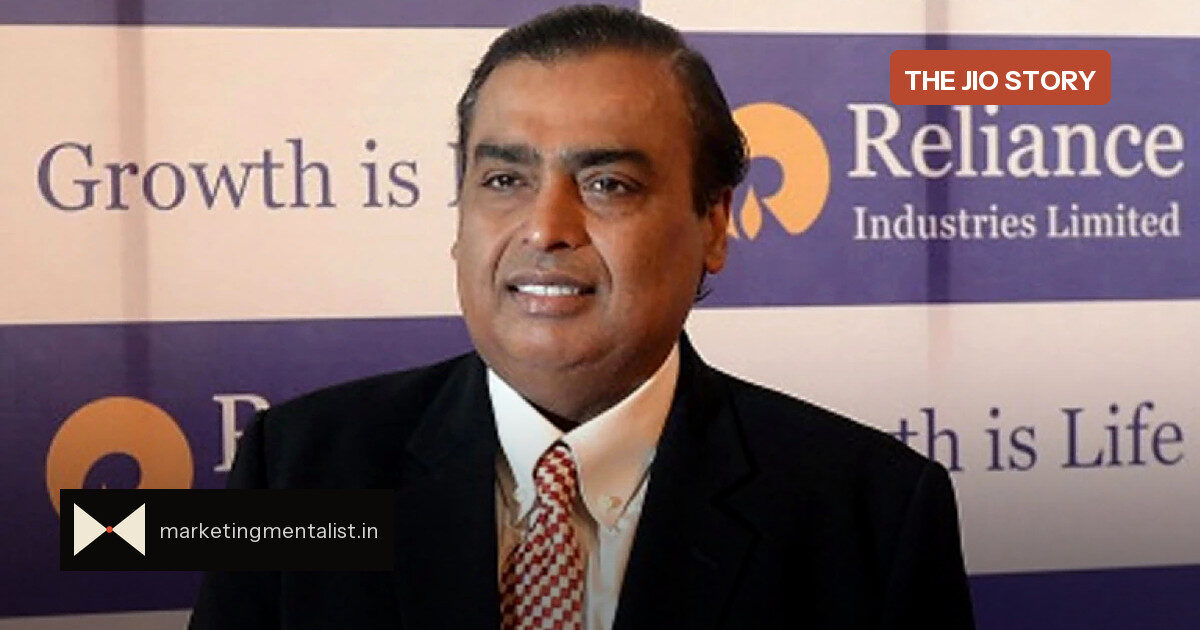
This is where the 2016 shift becomes a behavioural case study. When Jio launched with the Welcome Offer of unlimited 4G data, voice, video and apps (Reliance Industries), it did not simply reset a tariff. It reset the question people asked. The series framing line puts it well: India moved from ‘How much does data cost?’ to ‘What can we do with data?’
The speed of that reset was startling in user terms: Jio reached 100 million subscribers within 170 days of launch (company-reported). Today the company reports 524 million+ customers.
But the deeper branding lesson is not scale. It is memorability through usefulness. A connection that reliably shows up for chai, study and travel becomes less like a product and more like punctuation in the day.
The quiet, reliable backdrop
Jio’s ecosystem today spans connectivity, entertainment, commerce, payments, devices, cloud and AI, and its stated priorities include connecting every Indian, digitising businesses and ‘AI Everywhere for Everyone’ (Reliance Industries 48th AGM, August 2025). For brand managers, the interesting part is not the list of capabilities. It is the way those capabilities disappear into daily micro-moments.
There is a paradox here. Marketers often want the brand to be noticed, celebrated and loved. But the daily utility brand earns a different kind of attention: the kind that shows up when the chai is already being poured, when the assignment is already due, when the highway is already chosen.
That is why the habit loop is a useful planning tool. Cue, routine and reward can be designed for, not just observed. A marketer who maps the existing micro-moments in a customer’s day, and positions the product as the routine that removes a small friction, is working with behaviour rather than against it.
The brand that becomes the invisible background of daily micro-moments is not fighting for attention. It has already been chosen, one scan, one call, one turn at a time.