Why Madewell’s NYPL Book Girl tee sold out in 20 minutes
When reading becomes niche, bookish merch turns into identity. Madewell's NYPL Book Girl tee sold out in 20 minutes—here's the psychology.
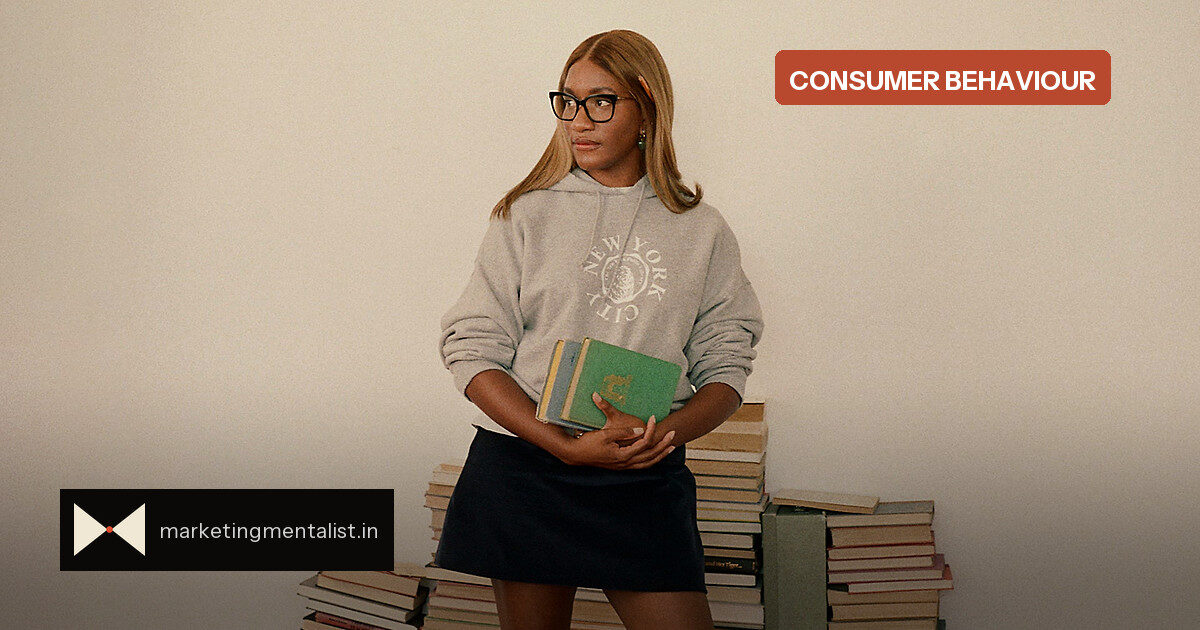
When Madewell posted a woman in a “Book Girl” baby tee with a glass of wine, the internet did not just nod along. Within 20 minutes of the New York Public Library collection going live, the shirt had already sold out. The tote bag and pin pack followed by the end of launch day.
This isn’t a routine logo drop. Madewell’s team has used the library’s picture collection for years as a styling and vintage reference archive. The collection translates that insider knowledge into merch: a “picture librarian” tee, a “Rose Reading Room” cap, and hoodies carrying the NYPL mark.
Books are becoming identity, not just a pastime
Madewell isn’t alone. Earlier this year, Coach partnered with Penguin Random House on miniature, readable book bag charms that sold out within minutes. Sandy Liang, Coach, and Celine have staged recent collections in libraries. Marc Jacobs has returned to the NYPL’s Fifth Avenue building for runway shows, and Miu Miu has launched its own book club.
The curious part? Americans are actually reading less for pleasure. A study published last year found the share of Americans who read for pleasure on an average day fell from 28% in 2004 to about 16% in 2023. That decline may be exactly why the merch works.
The sellout runs on cultural capital
Once an activity becomes niche, it stops being just a hobby and becomes a marker of identity. A library tote is no longer about carrying books. It signals taste, creativity, and belonging to a particular set.
Steven Cateron, Madewell’s creative director, puts it plainly. “The library represents access to ideas and inspiration,” he says. “It’s also a physical place where creatives go. Our customer is very much in the creative set.”
The collection works because it doesn’t over-explain the references. Terms like “picture librarian” and the “Rose Reading Room” reward people who already know. That in-group recognition is the entire point.
- Cultural capital over celebrity. The NYPL carries meaning for the creative set without an influencer’s face.
- Scarcity as proof. A fast sellout feeds the next restock with built-in demand.
- Insider references. Hidden cues let the right customers recognise each other.
What brand managers can do
Find an institution or subculture your audience already uses as a creative resource. Design a small first drop to create urgency, then open a larger restock as preorder. If mainstream participation is declining, lean into the niche status rather than chasing the mass market.
The bigger lesson: when a behaviour becomes rarer, the identity around it becomes more valuable. Madewell and the NYPL didn’t sell books. They sold belonging.
Source: Fast Company