Bajaj Auto holds more than 17% of Colombia’s bike market
Local assembly, a value wedge and owner communities made Bajaj Auto Colombia's favourite Indian, with over 17% of the motorcycle market.
In Colombia, the ‘favourite Indian’ is not a Bollywood star or a cricket captain. It is a Pune-built motorcycle. Bajaj Auto has quietly become the country’s top two-wheeler brand, with more than 17% of a market that shifts around 1.38 million motorcycles a year.
The company says it recorded over 180,000 new registrations in 2025 and has continued to top monthly industry rankings through August 2026. Suzuki is second, followed by local player AKT Motos, then Honda and Yamaha. Other Indian names trail far behind: Hero sixth, TVS seventh, Royal Enfield thirteenth.
Local assembly did the early trust-building
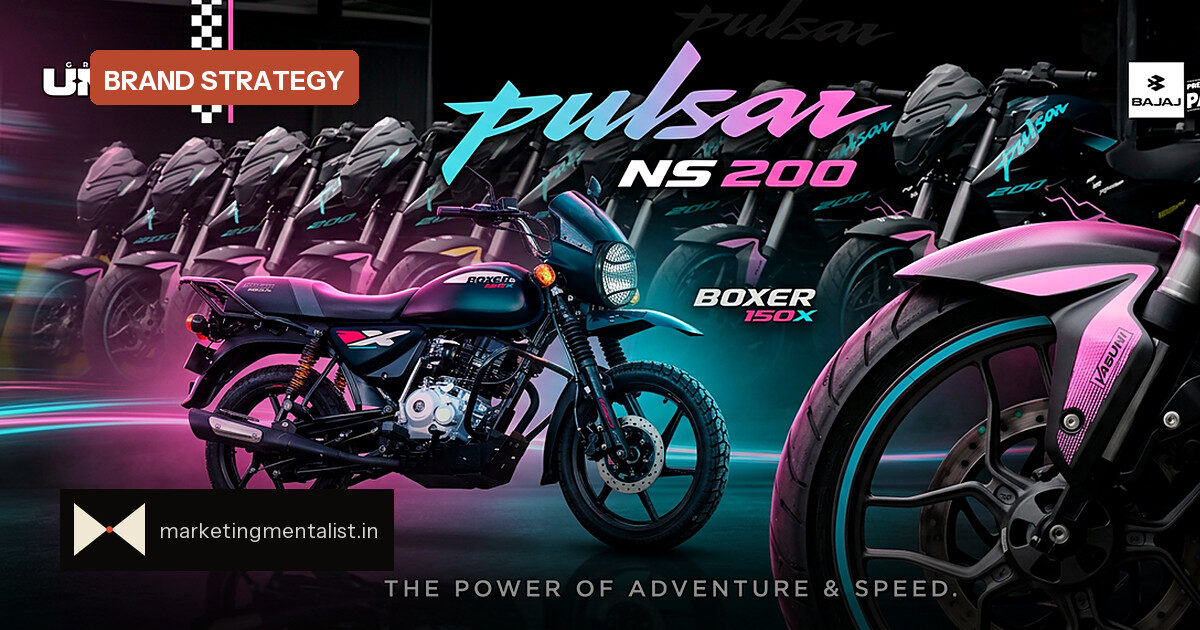
Bajaj’s Colombian story began in 1993 with a local version of the Chetak scooter, assembled through Medellín-based Auteco. The Boxer arrived in 2001 and became the everyday workhorse; the Pulsar followed in 2004 and gave the brand a sportier, performance-led identity.
When the Auteco partnership ended in 2020, Bajaj opened a newer assembly plant in Quindío with Grupo UMA. Today the network includes more than 450 sales points and over 500 authorised workshops. That service density matters as much as the product: for riders who depend on a bike for daily work, easy parts and repairs lower the risk of choosing a foreign brand.
A value wedge between cheap and premium
The portfolio runs from Boxer, Platina and Discover commuters up to the sporty Pulsar NS160, NS200 and NS400Z. Bajaj positioned itself in the middle: more durable and tech-forward than cheaper Chinese options, less expensive than Japanese premium models. It is a classic value wedge, and it works because it serves both practical and aspirational needs.
Riders became the marketing
Bajaj’s distributors have spent years building owner identity around Colombia’s rodada road-trip culture. Encuentro Nacional Pulsar gathers owner clubs from across the country and riders from Argentina, Peru, Brazil and Ecuador. Copa Pulsar puts amateurs on identical Pulsar machines so the race is about the rider, not the equipment. Pulsarmanía pulls in over 2,000 applicants for stunt and obstacle challenges.
These events do not feel like sponsorship. They feel like belonging, and that is what turns a purchase into a tribe.
What the playbook teaches
- Local assembly and dense service coverage lower perceived risk better than big-budget ads.
- A mid-market value wedge lets a challenger outflank both cheap and premium rivals.
- Owner rituals and clubs can create loyalty that discounts cannot buy.
- A product ladder—Boxer to Pulsar to NS400Z—gives customers a reason to stay and upgrade.
The next test is scale and aspiration. Grupo UMA wants to sell around 250,000 units by the end of 2026, and the NS400Z points toward larger-capacity bikes long owned by Honda, Yamaha and Triumph. Whether the riders who grew up on a Boxer will follow Bajaj up the price ladder is the real question for the next few years.
Source: Afaqs!