AI is becoming the new gatekeeper for D2C discovery
A roundtable with D2C leaders breaks down why AI-driven discovery is rewriting brand visibility, content strategy and the purchase journey.
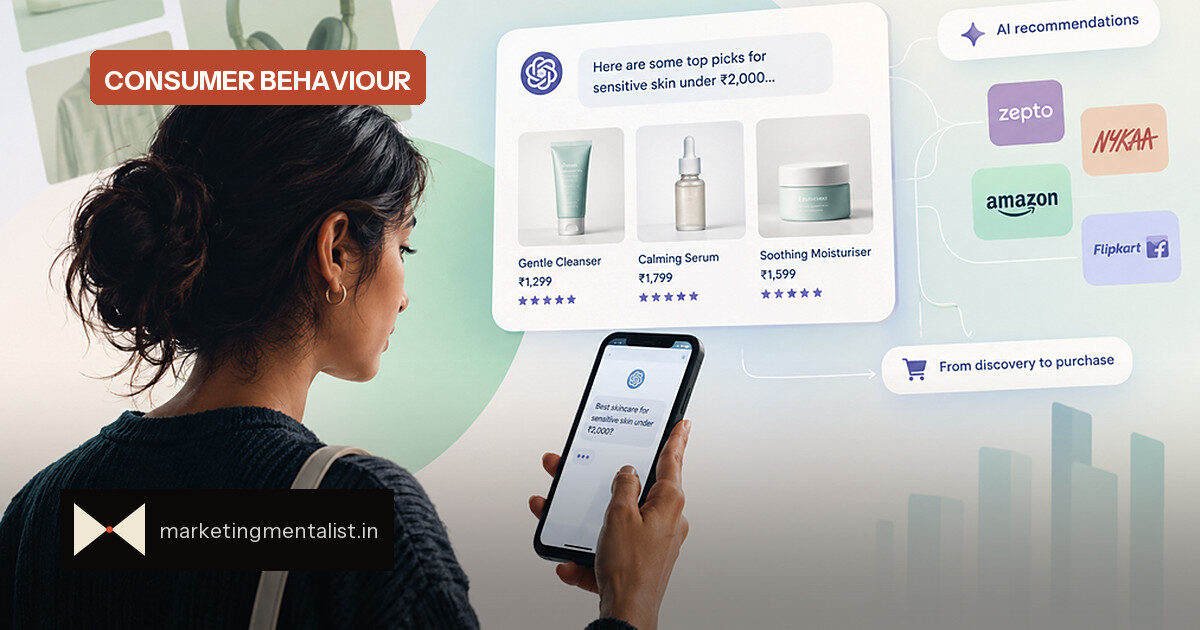
The new gatekeeper in the buying journey
Artificial intelligence is starting to sit between a customer and a purchase. Instead of only searching a marketplace or scrolling a feed, shoppers can now ask an AI tool for options, comparisons and reasons to pick one brand over another. That shift was the centre of The AI Commerce Shift, a roundtable hosted by afaqs! and Glu.ai, where D2C marketing and e-commerce leaders discussed how AI is changing brand discovery and the path to purchase.
Leaders from Bonkers Corner, SuperYou, Headphone Zone, Ajmal Perfumes and NOTO, among others, joined the conversation. Glu.ai operates in AI-led commerce, so the discussion focused on visibility, consumer decision-making and how brands are represented when AI tools surface recommendations.
Why this matters for D2C brands
For years, D2C growth relied on a fairly predictable mix: paid social, search ads, influencer content and retargeting. AI tools add another layer before the brand gets a chance to speak. A shopper may start with a prompt rather than a product name, and the AI’s answer could include your brand, a competitor’s brand, or neither.
The experts pointed to a practical consequence: visibility is no longer only about reaching consumers through paid campaigns. It also depends on whether a brand’s information is accessible, relevant and useful to AI-driven discovery systems. That has implications for content strategy, product information, performance marketing and customer acquisition.
The stakes are especially high for D2C players, many of which were built on reaching a niche audience efficiently online. If an AI tool favours brands with clearer product data or stronger third-party mentions, the cost of being absent from an answer could be a customer who never arrives at the website at all.
Think of AI as a new placement
In behavioural terms, consumers are delegating part of the evaluation process. Where marketers once optimised for attention, they now have to think about being the answer a machine can confidently give. That does not require chasing every new tool. It does require treating AI interfaces as a placement with its own rules:
- Supply clear, structured product information: features, ingredients, sizing, compatibility, price and use cases in plain language.
- Audit how AI tools describe your brand: prompt the tools your customers actually use and note what they say, omit or get wrong.
- Create answer-friendly content: comparisons, FAQs and buying guides, not just lifestyle posts.
- Connect acquisition to assisted journeys: track and attribute discovery from AI assistants where your platform allows.
A simple test
Ask the AI tools your customers use: what should I buy if I want X? Then ask why not your brand. If the system cannot answer or gives outdated details, that is the new equivalent of a broken landing page. The principle is familiar: be useful, consistent and easy to verify. When AI acts as a recommender, accuracy and relevance become brand assets. D2C players that treat AI as another interface, not a passing trend, are more likely to be found, compared and chosen.
Source: Afaqs!