
What Apple’s iPhone Duo Teaches About Brand Innovation
Apple's $1,999 foldable iPhone Duo is more than a pricing story. Innovation without marketing is a secret—here are seven rules for brand growth.
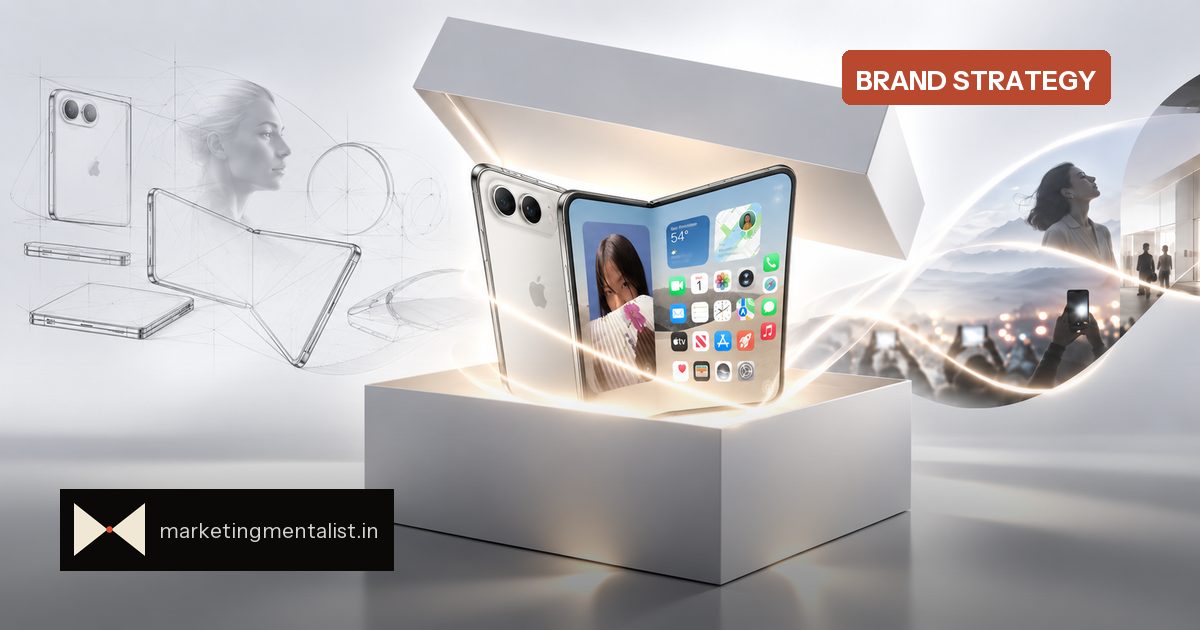
Apple’s new foldable iPhone Duo has arrived with a suggested retail price of $1,999. Much of the immediate coverage asks whether buyers will pay that much. That is a legitimate question, but it misses the more durable story: Apple keeps pairing product innovation with marketing theatre, and the two are inseparable.
The New York Times treatment framed the Duo as a purchase-intent puzzle. The deeper issue is not the hinge or the price alone. It is whether the brand can make a new form feel obvious, desirable and inevitable. When the first iPhone launched, the white box was part of the innovation. The unboxing ritual signalled that something new lay inside. Consumers do not separate strategy from execution; the execution is the strategy.
Apple’s advantage has never been the component spec alone. It is the ability to wrap a new capability in a story, a ritual and a reason to care. Without marketing, innovation is little more than a secret.
The rules behind brand-designed growth
Branding Strategy Insider’s framework argues that creativity is an input, not a process output. Here are the seven rules it proposes for organizations that want organic growth through brand-designed experiences:
- Do not manage creativity like a manufacturing line. Process-oriented systems can muffle a strong idea into a dull compromise.
- Stop trying to train everyone into creativity. Hire people who think differently; Apple’s “Think Different” ethos applies internally as much as externally.
- Democratize the origin of ideas. McDonald’s “I’m lovin’ it” concept came from Germany, while packaging and retail ideas came from other markets.
- Favor synthesis over analysis. Analytics explain what happened; synthesizers combine unrelated fragments into future possibilities.
- Move from forecasts to foresight. Electrolux had the bagless vacuum idea but rejected it; Dyson saw the future and built the market.
- Let creative friction generate spark. Jerry Hirschberg of Nissan Design International called this “creative abrasion”—without friction there can be no spark.
- Lead culture from the top. Innovation needs senior cover, or short-term demands will quietly kill it.
What this means for brand managers
For founders and marketers in India and global markets, the Duo may look like a halo product rather than a volume play. But the strategic question is closer to home: are your best ideas being strangled before they reach the customer? If your review process keeps asking “who has done this before?”, you are filtering for precedent, not possibility.
Apple’s own history shows that failure and foresight coexist. The Lisa failed; the iMac did not. The lesson is not to avoid risk, but to pair courageous innovation with marketing that makes the value legible. Peter Drucker’s observation in the piece remains the sharpest test: “Marketing and innovation create results; all the rest are costs.” The foldable will eventually answer the demand question. The strategic lesson is available now.
Source: Branding Strategy Insider