Airport retail: winning a ₹6,000/sq ft gifting gamble
Airport rents can hit ₹6,000 a square foot, but gift-led, speed-first retail wins. What Hidesign, Forest Essentials and Bengaluru airport teach us.
An airport store can look like a trophy retail address. Look closer and it is a high-stakes bet: rents that can touch ₹6,000 per square foot a month against a shopper who is trying to clear security, not browse.
Leather-goods brand Hidesign has found a way through. It changes the storefront of its airport stores every month. Founder Dilip Kapur explains why: “You can’t bore the man or woman who’s coming to the airport every week.” The airport shopper is affluent and often willing to spend, but time-poor and looking for convenience.
Brutal rent maths
The rent differential is punishing. A good mall in Chennai charges roughly ₹350–800 per sq ft monthly, and the high street sits at ₹150–200. Airport rentals can rise to as much as ₹6,000 per sq ft, with similar gaps in other major cities.
Brands still sign because the alternative is a one-dimensional hoarding, says S Shriram, founder of Miles2Go Consulting Services. An airport offers a captive and engaged audience, he argues: “touch and feel, trial, buy, and even return elsewhere.”
Go Colors is now rationalising stores where the economics don’t work. CMO Vatsal Koolwal says a rental-to-revenue ratio of 15–20% can work if the rest of the cost structure is managed.
The gifting edge
Hidesign’s airport performance shows how the economics can tilt. Six of its top ten stores in India are at airports, and an average airport store generates roughly twice the turnover of a mall store, with a smaller footprint lifting sales per square foot higher.
Around 40% of products sold in Hidesign’s airport stores are gifts. Kapur’s logic: if a product can be gifted, bought quickly and is work-oriented, most of the problematic variables are covered. A majority of domestic air travellers are men who may not spend two hours in a mall, but will quickly buy a premium handbag for someone back home. Time, not money, is their scarcest resource.
Forest Essentials executive director Samrath Bedi calls these purchases “breaks from routine” – things travellers would not normally make time to do. The pitch, he says, is about how you angle the product: hydration for flying, sleep on a long journey, stress relief, gifting or replenishment.
Why apparel gets stuck
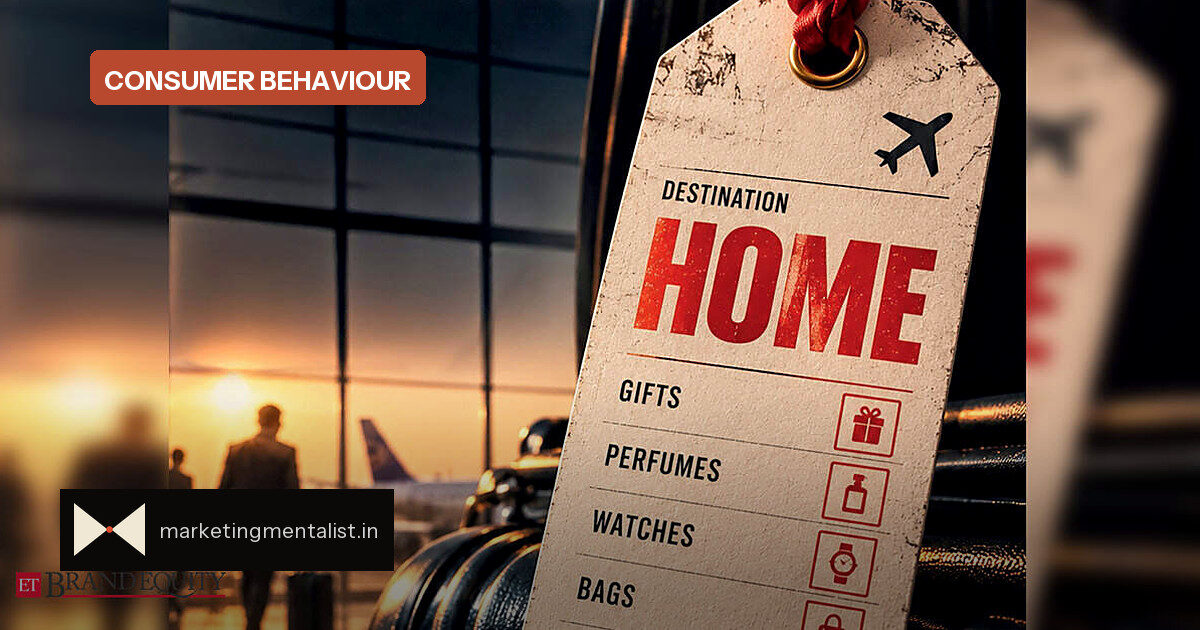
Quick, one-size categories have the clearest advantage. Pravat Paikray, VP–Commercial at Bangalore International Airport, points to perfumes, cosmetics, watches, sunglasses, travel accessories and bags as “one-size-fits-all” lines that sell well because they need no fitting room.
Apparel and jewellery have a harder job. Damodaran Radhakrishnan, associate partner at Miles2Go Consulting Services, says many apparel and fashion brands won’t be profitable, and break-even would make them happy. Devangshu Dutta, founder of Third Eyesight, adds that standalone apparel and niche lifestyle stores would typically be loss-making.
Shriram believes part of the problem is an old assumption: the “who will shop at an airport” mindset. A business traveller may not need another blazer, but might need track pants for an overnight trip, a gift, or a product discovered while waiting. Ramraj Cotton’s airport success draws on local-brand resonance and gifting-driven combos, with repackaging to fit passengers’ weight concerns.
Design for the queue, not the city
Bengaluru airport designs its retail around time. Paikray’s message to brands: “If a brand has 100 stores, don’t come and open 101st store in an airport.” He expects brands to adapt store design, assortment, staffing, service and operations.
- Airport merchandise can carry a 20–40% premium because the customer is partly paying for convenience.
- Pop-up stores let newer and D2C brands test travel retail without long-term contracts.
- The winning play is gift-led, speed-first and format-specific, not a city format with a security queue outside.
Airport visibility alone is an expensive billboard. The brands that adapt the offer to the traveller’s clock turn boarding time into a sale.
Source: ETBrandEquity.com