Consumers Forgive Average Ads, Not Poor Products
HUL's Rajneet Kohli says consumers forgive average ads but not poor products. Here are the shifts reshaping India's food and beverage market.
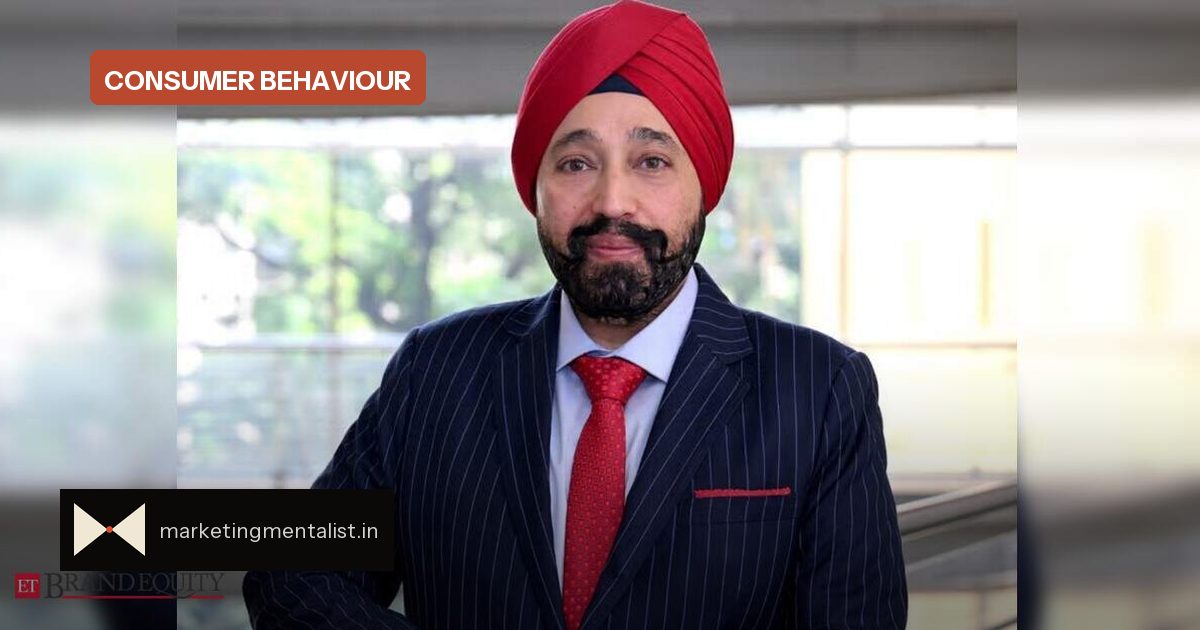
Rajneet Kohli, executive director for foods at Hindustan Unilever, recently outlined a deceptively simple principle for food brands: consumers may tolerate an average advertisement, but they will not tolerate a poor product. That distinction matters because India’s food and beverage market is entering a more demanding phase.
Trust is the real product attribute
Kohli attributes the structural shift to rising affluence, premiumisation, health consciousness, changing beverage preferences and the search for convenience. Yet he argues that scale still rests on three fundamentals: staying close to brand purpose, balancing taste with nutrition, and building consumer trust.
Trust in food is unforgiving. A forgettable ad is a minor cost; a quality failure becomes a consumer memory. “In the food business, you have to be paranoid and obsessed about food quality,” Kohli said. HUL has also tried to make front-of-pack information more prominent and has spent the past five years reducing sugar and sodium across its portfolio without letting taste slip.
Horlicks stretches from drink to lifestyle nutrition
The Horlicks protein play is a useful example of stretching a familiar brand without detaching it from its equity. Kohli notes the brand was once associated with marathon runners at the 1928 Olympics and with soldiers carrying Horlicks tablets and biscuits. That heritage lets it credibly move from a children’s health drink to broader lifestyle nutrition.
The market is still nascent. Kohli estimates India’s protein market at INR 7,000–9,000 crore, with only about 3 percent of households consuming protein products. The blockers are partly belief-based: many consumers assume dal, paneer or non-vegetarian meals provide enough protein. Others worry about taste, digestibility or trust.
The campaign reframes daily life—carrying groceries, travelling, managing household work—as physical exertion. The idea that “life is a gym” shifts protein from a sports supplement to an everyday support. “Nutrition has to be for everyone, every day,” Kohli said. “It is not just for gym-goers or sports enthusiasts.” That is a positioning move aimed at category expansion, not just share capture.
Lower the friction, not just the price
For a new food habit to stick, it must be affordable, accessible and easy to slot into a routine. HUL is offering pre-measured sachets priced below INR 85 per drink and ready-to-drink formats. The strategic point is that convenience is not an add-on; it is an adoption lever.
Convenience is also reshaping adjacent categories. With more working women since 2018, ready-to-cook and ready-to-drink products have become structural, not temporary. For HUL, that includes everything from Kissan chutneys and cooking aids to protein formats that need no kitchen access.
For marketing leaders, the food-sector playbook looks clearer:
- Fix the product before scaling the message. Quality and taste are the real brand promise.
- Stretch the frame, not the brand. Move from drink to nutrition, not to an unrelated category.
- Reframe the use case. Everyday activity becomes the occasion for protein.
- Make trial cheap and routine-friendly. Sachets and ready-to-drink formats reduce adoption barriers.
Media follows penetration
HUL’s approach to Horlicks Protein is deliberately narrow at first: Meta, Instagram, YouTube, influencers, performance marketing and quick-commerce partners. Connected TV arrives later as the proposition scales. The broader Horlicks portfolio can still justify mainstream TV and CTV because its consumer base is far larger.
The lesson is media mix should mirror category maturity. When penetration is around 3 percent, the first task is conversion among receptive users, not mass awareness.
Health is a currency
“Health is a currency,” Kohli said. It is earned through consistent product experiences and spent quickly when quality slips. As premiumisation accelerates, coffee experiments grow, and cold beverages gain from warmer temperatures, the brands that win will be the ones whose product truth matches their advertising promise.
Source: ETBrandEquity.com