Blue Star’s Two-Thirds Small-Town Sales Upend Rural Marketing
Rural India is no longer one price-sensitive market. A 2026 summit showed premium aspiration in small towns, led by Blue Star's two-thirds Tier 2-5 sales.
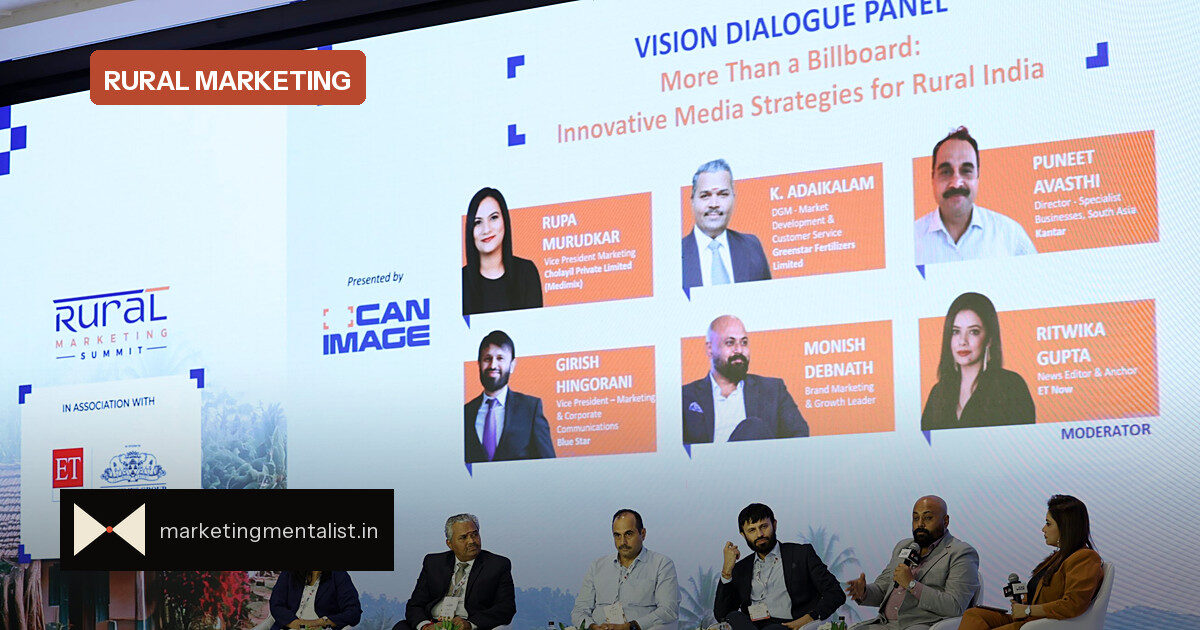
For years, “rural” was shorthand in too many marketing decks for “price-sensitive, simplified, mass.” At the Rural Marketing Summit 2026, held on September 28 with the theme “The Power of Presence: Consistency Wins in Rural India,” that framing was called out as a dead end.
Industry leaders argued that the next phase of rural marketing will depend less on simply reaching consumers and more on understanding, engaging and consistently showing up for them.
The myth of one rural market
Brand and growth leader Monish Debnath said one of the biggest misconceptions is to “idiot-proof” the entire rural marketing approach—assuming consumers need excessive simplification or are driven primarily by affordability. Rural consumers, he argued, are increasingly informed and clear about what they want.
Kantar’s Puneet Avasthi added that marketers need to “go beyond average” and segment rural markets into distinct consumer groups. The same strategy cannot serve premium air conditioners and low-unit-price packs. He also highlighted the increasing role of women in rural household decision-making, supported by greater financial participation and access to money.
Aspiration has left the metro
Girish Hingorani of Blue Star gave the clearest proof. Air conditioning may look like a premium category, but roughly two-thirds of the company’s sales typically come from Tier 2, 3, 4 and 5 towns. Smaller-town buyers pursue premium products when brands connect with their aspirations.
Rupa Murudkar of Medimix reframed the definition: “Rural talks about where people live. It does not talk about their aspirations.” Rural households include farmers, labourers, landlords, fishermen, horticultural workers, content creators and online sellers—each with different incomes and expectations.
From language to context
Medimix moved beyond dubbed Hindi assets. In Maharashtra, it worked with actor Amruta Khanwilkar, shot a campaign directly in Marathi, introduced Devanagari packaging and created influencer-led content for cultural clusters like Mumbai, Pune and Konkan.
In agriculture, Greenstar Fertilizers’ K. Adaikalam said localisation must go further: “It should not be a geography-oriented strategy. It should be a context-oriented strategy.” That means crop, soil, water, season and local market conditions, with messaging timed from pre-sowing through harvest and post-harvest.
Consistency is the moat
Presence extends through packaging, signage, wall paintings, retail assets, community interactions and digital content. If logos, colours, messaging or visual cues vary, the familiarity brands are trying to build weakens.
That is the strategic shift: stop counting reach and start managing what consumers encounter after you arrive. Hingorani put it bluntly: “Being relevant is more important than media. Media is just for recall.”
Here is what that means for brand teams:
- Segment by consumer context and decision role, not just income or settlement size.
- Localise language, faces, packaging and timing for cultural and agricultural clusters.
- Use retailers, dealers, progressive farmers and community voices to build credibility.
- Keep the brand visually and verbally consistent at every rural touchpoint.
Murudkar closed with a trust equation: intimacy through knowing consumers, credibility, consistency and authenticity—without separate brand formulations for rural and urban audiences.
Source: ET Edge Insights