
65% of Consumers Avoid Ads. Marketers Can Fix That.
Omnicom's 1,136-person study finds 65% avoid ads—but avoidance is a spectrum of behaviours, and there are four ways to make ads feel additive.
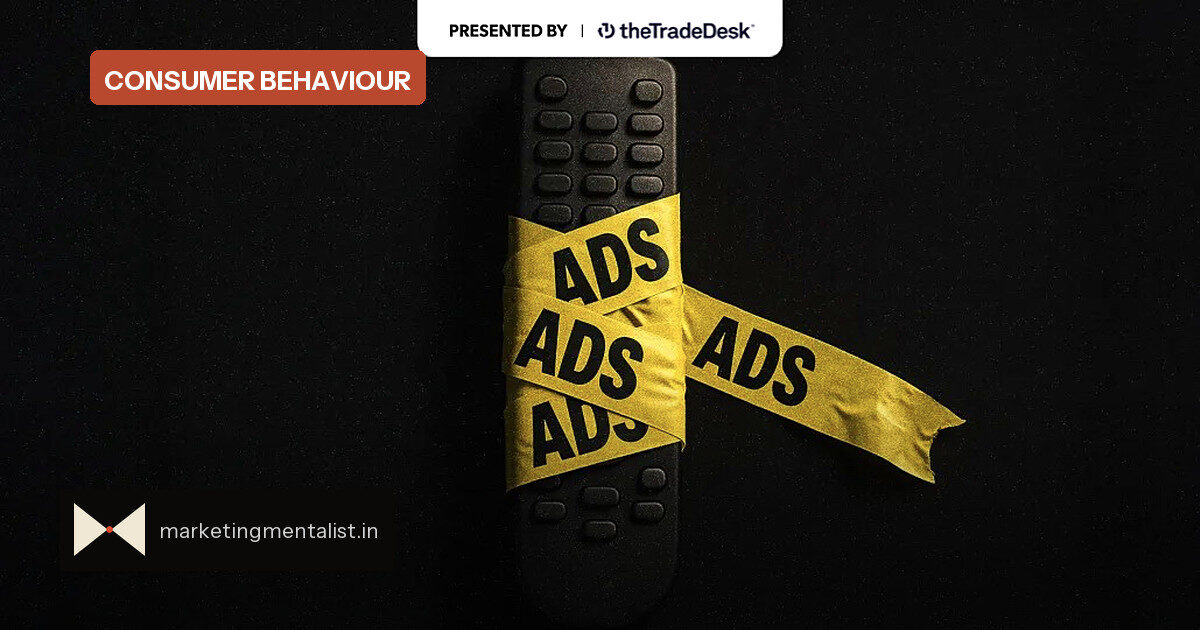
If you have ever skipped, muted or scrolled past a video pre-roll, you are part of a majority. Omnicom Media Intelligence’s new study, From Tuned Out to Leaned In: How to Combat Ad Avoidance, found that 65% of U.S. consumers avoid advertising to some degree.
The August survey of 1,136 adults aged 18 and over, run with research firm eye square, tested four video-based creative executions across product placement, brand integration and augmented reality. It measured conscious and unconscious responses: attention, emotional response and post-exposure perception.
Avoidance is a behaviour, not a type of person
The most useful shift in the research is a reframe. Ad avoidance is not a fixed cohort of ad haters. It is a spectrum of active and passive behaviours, which means it can be modified.
One in four respondents described themselves as very or extremely active avoiders; another 40% were somewhat active. Active avoidance covers ad-free subscriptions, ad blockers, skipping, muting and closing. Passive avoidance is sneakier: second-screening, mentally filtering familiar or irrelevant ads, or simply tuning out.
Notably, 41% said they pay for subscriptions specifically to avoid ads. The common thread is not a rejection of brands. It is a rejection of interruptive, repetitive or irrelevant ad experiences.
Why this matters for brand managers
Traditional reach-and-frequency planning often makes the problem worse. Repeating the same message because the plan says so trains audiences to ignore you. The opportunity is to treat every exposure as a small experience design problem, not a quota to be filled.
Megan Pagliuca, Omnicom Media North America’s chief product officer, said the work builds on the group’s earlier CTV frequency and “negative reach” efforts, and Omnicom planned to share an ad-tech partnership during Advertising Week to help clients reach consumers more effectively.
Joanna O’Connell, chief intelligence officer at Omnicom Media North America, put it simply: “Consumers are saying brands have permission—they just want it to be good.”
Four levers to pull
- Frequency, context and creative should work as one system so each exposure adds something new rather than repeating.
- Design the moment, not just the ad: consider where and when a brand enters, how much attention it demands and what value it adds to the surrounding content.
- Move beyond interruptive formats: product placement, brand integration, sponsored content and immersive experiences can be additive rather than disruptive.
- Connect everything: content, creators, commerce, sponsorship, media and measurement should run from one strategic playbook.
The study’s big strategic question: how do you get people to want to experience your advertising, and feel it is augmentative rather than something to skip? That shifts the goal from winning the impression to earning the attention.
Source: Digiday


