The Psychology Behind Day-in-the-Life Ads
Google and Spotify dropped celebrity day-in-the-life films days apart. The format borrows vlog trust—but it also tests ad disclosure rules.
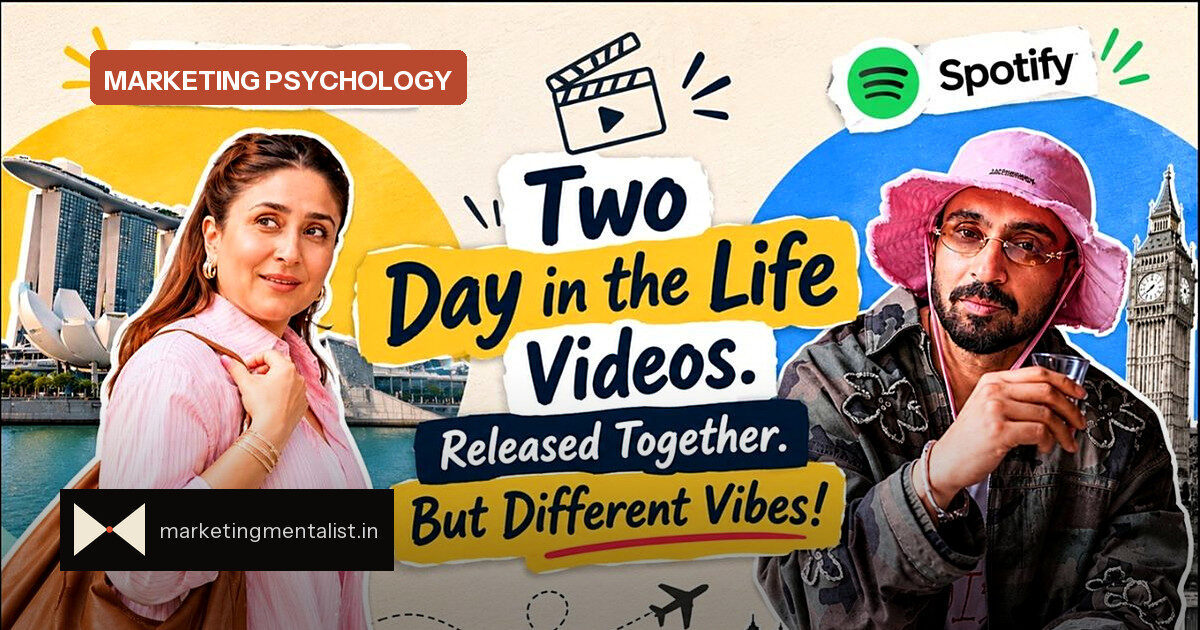
In the space of four days, Google and Spotify made the same creative bet. On 10 November, Google India released a two-minute film following Kareena Kapoor Khan through Singapore. On 14 November, Spotify India followed Diljit Dosanjh through London for a ten-minute “Day in the Life” episode. The format is suddenly everywhere—and it works for a reason.
Two giants, one lo-fi script
Google’s film, “Bebo’s Day Out with Android,” was built around a no-plans, no-rush day where the phone quietly does the heavy lifting. Kapoor was announced as the global face of Android on 19 October, so the video doubles as a product demo: she navigates unfamiliar streets and asks Gemini about the history behind Singapore’s Peranakan shophouses.
Spotify’s film is looser. Dosanjh wanders diners, cafés and thrift stores in a pink floppy hat, reflects on being “an artist, bro,” and never once holds a phone up to the camera. He is the first Indian artist in Spotify’s global Day in the Life series, which has previously profiled Central Cee, Lil Baby, Gunna, Cody Johnson and Poppy. The drop landed mid-way through the Indian leg of his Aura World Tour, which runs from 30 October to 19 December.
Why the format lowers our defences
Polished advertising has a signature. We have learned to recognise it—and scroll past it. The day-in-the-life format borrows the texture of a creator vlog: handheld shots, dead air, mundane detours. Because it doesn’t look like a pitch, our authenticity heuristic kicks in and we treat it as more honest. The brand gets closeness without the banner-blindness tax.
That trick is older than social media. Gay Talese’s 1966 Esquire profile “Frank Sinatra Has a Cold” shadowed Sinatra through ordinary routines instead of a formal Q&A. MTV’s Cribs and Diary popularised the handheld celebrity tour. Then came GQ’s 10 Essentials, Vogue’s 73 Questions and Architectural Digest’s Open Door. Instagram and TikTok creators turned it into a default language from 2018, and brands followed.
The disclosure grey zone
There is one problem. ASCI and the CCPA require any paid or barter collaboration to be clearly disclosed as advertising. When a celebrity film is indistinguishable from an organic vlog, viewers may not realise they are being marketed to. Kapoor’s video is tagged as an ad and shows the product in action. Dosanjh’s is not tagged, and there are no in-app demonstrations on screen. That gap between the two launches is the actual lesson for marketers.
What to copy—and what not to copy
- Borrow texture, not just the template. Handheld footage and mundane moments do the work; heavy production kills the effect.
- Disclose before the reveal. A natural “paid partnership” note up front costs less trust than looking like a hidden ad.
- Anchor the celebrity to a real use case. Google made the phone solve problems; the format works best when the product earns its screen time.
- Match the figure to the platform. Diljit made sense for Spotify because he is an artist on tour, not a random face.
The day-in-the-life format isn’t fading. But the brands that win with it will be the ones that borrow authenticity without borrowing ambiguity.