Pringles India: Premium First, Scale Later
How Pringles India built premium distinctiveness through selective distribution, cultural stunts and distinctive assets before its first big film.
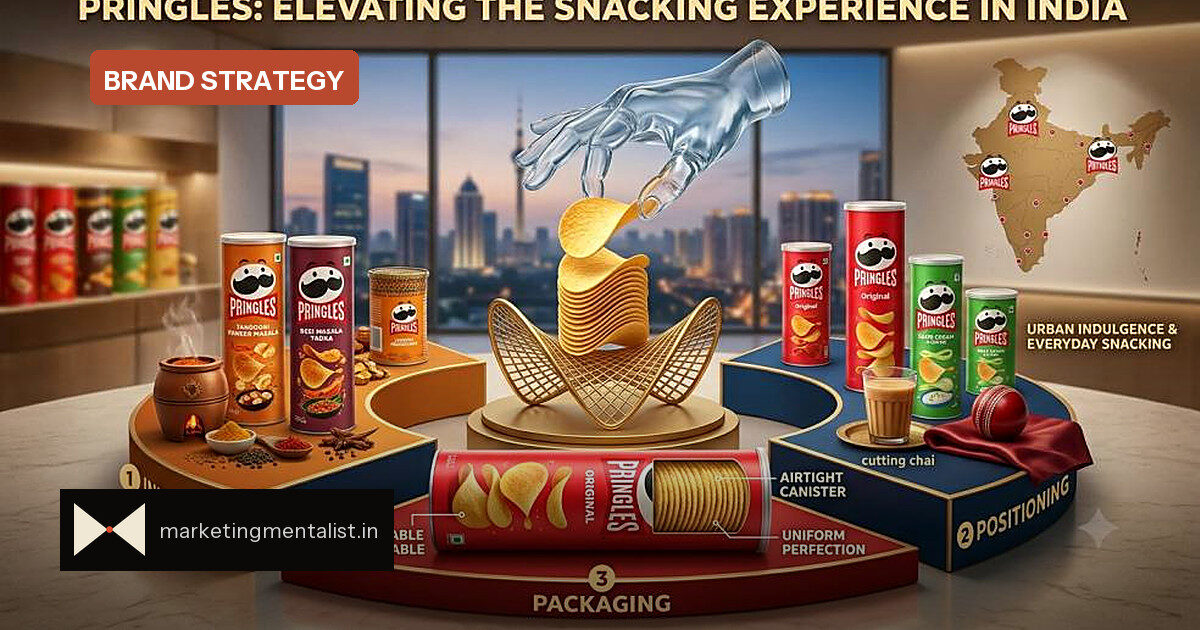
Pringles did not enter India the way most snack brands do. It arrived in 2012 as a side effect of a $2.7 billion deal, when Kellogg’s bought the brand from Procter & Gamble. For years, Indian consumers met it as an import, sold through distributors at roughly Rs 50–100 a can, before Kellogg’s India took over distribution in 2014. The strategic bet was selective: reach a premium urban base first and build recognition before chasing mass availability.
A three-stage build
The documented timeline falls into three moves.
- Selective import (2012–2014): Sold through premium outlets; an analyst estimate pointed to roughly 8,000 premium retail outlets as the early opportunity.
- Cultural stunt (2019): A 10,005-pack message at Lulu Mall, Kochi, earned a Guinness World Record around the Cricket World Cup.
- First film (March 2026): The brand made its above-the-line digital debut, turning the sound of a can into a shared rhythmic moment.
Distinctive assets before mass media
Kellanova’s sales leaders point to a specific asset set: the lid pop, the shape of the crisps, the iconic can, and the brand’s cultural expression. The 2026 film doesn’t introduce these cues; it amplifies them. That is the classic logic of distinctive brand assets—memory shortcuts that let buyers recognise the brand instantly, even before the logo is processed.
By keeping distribution selective and leaning on product cues, Pringles behaved more like a premium import brand than a volume snacker. Amit Banati, then Kellogg’s Asia Pacific president, said the brand was well established in Japan, Korea, Australia, New Zealand and Singapore, but far less so in India, China and South Africa. The plan was to adapt flavours and sizes selectively while leveraging the global brand.
The psychology of the pop
The lid pop is not just packaging; it is an auditory cue that signals the product moment. In a retail environment, sound and shape can build mental availability long before a consumer reads a price. The 2026 film takes that single product moment—the opening of a can—and turns it into a communal musical beat, which is a textbook way to make a brand asset feel socially shared.
That matters in India, where snacking is often communal. But it also sets a bar: a distinctive asset only earns mass-media spend if it already means something to a niche audience.
Why the sequencing matters
For Indian and global founders, the Pringles path is a useful counter to launch-and-scale thinking. Premium branding in a market dominated by PepsiCo, ITC and Balaji Wafers cannot win on price. It wins by being the brand people remember when they want something different. That memory is built through distinctive assets and selective presence before the big media spend.
The caveat: the public record has no revenue, share or distribution data to prove the strategy worked. The 2019 stunt generated buzz, and the brand now sits inside Mars Snacking after Mars completed its acquisition of Kellanova in December 2025. Those are signals, not outcomes.
What brand managers can steal
Before you pour budget into awareness, ask what distinctive asset you already own. Pringles had the can; many brands never identify theirs. Then stage the rollout: selective availability, event-led proof, and mass media only when the asset is recognisable enough to reward the spend. Under Mars, the next test is whether Pringles can convert that hard-won distinctiveness into broader reach without diluting the premium feel.
Source: MarkHub24