
Patagonia’s $100 Voting Nudge, Decoded
Patagonia is investing $11.2 million to turn customers into voting advocates—and the design is a masterclass in behavioural activation.
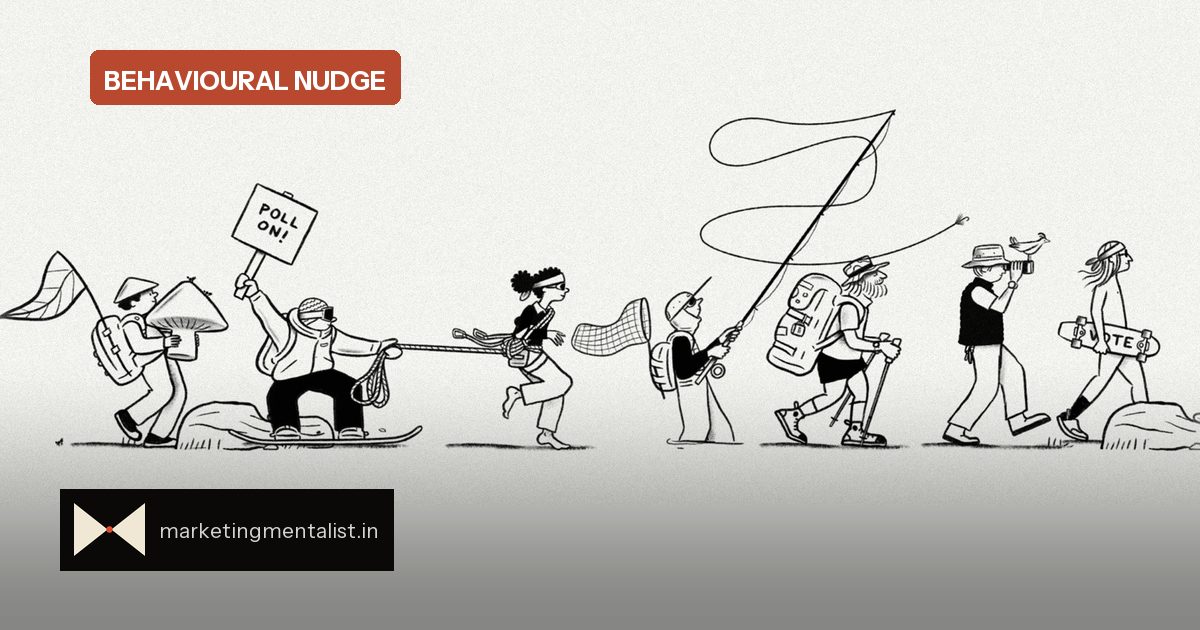
Patagonia is turning its customers into a relational get-out-the-vote engine—and offering a $100 credit for the nudge. The outdoor brand says it is investing $11.2 million in the campaign, a figure matched to the estimated 11.2 million environmental voters who did not vote.
The sign-up opens on September 26 through a platform called Relentless embedded on Patagonia’s site. You enter details for three people you want to encourage. The platform builds each person a voting plan based on their address: where to vote, whether they can vote early or by mail, and what ID to bring. You can text or email the plan. Once you confirm you have sent it, you choose between a $100 Patagonia credit and a $100 donation to the League of Conservation Voters.
The incentive does not depend on whether those friends actually vote. Patagonia is rewarding the first move, not the final result.
Pay for the nudge, not the outcome
Corley Kenna, who leads Patagonia’s communications and policy team, told Fast Company the number was startling. “We couldn’t believe that,” she said. That reaction shaped the offer: instead of asking people to guarantee votes, the campaign asks them to send a personalised plan.
This is a classic behavioural design choice. The hard part of voting is not knowing where to go, what ID to bring, or how to register. By removing that cognitive load, Patagonia makes the friend’s decision easier. The $100 credit makes the advocate’s first step easier too. When a reward is attached to a small, concrete action rather than a large, uncertain outcome, completion rates rise.
- Lower the ask: “Get three friends to vote” becomes “send three voting plans.”
- Decouple reward from outcome: Pay for the pivotal first step, not the hard-to-control result.
- Use a trusted messenger: A nudge from a friend lands differently than a banner ad.
- Make identity visible: The credit or donation choice lets customers signal environmental values.
Activism as identity, not just advertising
Patagonia has pushed voting since 1978, starting with a local newspaper ad in Ventura, California, backing pro-environment candidates and ballot measures. In the 2024 election, Kenna says the company helped get around 5,000 people to vote and volunteer. This cycle, with the company citing hundreds of anti-environmental actions under the Trump administration, it is doubling down through relational organising rather than traditional media spend.
For brand managers, the lesson is not to follow Patagonia into politics. It is to notice how the brand converts passive support into visible action. Patagonia is not running a generic “go vote” message. It is giving customers a script, a tool, and a reason to become the channel. The $100 credit is the ignition; the voting plan is the product; the friend is the medium.
What marketers should borrow
If you want advocacy, reduce the cost of the first act. If you want word of mouth, give people something specific to share. And if you offer an incentive, attach it to a behaviour the person can control, not to a result the person cannot.
Source: Fast Company