Jio Story: The Data Habit India Stops Noticing
A UPI ping at a chai stall, a study group on a video call and maps on a family road trip show how data became an invisible daily utility.
Somewhere in India, a UPI ping at a chai stall, a study group on a video call, and a family road trip following a map have one thing in common: none of them feel like a “data event” anymore. That is the real behavioural shift.
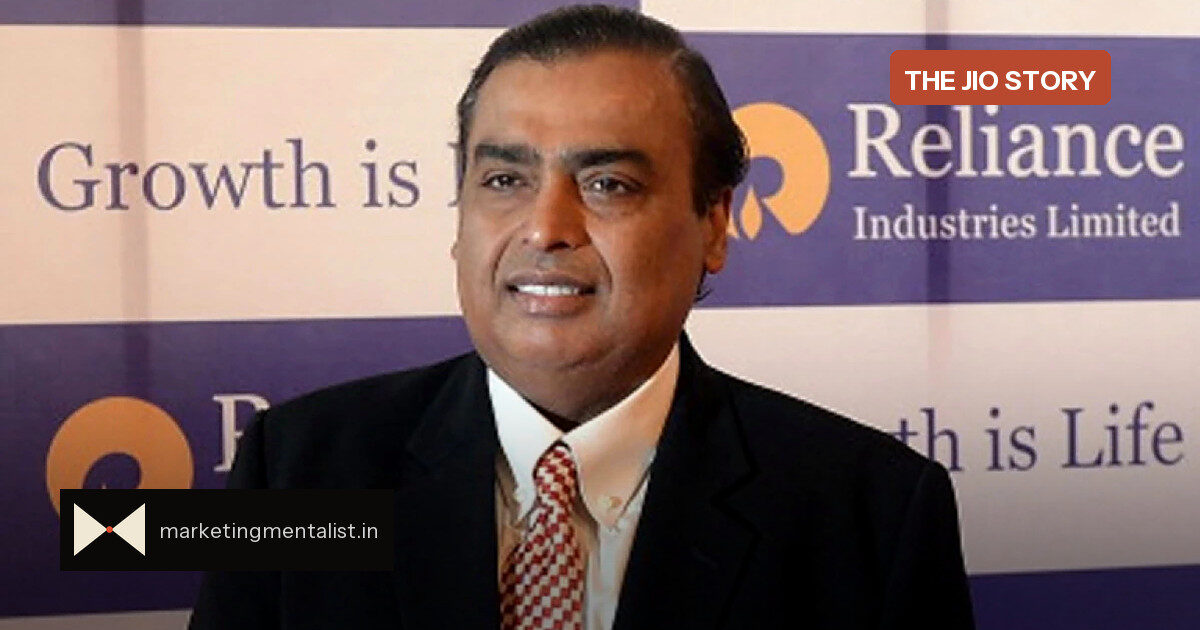
In 2016 Jio launched with the Welcome Offer: unlimited 4G data, voice, video and apps (Reliance Industries). Jio reached 100 million subscribers within 170 days of launch (company-reported; Reliance Industries Integrated Annual Report 2016-17). Today, Jio serves 524 million+ customers (Reliance Jio Infocomm, March 2026; company-reported). But the daily story is not about scale; it is about the habits that make the scale feel ordinary.
The chai stall’s new mental account
When a payment goes through before the chai is poured, nobody calculates the kilobytes. That is mental accounting at work. Data moved from a metered budget line into a fixed mental category: background utility.
For marketers, this is utility framing. When a service stops being the thing you buy and starts being the thing you assume, it changes behaviour. You no longer decide; you default.
- UPI at the chai stall: data as the quiet pipe, not the product.
- Study group video call: data as presence, not a cost.
- Family road-trip maps: data as navigation, not a consumption decision.
The study group’s presence effect
On a video call, the connection is good enough that the mind stops monitoring it. Attention shifts to faces, notes and doubts. This is what behavioural scientists call presence: the technology recedes, and the interaction becomes the experience.
That is a strong place for any brand to be: chosen without being noticed. It is the opposite of a high-involvement purchase. It is infrastructure.
The road trip’s closed loop
Family road-trip maps reroute without prompting, and no one says “let’s conserve data for the journey.” The habit loop is closed: cue, routine, reward, repeated until it becomes invisible. That is how an everyday utility gets built.
The question India asked moved from “How much does data cost?” to “What can we do with data?” Once that flip happens, the brand story is no longer about the network. It is about the normal life the network quietly carries.
That is the marketing lesson: the most useful positioning is sometimes the one that stops asking for attention.