Jio Story: The Habit Layer Beneath a Normal Tuesday
When UPI chai, study calls and road-trip maps stop being moments and become a background habit, the real brand work has already happened.
Somewhere between paying for chai through UPI, joining a study group on a video call and following maps on a family road trip, the network stops feeling like a product. It becomes a background assumption. This is the ordinary-day effect: when a service dissolves into utility, people stop asking how much data costs and start asking what they can do with it.
That shift is not a technology story. It is a consumer psychology story.
The chai stall is now a checkout counter
At a roadside chai stall, the most important screen is no longer the phone. It is the shared expectation that payment will be instant. Customers scan, pay and walk off without watching the confirmation animation for more than a second. The vendor trusts the pattern because the habit has repeated thousands of times. Behavioural scientists call this friction reduction: when a frequent action loses its small anxieties, it becomes automatic.
For marketers, this is the point. A product can be loved when it is visible. It becomes indispensable when it is invisible.
The study group and the road trip
The same pattern shows up in coordination. Students on a video call do not discuss the connection. They discuss the topic. A family using maps does not say the network is working. They argue about the next stop. When infrastructure is reliable, the conversation moves to the goal, not the tool.
This is secondary utility. The data connection is not the experience; it carries the experience. That is a subtle but powerful position for a brand.
What marketers should notice
- Utility beats presence. The brand is remembered less for how it appeared and more for what it let happen.
- Friction decides habits. Each smooth payment, call or route search strengthens the loop.
- Normality is the outcome. When people stop praising the service and start depending on it, the job is done.
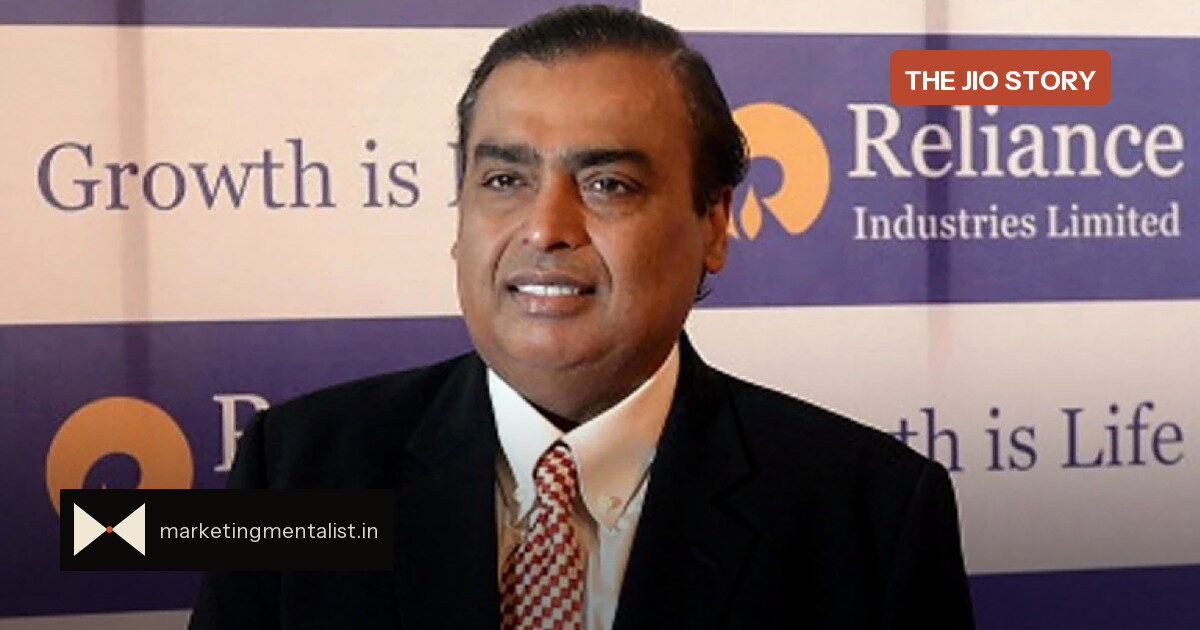
Jio launched in 2016 with the Welcome Offer: unlimited 4G data, voice, video and apps (Reliance Industries). The early memory was of a dramatic reset — data stopped being rationed. But the longer arc is quieter. Across those years, the question India asked moved from “How much does data cost?” to “What can we do with data?” That question is answered not by a campaign but by a thousand ordinary transactions.
That is the marketer’s takeaway. Big launches create awareness. Daily habits create a category. The chai stall, the study group and the road trip are not unusual moments. They are the product working so quietly that nobody has to think about it.