
India’s Gen Z Now Drives 43% of Consumption Spending
India's 377 million Gen Zs already steer $860 billion of spending, and most of it isn't their own money. What that means for brand strategy.
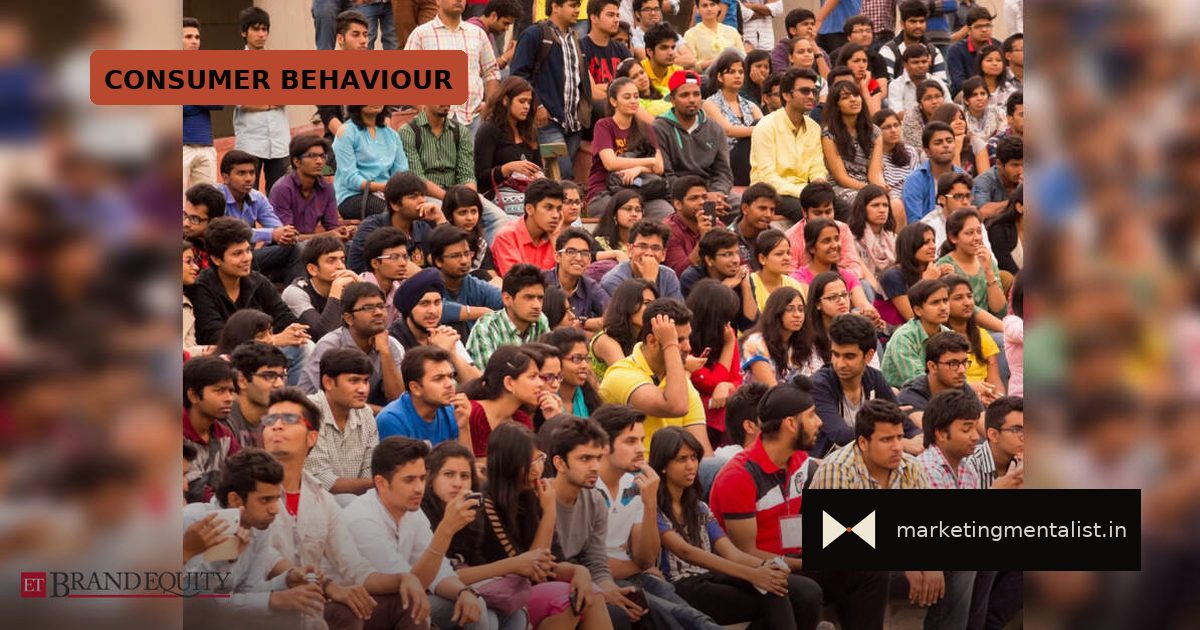
Here is a number worth pinning above your planning deck: India’s 377 million Gen Zs, born between 1997 and 2012, already account for 43% of the country’s consumption spending, worth roughly $860 billion. That’s from a joint report by Boston Consulting Group and Snap Inc., and by 2035 the figure is projected to more than double to $2 trillion, around half of India’s total consumption spend of $3.9 trillion that year.
As a cohort, they outnumber the entire population of the United States. But the more interesting story for marketers isn’t the size. It’s the mechanics.
The influence gap is the real insight
Only one in four Indian Gen Zs is currently working. That share is expected to rise to 36% by 2030 and 47% by 2035. So where does $860 billion come from?
Mostly from someone else’s wallet. Of that total, $660 billion is what the report calls “influenced” spending: a dependent Gen Z picks the brand, the app, the restaurant, the sneaker, and a parent taps to pay.
This flips a lot of media strategy on its head. If your funnel assumes chooser and payer are the same person, you’re modelling the wrong buying unit. The persuasion job is split into two:
- Desire has to be manufactured with the 19-year-old, in their feed, in their language, at their speed.
- Permission has to be won with the payer, usually through justification cues: safety, durability, value, “it’s for her studies”, transparent pricing.
Classic family decision-making research calls this the initiator-influencer-buyer split. Indian brands have long optimised for the buyer. The new growth is sitting with the influencer.
Don’t over-attribute the boom to one generation
Worth keeping honest here. Deloitte’s Anand Ramanathan, Partner and Consumer Industry Leader for South Asia, cautions that while confidence in Gen Z’s importance should be high, confidence in claims that credit the entire consumption increase to them should be low. He describes the generation as “an accelerator within this broader transition,” pointing to India’s urban population nearing 600 million by 2030 as the structural driver.
BCG’s Kanika Sanghi makes a similar point: the move towards non-food spending is a general trend tied to rising affluence. MoSPI’s Household Consumption Expenditure Survey 2023-24 shows non-food at 60.32% of urban household spending, up from 57.38% in 2011-12. Conveyance rose to 8.46% from 6.52%; durables to 6.87% from 5.60%.
Translation: the tide is rising for everyone. Gen Z is the surfboard, not the ocean.
Where Gen Z’s fingerprints are unmistakable
Around half of every rupee spent on footwear, eating out, out-of-home entertainment, travel, OTT subscriptions and fashion traces back to a Gen Z buyer, direct or influenced. Beauty sits slightly lower at 44%, though Redseer expects India’s beauty and personal care market to nearly double to $40 billion by 2030, with quick commerce taking almost 40% of online beauty sales, up from about 15% today.
Jewellery shows the same behavioural rewrite. BlueStone lifted its revenue market share from 17.7% in FY19 to 24.6% in FY25 on lightweight, design-led daily wear rather than heavy bridal sets, per Kotak Mutual Fund research. Lifestyle jewellery is expected to grow 16-18% annually through 2029, outpacing wedding jewellery. Titan’s beYon is going after the same cohort with lab-grown diamonds and transparent pricing.
Credit comes first, savings later
Gen Z made up 41% of India’s new-to-credit borrowers in 2024, more than any other generation, per a TransUnion CIBIL report from March 2025. Credgenics CEO Rishabh Goel puts the psychology plainly: for many Gen Zs, credit isn’t the final step in a financial journey but the first one. Once EMI comfort sets in early, a luxury SUV on a five-year plan stops feeling like a stretch and starts feeling like a line item.
That is a monthly-payment mental model, not a total-price one. Price architecture built around per-month framing will convert better with this cohort, and brands that ignore it will look expensive for no good reason.
Three moves for brand teams
First, separate your chooser message from your payer message and budget for both. Second, replace vague benefit claims with verifiable specifics; Ramanathan notes 74% of consumers now read ingredient labels and 44% paid a premium for cleaner formulations in the last six months, though most cap that premium near 10%. Third, plan for geography. Ramanathan’s warning is that brands will underestimate, not overestimate, Gen Z’s reach as it becomes half of India’s online shoppers by 2030, with demand “geographically dispersed” and shaped by locally relevant price points.
As Sanghi puts it, the playbook is only following the consumer. Brands are responding, not leading.
Source: ETBrandEquity.com