Why Havas Is Betting on Luxury Experiences in India
Havas India and Paris-based Shortcut have launched a luxury experiential agency. Here's the consumer psychology behind India's shift to premium experiences.
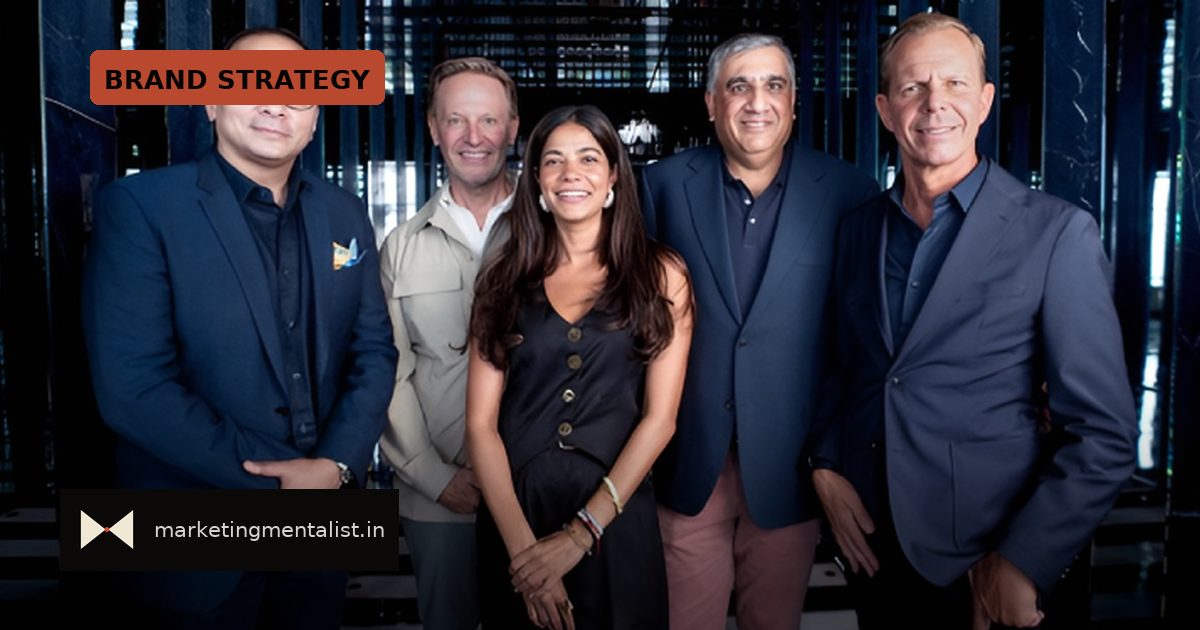
Havas India has launched Shortcut Shobiz India, a luxury and lifestyle experiential agency built as a partnership between Paris-based experience specialist Shortcut and Shobiz, Havas India’s experiential marketing arm. The venture marks Shortcut’s entry into India, following its recent expansion into Milan, and becomes the 26th expertise inside the One Havas ecosystem in the country.
The agency will focus on luxury, beauty, fragrance and lifestyle brands, operating around the proposition “Experiences Designed with Artistic Intelligence” — a mix of French savoir-faire and Indian craftsmanship and production scale. It will be anchored at Shobiz’s offices across India.
The people and the numbers
Farah Lauren Khan has been appointed Vice President, Shortcut Shobiz India, based in Mumbai, reporting to Sameer Tobaccowala, CEO of Shobiz. Khan brings over 15 years in experiential marketing and brand strategy, with work across Apple, Bvlgari, Cartier, Christian Louboutin, Dior, Estée Lauder, Ferrari, Gucci, Hermès, Jo Malone, Rolls-Royce, Rolex, St. Regis Hotels, Tod’s, Zara and W Hotels.
The commercial logic is simple enough. India’s luxury market is estimated at between $10 billion and $12.1 billion, per the 2025 State of Fashion report from McKinsey and The Business of Fashion. Havas India Group CEO Rana Barua noted that of the network’s 1,000-plus clients in India, a significant number are already luxury and lifestyle partners — and many more want to move into the category. Shortcut, meanwhile, crossed 30 years of operations in July 2026.
Why luxury sells experience, not product
Here is the psychology worth pausing on. Luxury does not compete on features; it competes on meaning. And meaning is unstable when a product can be photographed, dupe-d and drop-shipped within a week. A handbag can be copied. A perfectly lit, invitation-only, multi-sensory evening in a heritage building cannot.
Experiential marketing works on luxury buyers for three reliable reasons:
- Scarcity and access. An experience you cannot buy your way into converts money into status. Exclusivity is the product.
- Effort justification. When a consumer travels, dresses up and commits an evening to a brand, they rationalise that investment by liking the brand more. Participation manufactures preference.
- Sensory encoding. Scent, texture, sound and space create memories that outlast advertising recall. Fragrance and beauty brands know this better than anyone — which is exactly why they are named in the agency’s mandate.
Tobaccowala framed the shift in terms of expectation: luxury audiences now want experiences that are, in his words, “thoughtful, immersive, and deeply authentic”. Shortcut Co-Founder and Co-President Lionel Laval pointed to combining artistic finesse with local production depth, while Co-Founder Christophe Pinguet described the aim as experiences that are locally meaningful and internationally inspiring.
The India-specific problem this solves
Global luxury brands entering India have historically faced a translation gap. Import the Paris playbook wholesale and it reads as imported and cold. Localise too aggressively and the brand loses the distance that makes it desirable. Luxury needs to feel slightly beyond you — that gap is the aspiration.
A joint venture structure is essentially an attempt to hold both ends: global codes plus local craft, cultural fluency and executional muscle. It also fits Havas’ global positioning of “Growth, Powered by Desire” — desire being, notably, a psychological outcome rather than a media metric.
What marketers should take from this
You do not need a Paris partner to apply the principle. Three moves translate down-market:
- Design one moment, not a calendar. One unforgettable, tightly curated event beats twelve forgettable activations.
- Engineer the invitation. How people are asked matters as much as what they attend. Access rituals create status.
- Build in a sensory signature. A scent, a sound, a material — something the memory can hook onto later, in a store or on a shelf.
Premiumisation in India is no longer a niche bet. When agencies start building specialist units around it, it usually means client demand arrived first.
Source: MediaNews4U