
Why Consumers Are Fighting Back Against Lost Agency
From surveillance pricing to AI comparison tools, consumers are demanding more control. Here's how brands can return agency and win trust.
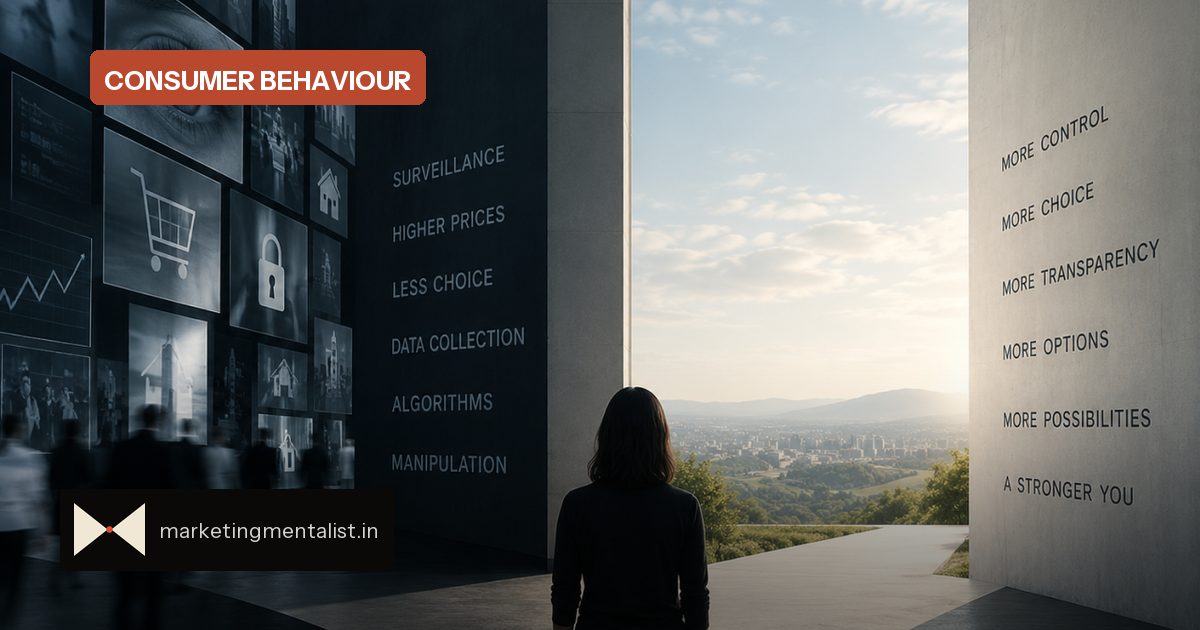
It is tempting to read today’s consumer mood as ordinary price sensitivity or digital fatigue. But a recent Branding Strategy Insider essay by Walker Smith points to something deeper: a broad feeling that personal agency has slipped away.
That loss of control shows up in AI anxiety, privacy fatigue, and the quiet creep of pricing systems that seem to know exactly what a buyer can pay before they do.
The real problem is agency, not just affordability
Inflation is part of the story. Unlike unemployment, inflation hits nearly everyone and erodes value beyond wages. It shortens planning horizons and distorts how people allocate money. When cheaper alternatives vanish—especially in housing and health care—consumers cannot simply trade down to protect themselves.
Surveillance pricing makes this worse. Predictive models can limit the options a shopper sees, making it harder to compare offers or negotiate. Calls for regulation are growing, but if the slow policy response to AI and privacy is any guide, consumers may not get much relief soon.
Consumers are using new tools to reclaim control
The source notes that people are not passive. Some are turning to GLP-1 medications partly because they restore a feeling of power over cravings and habits. Many are also using AI as a personal research assistant: to compare prices, evaluate health options, find alternatives, and even get mental well-being support outside traditional institutions.
This is the crucial shift. The same technology that can feel threatening at a macro level can feel empowering at an individual level—especially when it helps someone spot a better deal, understand a contract, or self-assess a health concern.
Hyper-vigilance is the new default
Expectations are up, patience is down, and scrutiny is constant. Consumers are auditing brands with more intensity. Yet the natural marketing reflex—trying to pull customers closer with more targeting and control—often backfires. It reads as another attempt to remove agency.
Brands that want to win will need to earn more while demanding less. That is difficult, but it is the central opportunity.
Try an agency audit
A useful way to apply this is to ask where your brand gives control back or takes it away. An agency audit looks at four touchpoints:
- Transparency: Do customers understand how your price or recommendation was made, or does it feel surveilled?
- Choice: Are you presenting real alternatives, or narrowing the set to protect margin?
- Self-direction: Does the brand help people learn and compare, or push them through a preset funnel?
- Recovery: When something goes wrong, can the customer fix it without begging for permission?
For example, a subscription app that lets users adjust data-sharing toggles is handing back agency; a checkout that hides the annual plan until the last step is quietly removing it. If a consumer using an AI assistant can find a better option in seconds, your brand has already lost the comparison. Returning agency is not just a trust exercise—it is becoming a competitive defence.
Source: Branding Strategy Insider