
Cheerios fixes stale cereal for 9 in 10 bag hackers
General Mills finally launched Cheerios with a Ziploc seal. Here's why the packaging fix is a masterclass in effort reduction and hero-SKU testing.
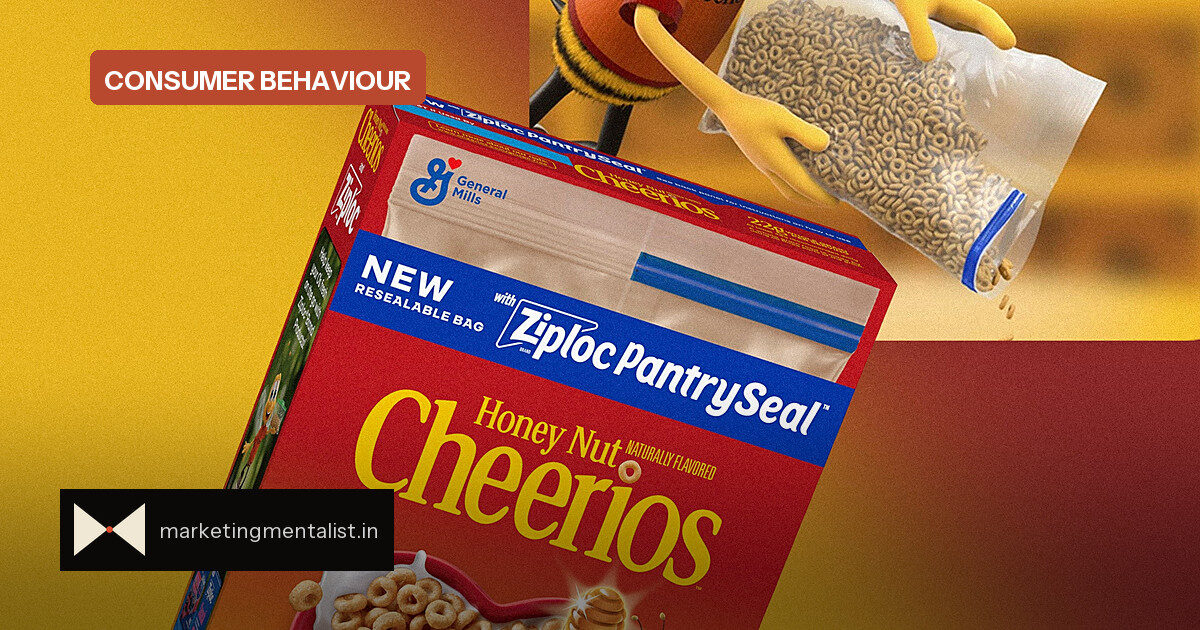
Cheerios has finally built a freshness solution straight into its bag. General Mills is launching Cheerios with Ziploc PantrySeal, a blue seal across the top of the bag that doubles as a pour spout. The specialty box is available only for Cheerios and Honey Nut Cheerios, exclusively at Walmart’s website, priced around $5 for a 14.4 oz box.
Why the fix took so long
The surprising part isn’t the feature itself. It’s the gap between obvious demand and shipping reality. General Mills says it receives hundreds of thousands of requests for resealable cereal bags every year. Its own market research shows nine in 10 cereal lovers already fold, roll or clip the bag, close the box, or transfer cereal to another container to preserve freshness.
That is the real insight: consumers were already engineering their own solution. The opportunity wasn’t to educate people about freshness. It was to remove a small daily friction and make it visible on the shelf.
- Workaround as signal: nine in 10 buyers already hack the bag, so the need is proven.
- Scale, not idea: Cheerios makes nearly one box every second, so the seal had to work at speed.
- Co-brand trust: Ziploc wraps a known freshness cue around an already trusted cereal brand.
“With nearly one box of Cheerios produced every second, we needed to develop a solution that could work reliably at scale while still delivering the simple intuitive experience our consumers were seeking,” Emilie Knox, General Mills vice president and business unit director for Cheerios, told Fast Company.
Malt-O-Meal did it in 1998
Cheerios is not creating a new category. Malt-O-Meal introduced zippers on its off-brand cereal bags in 1998, and its 2011 Bag the Box campaign pushed bagged cereal as less wasteful. The difference now is that Cheerios brings the feature to a mainstream, top-selling brand, with the production constraints that come at that scale. The bags are made at the company’s Buffalo facility, where Cheerios were first made in 1941, without disrupting the existing line.
A restrained rollout is the real story
General Mills has no plans yet to add the seal to other brands. “We’re always listening to what consumers want and need,” Knox said. The choice to launch two Cheerios variants, one retailer and one co-branded format makes the launch function like a live experiment.
Breakfast cereal sales have been shrinking generally, even as General Mills recently reported stronger cereal numbers thanks to smaller boxes at lower price points, protein cereals and collaborations. Adding a freshness cue gives shoppers a concrete, visible reason to choose Cheerios rather than the private label next to it.
For brand managers, the lesson isn’t just resealable packaging. It’s that the features customers already improvise are often the safest innovations to build next.
Source: Fast Company


