73% of Bharat Z trust family over ads before buying
MSL India and Youth Ki Awaaz surveyed 3,509 under-30s in Tier 2, 3 and 4 cities. Algorithms may drive discovery, but relationships still close the sale.
MSL India and Youth Ki Awaaz have released the second edition of their Bharat Z study, and the headline for marketers is as uncomfortable as it is useful: young India outside the metros still buys on trust, not just on feeds.
The report, called ‘Bharat Z Vibe Check’, surveyed 3,509 people under 30 in Tier 2, 3 and 4 cities through YKA’s WhatsApp-native polling platform Yoot. It follows the 2024 ‘Make Way for Bharat Z’ report and tracks how habits have shifted over two years.
Discovery is algorithmic, purchase is relational
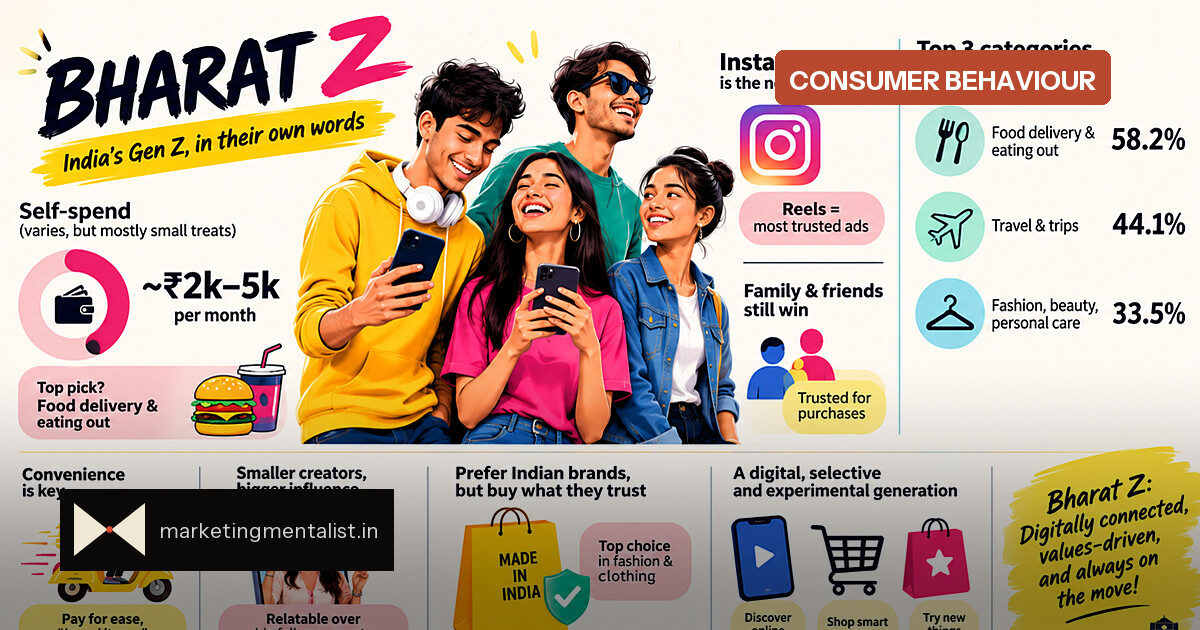
The finding that matters most: 73.1% of respondents trust family and close friends most before buying something new. Reviewers come a distant second at 49.1%, followed by small creators at 28.3% and big influencers at 28.0%. Celebrity endorsements barely register at 9.5%.
Yet the path to purchase often begins on a screen. 55.8% say they first hear about products they eventually buy through Instagram Reels, posts or creators. YouTube follows at 39.0%, e-commerce apps at 29.8% and online search at 23.2%. Traditional TV and print ads sit at just 5.4%.
So the funnel is split: Instagram and short video put the product in front of Bharat Z, but the decision is validated offline, in conversations with people they already trust.
What Bharat Z actually spends on
- 58% pick food delivery and eating out as a leading self-spend category; travel follows at 44.1%, fashion/beauty at 33.5%, and gadgets at 31.0%.
- 67.7% keep their monthly self-spending under ₹5,000.
- 84.5% use online payments regularly, and over 62% use quick-commerce apps at least weekly.
- 50.6% pay for OTT platforms, 31.9% for online learning and 31.2% for music streaming.
Small creators out-influence large lifestyle and tech creators: 48% say they consider a small creator they follow when making buying decisions, compared with 35.5% for large creators and 23.8% for celebrities.
Trust breaks on experience, not exposure
Brand familiarity is a real entry point. 49.0% say they try new brands because of long-term name familiarity, and 38.2% because a friend or family member recommended them. But trust is fragile. It breaks primarily on bad product experience (59.6%), greenwashing (35.7%) and poor customer service (32.8%).
There is also a scepticism gap: 54.8% trust Reels and short-video advertising when considering a purchase, but 18.6% say no ad format drives trust. Women show higher scepticism than men — over 25% versus 16.7%.
The practical takeaway is not to abandon performance marketing. It is to design it for referral and familiarity. If a brand is discovered on Reels but validated in a family group chat, the creatives and creator choices should make that second step easy: give small creators real product experience, surface user proof, and avoid claims that smell like greenwashing.
Source: Afaqs!