53% of adults are moving too little, ASICS finds
ASICS' Human Nature documentary reframes inactivity with a conservation-style metric—and positions 15 minutes of movement as the mental health fix.
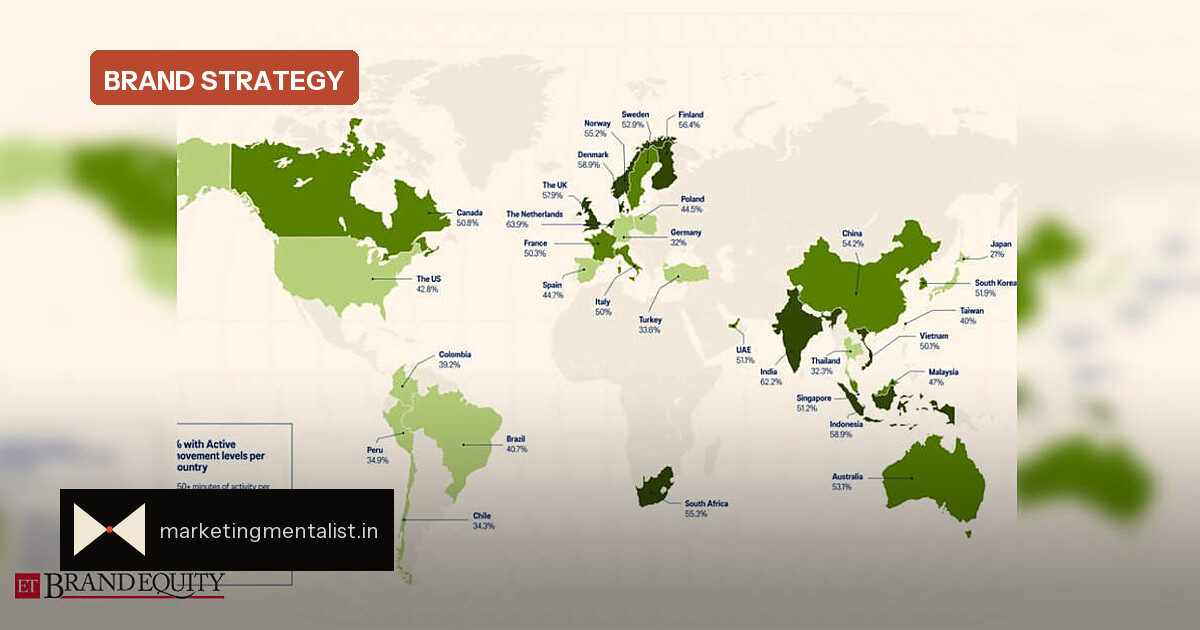
ASICS has launched a short documentary, Human Nature, narrated by Sigourney Weaver, to mark World Mental Health Day. The film does what a good brand documentary should: it wraps a global survey in a story. The finding at its centre is that 53 per cent of adults do not meet internationally recognised physical activity guidelines.
A conservation label for moving less
The survey, covering 34,000 people across 31 countries, introduces a “Movement Conservation Status” developed with experts. It sorts adults into Active, At Risk, or Endangered groups. Around 23 per cent fall into the Endangered bracket—moving fewer than 30 minutes a week. ASICS projects that by 2035, the combined At Risk and Endangered share could reach 56 per cent, or 2.3 billion adults across the surveyed nations.
ASICS India’s senior director of marketing, Saurabh Sharma, frames the shift simply. “Movement has always been a fundamental part of being human,” he says, before describing how modern life has made movement optional. Work, shopping, socialising and entertainment can now happen without leaving home.
Mental health puts a number on it
The data connects activity to mental wellbeing. Endangered adults score an average State of Mind of 60 out of 100, compared with 71 for Active adults. Sedentary respondents report feeling 23 per cent less energised, 20 per cent less composed, 17 per cent less focused and 16 per cent more stressed. Among 18-24-year-olds, 57 per cent fail to meet exercise standards, and 92 per cent cite consequences such as lower mood, heightened stress and impaired sleep.
Convenience is part of the pattern. 64 per cent of respondents say modern facilities make it easy to go an entire day barely moving, 41 per cent do daily errands digitally, and 41 per cent of 18-24-year-olds use AI tools for everyday tasks.
The brand move: make the unit tiny
Rather than ask people to become athletes, ASICS builds the remedy around its “15 Minutes to Thrive” initiative. The research cited by the brand holds that 15 minutes of activity gives a measurable uplift in mental health. That is the strategic stroke: it lowers the mental effort required to act, and gives the brand a simple, repeatable unit of change.
For marketers, the campaign is a lesson in framing:
- Borrow a familiar metaphor—”conservation status”—to make a slow, invisible shift feel urgent.
- Put the small action before the big product; 15 minutes lowers the barrier to entry.
- Anchor the message to a cultural moment, World Mental Health Day, without making the product the hero.
ASICS is not selling movement as exercise performance. It is selling movement as mental health preservation—and packaging it in a category people already understand. That reframe is what gives the documentary its marketing power.
Source: ETBrandEquity.com