
Stayfree Hands Boys the Period Conversation
Stayfree's Daughter's Day film puts a boy at the centre of a period conversation. Here's the peer-influence psychology behind normalising a taboo category.
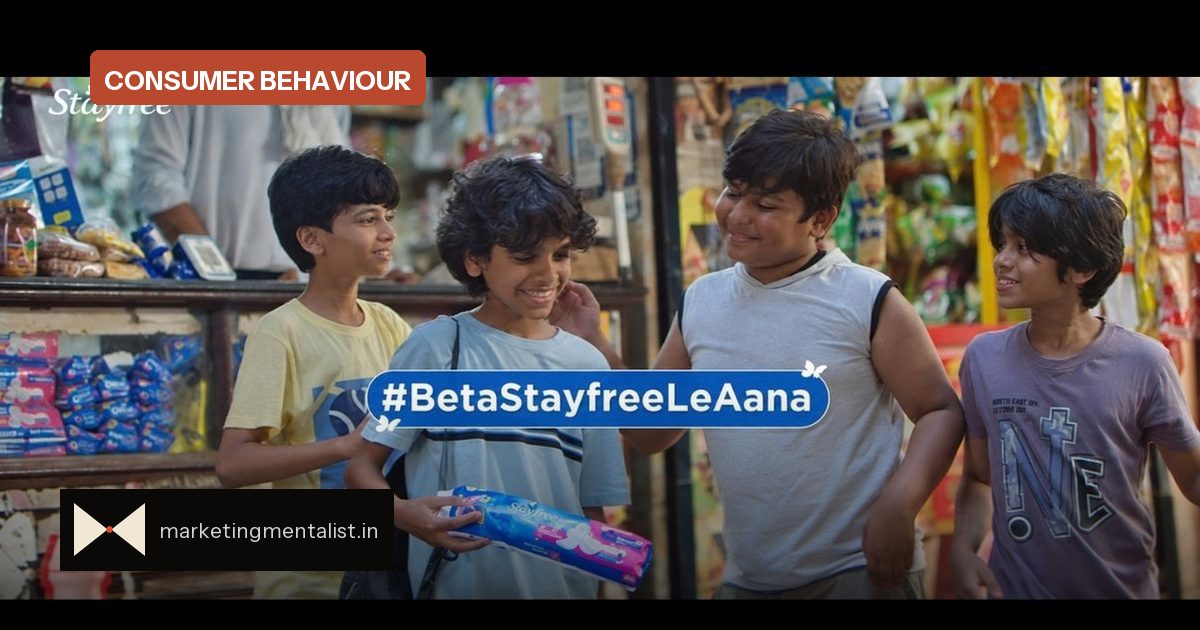
Stayfree’s latest Daughter’s Day digital film, created by Team WPP, opens with a gully cricket game being interrupted. A mother asks her son Rohan to buy a pack of Stayfree. His friends react with discomfort and tease him, but Rohan doesn’t flinch. Having grown up in a home where periods are discussed openly, he answers their myths matter-of-factly. By the final scene, the same friends are asking a shopkeeper for a pack of Stayfree.
The film is part of the brand’s ongoing #BetaStayfreeLeAana push and its ‘It’s Just a Period’ platform, which has been running for more than five years. It will air across YouTube, Instagram, Facebook and major OTT platforms.
Why the brand is selling to boys
Stayfree’s logic is social rather than clinical. It is not only selling a product to girls; it is trying to change the audience around girls. Supriya Srinivasa, marketing director, Stayfree, described the goal as a two-sided job: supporting girls while helping boys understand that periods are “completely natural and not a taboo.”
Sukesh Nayak of Team WPP put the mechanism plainly: peer influence can teach shame, so it can also teach empathy.
The psychology: proof from the peer group
For marketers, the film is a case study in using social proof to reframe a stigmatised category. Three moves stand out:
- Make the non-user the carrier. The protagonist is not the person who menstruates but the person who shops for her. That changes who is allowed to talk about the product.
- Put the discomfort on screen. The friends voice the exact taboos the brand wants to dissolve, mirroring the audience’s resistance before it is answered.
- Resolve through imitation, not argument. The boys don’t change because Rohan lectures them; they change because his calm normalcy gives them a script to copy.
That last move matters. When a taboo category tries to enter everyday conversation, an instruction (“talk about it”) is weaker than a demonstration (“here is someone talking about it—and nothing bad happens”).
What brand managers can borrow
If you are marketing a product tied to shame, the target consumer may be only half the market. The people whose reactions make the consumer embarrassed—partners, parents, peers—are often the more valuable persuasion target.
A brand can shift a norm by making the behaviour visible, low-stakes and social. In this film, the act is deliberately small: a son buying a pack for his mother. The campaign does not ask for advocacy, only for a routine errand done without flinching. Small acts are easier to imitate, which is exactly why they spread.
Source: Afaqs!