
K-dramas hit 107.8M monthly viewers—and brands go Korean
Ormax data shows 107.8 million Indians now watch K-dramas monthly, up 48% from 2025. Zepto, McDonald's and Netflix are betting on the K-wave.
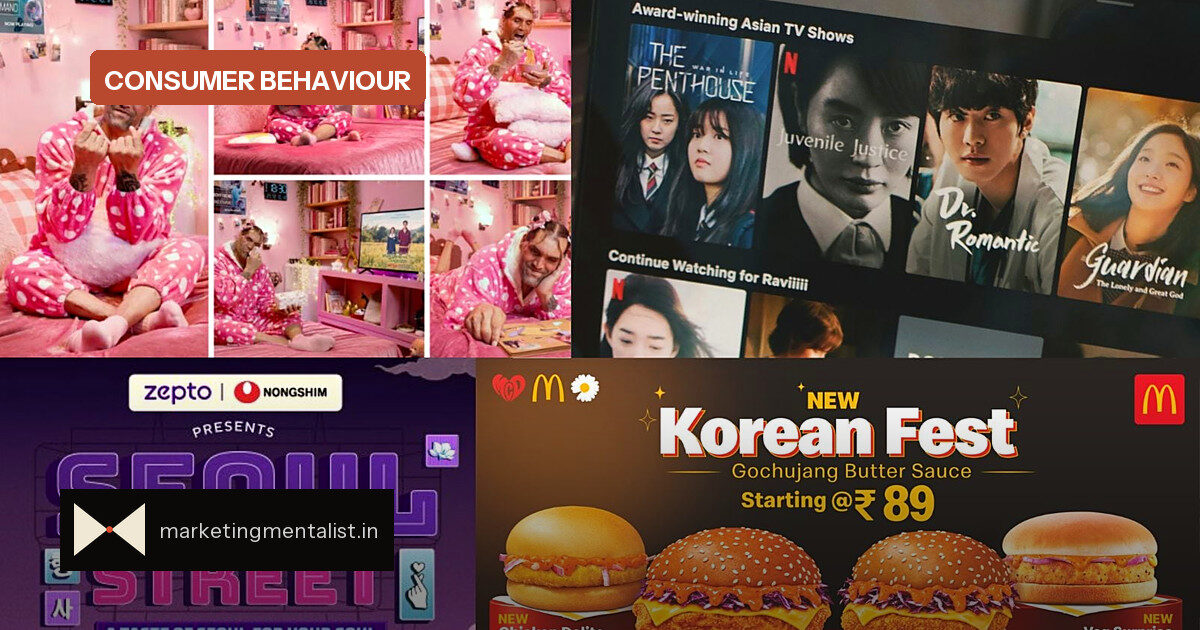
For years, aspiration in Indian advertising often came wrapped in a Western accent. Ormax’s latest numbers suggest the script is now being written in Korean. According to Ormax, 107.8 million Indians watch at least one K-drama every month, up from 72.9 million in 2025. That is a 48% jump in a single year.
The audience is much wider than the premium streaming stereotype. 58% of K-drama viewers in India are on AVOD, or ad-supported video, rather than paid subscriptions. 45% are connected TV viewers. Women make up 60% of the overall K-drama audience—the highest female share among the formats Ormax tracks. The format is also climbing the charts: in 2026 so far, eight K-dramas across Netflix, Amazon MX Player, Amazon Prime Video and JioHotstar have appeared in Ormax StreamView’s weekly top 50 most-watched properties on OTT in India.
From screen to shelf in minutes
Korean content does not stay on the screen. Ritika Taneja, Senior Vice President for E-commerce at WPP Media, points out that a consumer might spot Korean food in a drama and then find ramen on a 10-minute delivery platform. Quick commerce collapses the gap between cultural discovery and purchase.
Zepto’s search data makes that demand visible. The platform recorded more than 4.6 lakh ramen searches and over 1 lakh Korean noodle searches—signals that shaped Seoul Street, an invite-only immersive event in Delhi that recreated a Korean street with food, music and fandom.
Chandan Mendiratta, Chief Brand Officer at Zepto, described the approach as “culture hacking”: identifying what people already love and creating new ways for them to experience it. The marketer’s lesson is that a transaction is not just a sale; it can be an early demand signal before a brand commits to wider distribution.
Mass brands go Korean deliberately
McDonald’s India North & East has launched its Asia Chicken Campaign in partnership with G-Dragon. The centrepiece is Gochujang Butter Sauce, a Korean-inspired flavour from McDonald’s Korea, built on fermented sauces known as jangs. Sushmita Kashyap, Director of Integrated Marketing, Corporate Communications and Strategy at McDonald’s India, says Gen Z accounts for 45% of quick service restaurant consumption. The Korean range is designed to meet that cohort at different price points. “Korean is layered,” she said. “People can choose what fits with respect to taste and also the pricing.”
Netflix, by contrast, went for comedy. Its Indian team featured The Great Khali in a pink polka-dot onesie and a bow, doing the Korean finger heart and crying into ramen while watching When Life Gives You Tangerines. The joke works precisely because the audience already has the cultural reference.
Why this wave is different
None of this happened by accident. Researchers point to South Korea’s late-1990s policy shift, when cultural industries began to be treated as strategic contributors to economic growth. Korean drama exports reached US$167 million in 2013, four times the value a decade earlier, and licences spread far beyond Asia. India is now experiencing the downstream effect of a strategy that was years in the making.
What the data tells marketers
- 107.8 million monthly viewers—Korean content is a mass media habit, not a niche fandom.
- 58% AVOD viewership—the reach includes ad-funded audiences, not only premium subscribers.
- 60% female skew—a valuable audience base many categories still under-serve.
- 4.6 lakh ramen searches on Zepto—culture is visibly turning into commerce.
Treat it as a shift, not a hashtag
The common pattern across these campaigns is the same: entertainment builds the fanbase, commerce captures the first sale, and mass brands scale the taste. That means relevance is no longer only about adopting Western cues. The K-wave offers a broad female base, ad-supported viewership and fast-growing monthly numbers.
Brands that treat Korean culture as a sustained consumption shift—not a one-off campaign theme—are better placed to test demand early and scale distribution where attention is already moving.
Source: Storyboard18


