100,000+ Sales Show Heritage Is Europe’s EV Weapon
Renault's retro-styled 5 E-Tech has passed 100,000 European sales as Citroën revives the 2CV. Why heritage design is becoming a real EV moat.
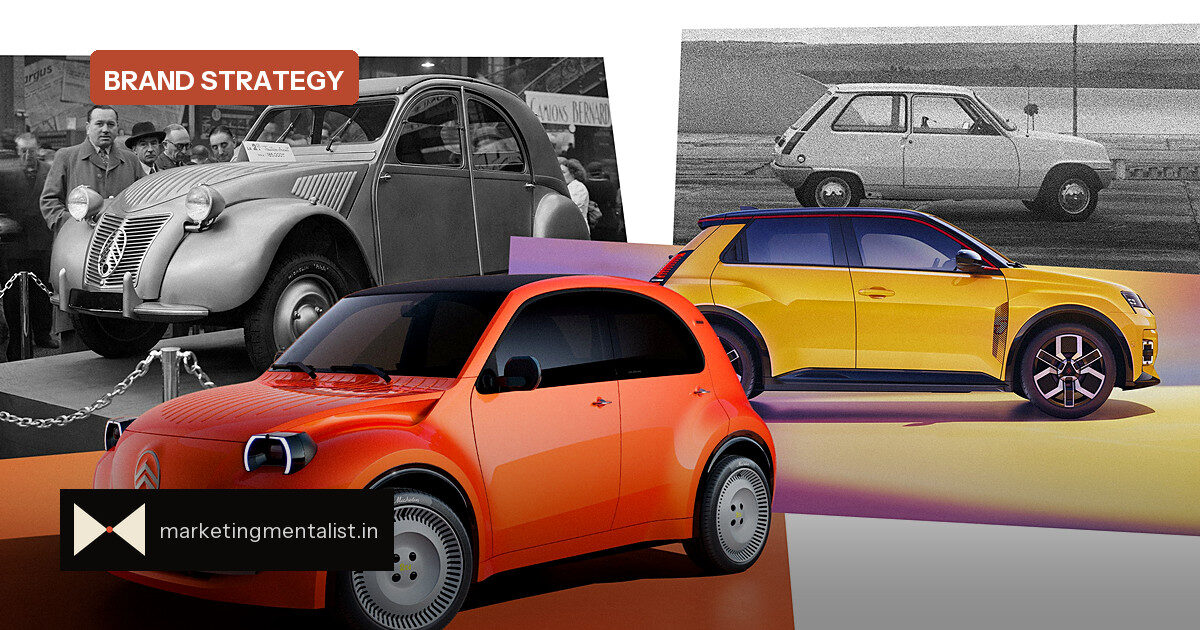
Chinese EV makers can outspend on batteries and undercut on price. What they cannot yet buy is a 50-year-old silhouette that already lives in a customer’s memory. At the Paris Motor Show, Renault and Citroën showed they intend to use that heritage as a competitive weapon.
Citroën unveiled an electric 2CV concept and a small delivery van. Renault displayed a reborn R8 Gordini and an E-Space concept next to the retro R5, R4 and Twingo models it already sells. The strategy is not just a show-stand flourish.
The Renault 5 E-Tech, a battery-powered remake of the 1972 hatchback, was Europe’s best-selling small electric car in the first half of 2026. According to the French magazine Auto Plus, Renault sold more than 100,000 across Europe in 2025. Its sibling, the Renault 4 E-Tech, has just been updated with up to 258 miles of range on Europe’s official test cycle, plus a cheaper trim before the end of the year. The Twingo E-Tech, which channels the cheerful 1992 city car, starts at €19,490.
- Renault 5 E-Tech: from €24,990 in France; Europe’s best-selling small EV in H1 2026.
- Renault 4 E-Tech: up to 258 miles of range; a lower-priced trim due before year-end.
- Twingo E-Tech: starts at €19,490, making retro design an entry-level offer.
Why does this matter for marketers outside the car industry? Because heritage is a memory shortcut. Buyers do not need to learn a new story; they only need to recognise one they already trust.
The psychology of a familiar shape
Nostalgia works on a simple bias: people remember the emotional high points of a past era and filter out the ordinary parts. A familiar design lets a brand borrow that warm residue. Adrian Clarke, a car designer turned critic, frames it as a difference newer rivals cannot copy: “Heritage and brand DNA become a key differentiator.” New entrants such as Tesla, Rivian and Chinese EV brands can match acceleration and range, he argued, but not the accumulated emotional appeal of a legacy nameplate.
Renault’s design chief Alexandre Malval adds a caveat that separates smart branding from lazy retro. The goal, he says, is “not to reproduce cars from the past out of nostalgia, but to reinvent them so they are perfectly suited to our times.”
Reinvent, don’t resurrect
That rule is the useful takeaway. The value is not in copying an old badge; it is in updating a design language so it feels contemporary while remaining instantly recognisable. For brand managers, that means reviving familiar assets—packaging, logos, product shapes—only when they can be remade for how people live now.
Heritage can lower perceived risk and create an emotional tug. But it becomes a costume when the product underneath does not deliver. Renault’s early numbers suggest that legacy design, handled with care, is more than sentiment: it is a positioning moat.
Source: Fast Company