Royal Enfield Icons Never Retire: the psychology of legacy
Royal Enfield's Icons Never Retire uses nostalgia, status and legacy cues to sell the Bullet 350. Here's the behavioural science behind the campaign.
The ad in one paragraph
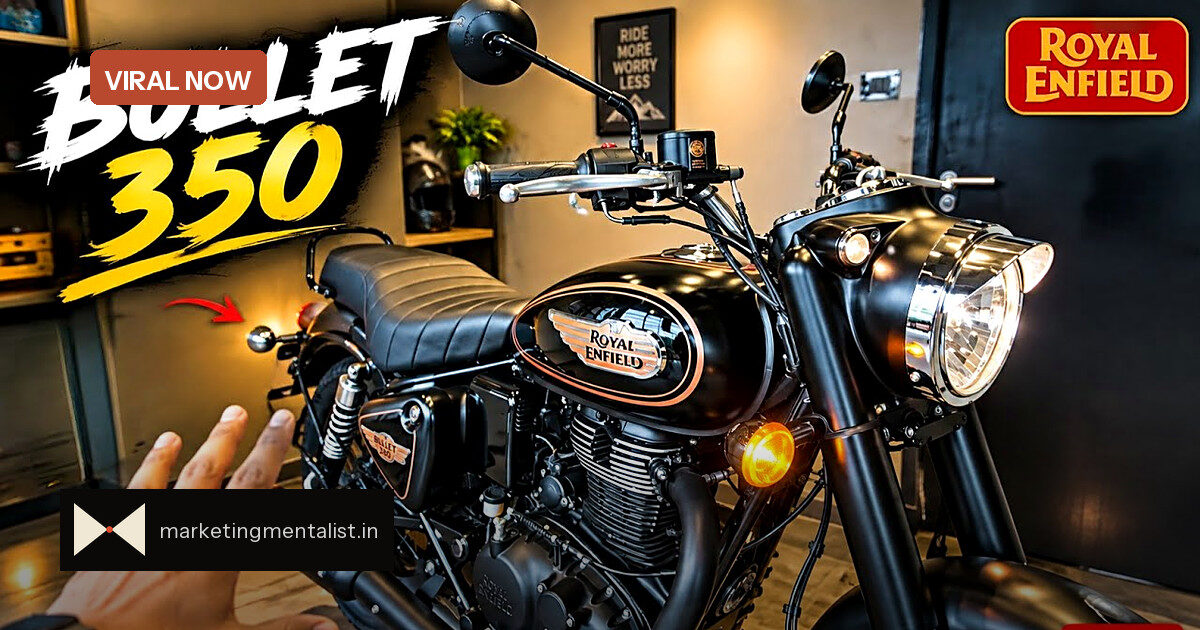
Royal Enfield’s 2026 campaign, “Icons Never Retire,” is built around the Bullet 350 and aimed at riders and brand loyalists rather than first-time spec shoppers. The film tells a nostalgic tale of a motorcycle legend still ruling the road, and it refuses to out-fresh the competition. It treats the machine’s age as the point. Royal Enfield is selling continuity, not a new model, and the hero is the relationship between a rider and a bike that won’t become a memory.
The levers it pulls
The film works because it hits three behavioural levers at once.
- Nostalgia bias: we trust what has lasted. The Bullet’s long silhouette and longer history make the past feel safer and more valuable than a new feature list.
- Social identity: a Bullet isn’t chosen for top speed; it’s chosen because it means “we” to a tribe. The ad frames ownership as belonging, not transport.
- Legacy effect: “Icons Never Retire” turns the bike into an heirloom. When a product is framed as permanent, its age raises perceived value instead of dating it.
The law holds beyond motorcycles. In 2026, Messi and Ronaldo still pull USD 70 million and USD 65 million off-field, with lifetime deals and Instagram followings of 517 million and 680 million. Their value doesn’t shrink as their playing days wind down—it compounds with access and imagery. Royal Enfield taps the same current: the longer the icon stays on the road, the more it is worth.
What it does for the brand
It turns the Bullet’s age into a moat. Competitors can copy a look, but they cannot copy a legend that has already been lived. The campaign also moves the conversation away from specs and towards meaning, which protects pricing power and deepens loyalty among riders who already feel the Bullet belongs to them. Royal Enfield becomes less a manufacturer and more a custodian of a shared identity. The nostalgia is not a soft rearview glance; it is a pricing strategy.
What to borrow for your next campaign
You don’t need a century of history to use this playbook. Sell the long game, not the launch. Make the product feel like a continuation of something the customer already values. Use understatement as a premium cue—ordinary machine, big deeds—and let the tagline carry the promise. As TCM Sports founder Lokesh Sharma notes about icons, people relate more to those who look ordinary but do big things. If your brand is not flashy by nature, don’t force it. Consistency and relatability can be the sharper positioning. The result is that your product stops competing on features and starts competing on story.
Watch the original: Royal Enfield on YouTube
Source: ETBrandEquity.com