Merino’s 250+ studios reframe the laminate sample problem
Merino's campaign compares tiny laminate samples to buying a saree or necklace unseen, and uses 250+ Studio Merino outlets to show designs at full size.
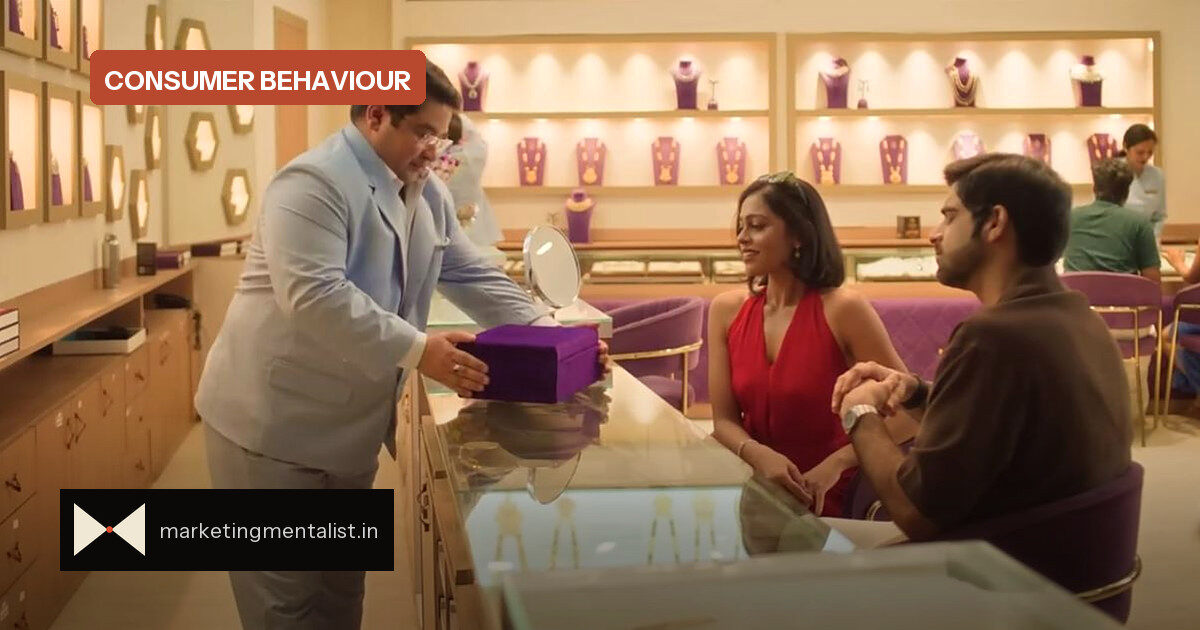
Merino Laminates has rolled out a pan-India campaign for Studio Merino that takes aim at a common purchase anxiety: the distance between liking a small laminate swatch and knowing how the pattern will actually read across a full wardrobe or kitchen. Created by WillBe Done, the campaign uses an everyday comparison. Consumers would hesitate to buy a saree or necklace after seeing only a tiny piece, so why do they select the surfaces of a home that way?
The answer, Merino suggests, is a visit to one of its Studio Merino outlets, where shortlisted designs can be viewed at full size before a decision is made. The films are running across OTT, social media and other digital platforms.
The gap between liking and knowing
Parveen Gupta, chief marketing officer at Merino Industries, frames the issue as an imagination problem. “Choosing a laminate is also about imagining how it will shape a room,” he said. A buyer can shortlist a design and remain unsure how it will look across a wardrobe or kitchen.
That uncertainty has a cognitive cost. When people cannot mentally simulate an outcome, they delay, downsize the decision or default to whatever feels safest. Studio Merino’s pitch is to turn an abstract visualisation into a concrete in-store experience.
Why a small sample misleads
The campaign leans on a simple perceptual truth: pattern, scale and repetition behave differently on a full surface. A compact swatch can hide how a motif clusters, how a woodgrain repeats, or how strong a high-contrast design becomes when it covers a large wall of cabinetry.
- Small formats suppress the pattern rhythm that appears at room scale.
- Colour temperature shifts under the lighting of a real space.
- Texture and finish are almost impossible to judge from a catalogue image.
This is a classic simulation gap. The brain treats the sample as a snapshot of the whole, but it is not a scaled preview; it is an incomplete data point wearing the costume of a complete one.
The saree-and-necklace logic
Tanul Bhartiya, founder of WillBe Done, said the team kept one thought at the centre: “a small glimpse never gives you the full picture.” The comparison is deliberately familiar, so it makes the laminate-buying ritual feel strange enough to question.
For marketers, the mechanism is worth noting. WillBe Done built the idea for digital-first attention, shaping the films for the scroll from the opening line rather than adapting a long format later. The message is not that Merino sells better laminates, Bhartiya noted, but that it is asking people to buy differently.
What brand managers can use
The broader lesson is to identify where customers are forced to make a high-consideration choice with low-fidelity information. If you can close that gap physically, you have a reason to bring people into retail rather than fight purely on price.
- Audit your purchase journey for moments where a partial view stands in for the full product.
- Design a showroom or demo step that lets buyers verify the thing they fear most.
- Anchor the message in an everyday category where the same incomplete view would be absurd, as Merino does with sarees and necklaces.
Merino is not arguing that samples are useless; it is arguing that samples alone are not confidence. For a category that goes on large, expensive, hard-to-reverse surfaces, the right store visit can be the real conversion tool.
Source: Afaqs!