MorningStar Farms sells 52 years of heritage as fake meat stalls
MorningStar Farms' retro rebrand leans on 52 years of heritage while fake meat turns political and rivals slide. Here's why longevity works.
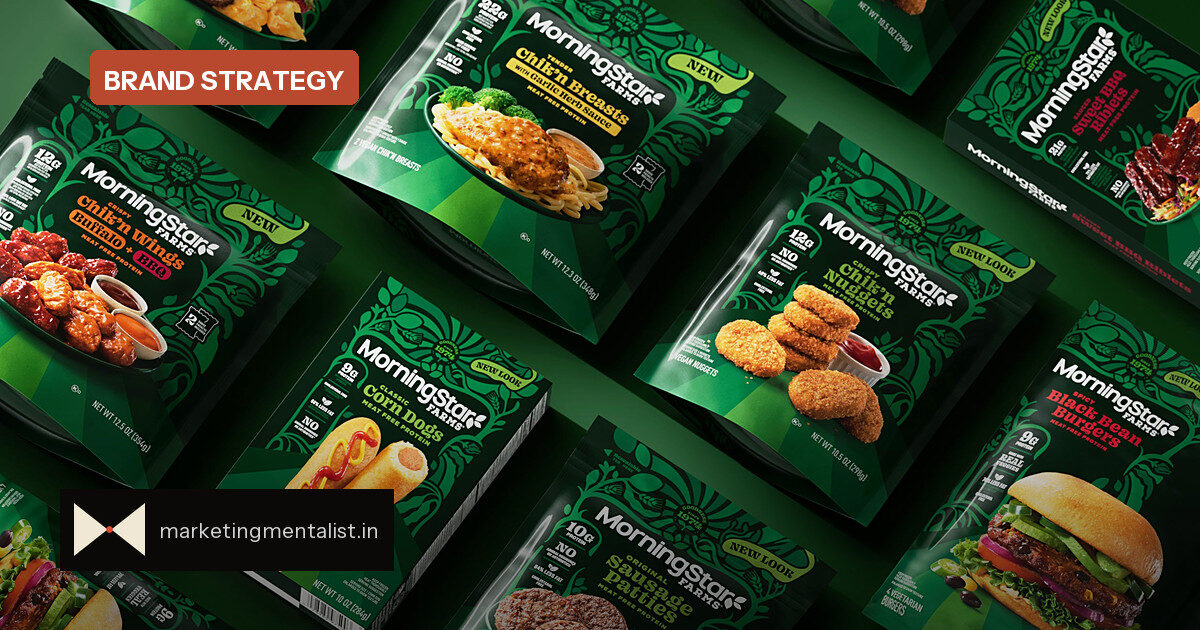
Plant-based meat may be out of fashion with investors and culture warriors, but MorningStar Farms is betting that its age is the message.
The Kellanova-owned brand, founded in 1974, has been selling meat alternatives since before “plant-based” was a grocery category. This month it’s rolling out a rebrand with Design Bridge and Partners: new typography, a vibrant green palette and a deliberately retro look that nods to its long shelf life.
When the category turned into a fight
The context is ugly for fake meat. Beyond Meat’s stock touched a high of $234 in 2019; it now sits around $8, an 88% year-over-year fall, and revenue at the company dropped 19.7% in 2025. The McDonald’s McPlant has stalled, Eleven Madison Park put meat back on its menu at the end of last year, and vegan chicken startup Nowadays is gone.
At the Semafor World Economy summit in 2025, Impossible Foods CEO Peter McGuinness said plant-based meat was “not in vogue right now.” That is the polite version: meat alternatives have become a political symbol as much as a food choice.
MorningStar’s counter-position: permanence
The new identity doesn’t take a side in the fake-meat culture war. Instead, it leans on 52 years in business to make a simpler argument: plant-based alternatives have been around for decades, and they don’t have to feel unfamiliar or threatening.
In positioning terms, this is heritage as a trust shortcut. A retro look can signal continuity and familiarity in a category that suddenly feels unstable. It reframes plant-based food from “novel experiment” to “established choice.”
- Use a long operating history to make the product feel normal, not new.
- Let design cues such as retro typography and familiar color carry the continuity message.
- When a category becomes political, shift the argument from ideology to endurance.
What marketers can borrow
MorningStar’s move is not just a fresh coat of green. It is a reminder that in a noisy, polarised market, longevity can be a differentiator. The brand is not marketing a new invention; it is marketing the fact that it was never a fad.
The challenge is whether a retro rebrand can win back shoppers who have drifted away, or bring in younger buyers who never had MorningStar in their freezer. But for any legacy brand facing a category in chaos, the lesson is clear: when everyone else is fighting over what the product means, it may be smarter to sell how long you have lasted.
Source: Fast Company