Why Havas Is Betting on Luxury Experience Design in India
Havas India, Shortcut and Shobiz have launched a luxury experiential agency in Mumbai. Here's the consumer psychology behind the bet on experience over advertising.
India’s luxury market has a peculiar problem: the money has arrived faster than the meaning. Buyers can afford the handbag, the watch, the coupe — but the cultural scaffolding that makes those purchases feel earned in Europe is still being built here. That gap is exactly where the newest agency launch in Mumbai is pitching its tent.
What happened
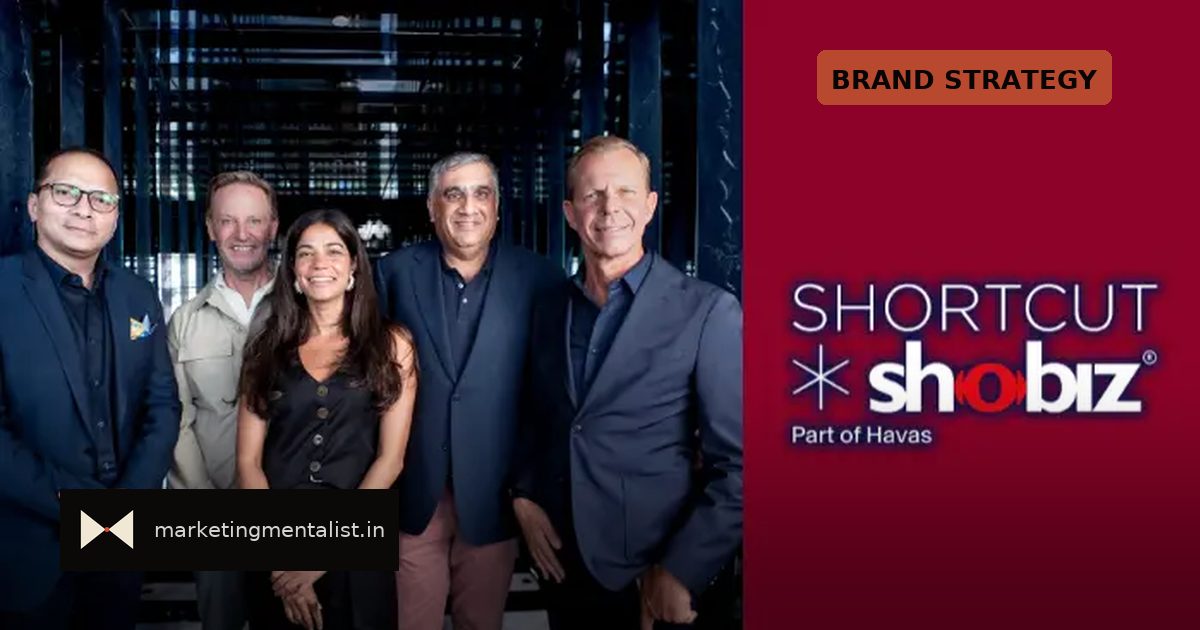
Havas India, in partnership with French agency Shortcut and Indian experiential firm Shobiz, has launched Shortcut Shobiz India. The Mumbai-based entity will design and produce experiences and events for luxury, beauty, fragrance and lifestyle brands, plus brandhouses, institutions and organisations.
It will be led by Farah Lauren Khan, Vice President at Shortcut Shobiz India, who reports to Sameer Tobaccowala, CEO at Shobiz. Khan brings more than 15 years in experiential marketing and brand strategy, with work for names including Apple, Bvlgari, Cartier, Dior, Ferrari, Gucci, Hermès, Rolex, Rolls-Royce and W Hotels.
The venture is the 26th expertise inside the One Havas ecosystem in India, according to Rana Barua, Group CEO at Havas India, SEA & North Asia. Barua noted that of the 1,000+ clients in Havas India’s portfolio, a significant number are already luxury and lifestyle partners — and many others want to move into the category. The launch also follows Shortcut’s recent expansion into Milan; the French agency marked 30 years in July 2026.
The number driving the bet
India’s luxury market is valued at roughly $10 billion to $12.1 billion, per the McKinsey and Business of Fashion State of Fashion Report 2025. That is small against global luxury — but it is the trajectory, not the base, that agencies are pricing in.
Shortcut co-founder Christophe Pinguet framed the venture as combining “French savoir-faire” with India’s creative talent. Co-founder Lionel Laval described it as a creative partnership built on trust and complementary expertise. Tobaccowala put the strategic logic more plainly: Indian experiential work has moved from delivering events to creating moments that shape how people connect with brands.
Why experience is the right lever for luxury
For our readers, the interesting part isn’t the org chart. It’s the implicit bet: that luxury in India will be won through experience design rather than reach. There is solid psychology behind that.
- Costly signalling. Luxury value depends on effort being visible. A flawless, hard-to-replicate event signals investment in a way a media buy cannot.
- Scarcity and access. Invitation-only experiences convert product into privilege. Exclusion is the product feature.
- Peak-end memory. People remember the emotional peak and the ending of an experience, not its duration — which is why craft in the last ten minutes of an event outperforms a bigger guest list.
- Embodied cognition. Touching, smelling and moving through a brand world builds stronger associative memory than viewing it. Fragrance and beauty depend on this almost entirely.
- Social proof at the top. Luxury cascades downward. Convince 200 culturally influential people and you have primed 200,000 aspirants.
What marketers should take from this
First, if you are a premium brand in India, your competitive set is no longer other brands — it is other experiences competing for the same discretionary evening. Benchmark against hospitality and live events, not category rivals.
Second, note the structure of the deal. Global conceptual heritage plus local production capability plus network integration. That is a useful diagnostic for your own partner stack: who owns the idea, who owns the craft, who owns the room? Luxury execution fails at the seams between those three.
Third, resist the temptation to translate. India’s luxury consumer is not a European consumer with a later start date. Occasion, family, festival and gifting logic reshape what “exclusive” even means here. The brands that win will localise the ritual, not just the guest list.
The broader signal is that holding companies now see experiential as a margin business rather than an activation line item. When a network adds a 26th specialism, it is telling you where it thinks pricing power lives.
Source: MARKETECH APAC