Why Havas Is Betting on Luxury Experiences in India
Havas India has launched Shortcut Shobiz India with Paris-based Shortcut. Here's the consumer psychology behind why luxury brands are buying moments, not media.
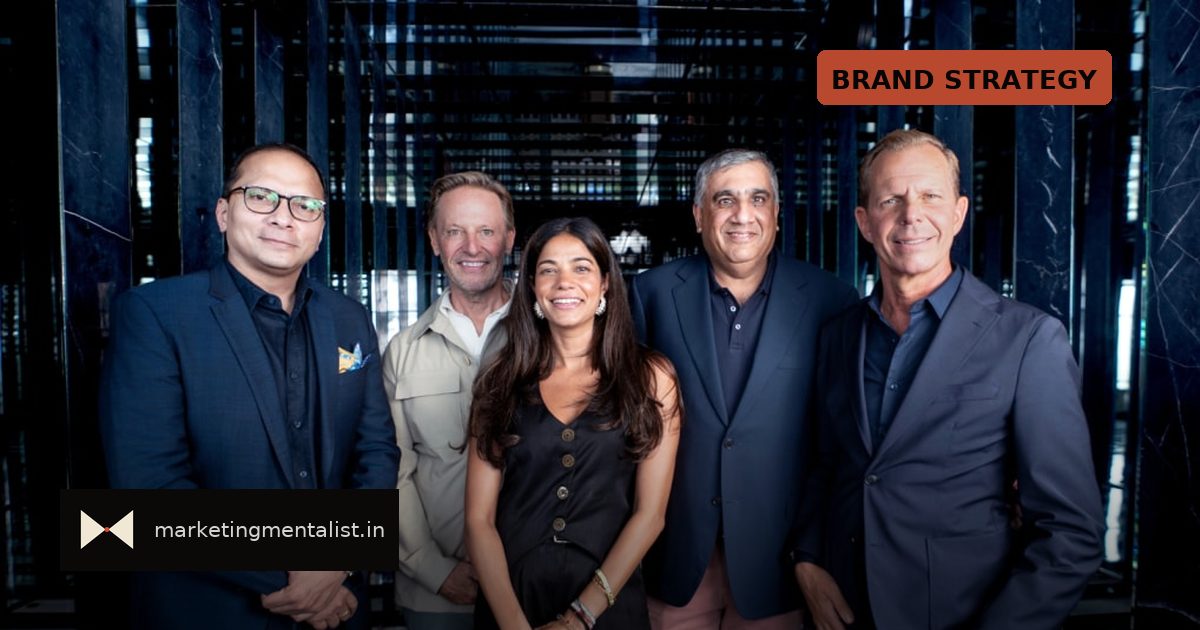
Havas India has launched Shortcut Shobiz India, a new experiential agency built for luxury and lifestyle brands, in partnership with Paris-headquartered Shortcut and Havas India’s own experiential arm, Shobiz.
On paper it’s an agency launch. Underneath, it’s a bet on a specific piece of consumer psychology: that in premium categories, the experience is the product claim.
What was announced
- The venture marks Shortcut’s entry into India, following a recent expansion into Milan, and coincides with Shortcut’s 30th year of operations.
- Havas pegs the Indian luxury market at roughly $10 billion to $12.1 billion, citing the 2025 State of Fashion report by McKinsey and the Business of Fashion.
- Farah Lauren Khan joins as vice president, reporting to Sameer Tobaccowala, CEO of Shobiz. She brings over 15 years in experiential marketing and brand strategy, with past work spanning Apple, Bvlgari, Cartier, Christian Louboutin, Dior, Estée Lauder, Ferrari, Gucci, Hermès, Rolls-Royce, Rolex, Zara and W Hotels.
- Headquarters in Mumbai, with regional offices in Delhi, Bengaluru and Chennai.
- It is the 26th expertise added to the One Havas ecosystem in India, per Group CEO Rana Barua.
The positioning line is “Experiences Designed with Artistic Intelligence” — Shortcut’s French creative craft paired with Shobiz’s four-decade Indian production muscle. The remit covers brand experiences, product launches, exhibitions, corporate events, institutional ceremonies, creative strategy and content production.
Why luxury keeps buying rooms, not reach
Luxury has a measurement problem that mass brands don’t. A discount brand can prove value with a price tag. A luxury brand has to manufacture perceived value with almost no functional argument — a leather bag is a leather bag. Which is why the category leans so heavily on three psychological levers:
1. Effort justification. The harder something is to access — the invitation, the guest list, the travel — the more the mind inflates its worth afterwards. Scarcity of access does what advertising cannot.
2. Peak-end memory. Kahneman’s finding that we judge an experience by its most intense moment and its ending is the entire operating logic of a launch event. Nobody remembers the 90 minutes. They remember the reveal and the exit gift.
3. Costly signalling. A brand that spends visibly on craft signals that it can afford to. In luxury, extravagance is the message, not the overhead.
Tobaccowala framed the shift as an industry moving from delivering events to creating moments that shape how people connect with brands, adding that audiences in luxury now expect experiences that are “thoughtful, immersive, and deeply authentic.”
The India angle brand managers should notice
Barua noted that the partnership arrives at a moment when India’s luxury and lifestyle market is growing at unprecedented speed, and that Havas India already works with more than 1,000 clients — several of whom are looking to move into the premium category.
That last detail is the interesting one. This isn’t only about serving existing luxury houses. It’s about mainstream Indian brands trying to trade up. Premiumisation is the dominant growth story across Indian FMCG, auto, hospitality and D2C, and most brands attempting it discover the same wall: you cannot advertise your way into prestige. Prestige is inferred from behaviour, not claimed in a headline.
What to do with this
If you’re building a premium tier, borrow the logic rather than the budget:
- Design one peak. A single unforgettable moment beats a uniformly polished evening. Budget accordingly.
- Restrict access deliberately. Capacity limits are a positioning tool, not a logistics constraint.
- Make the artefact travel. The photograph, the object, the story guests retell — that’s the actual media buy.
- Localise without diluting. Shortcut co-president Christophe Pinguet described the ambition as experiences that are locally meaningful and internationally inspiring. That tension is the hard part for global brands in India.
Co-president Lionel Laval described the opportunity as building “a new generation of immersive experiences” for the market, targeting luxury, beauty, fragrance and lifestyle categories.
Translation for the rest of us: attention is cheap, memory is expensive, and luxury has always been in the memory business.
Source: Storyboard18