Loyalty Programs Are Getting Worse—Here’s the Psychology
Dunkin', Starbucks, McDonald's and others are quietly devaluing rewards. Here's why members stay, and what brand managers should learn.
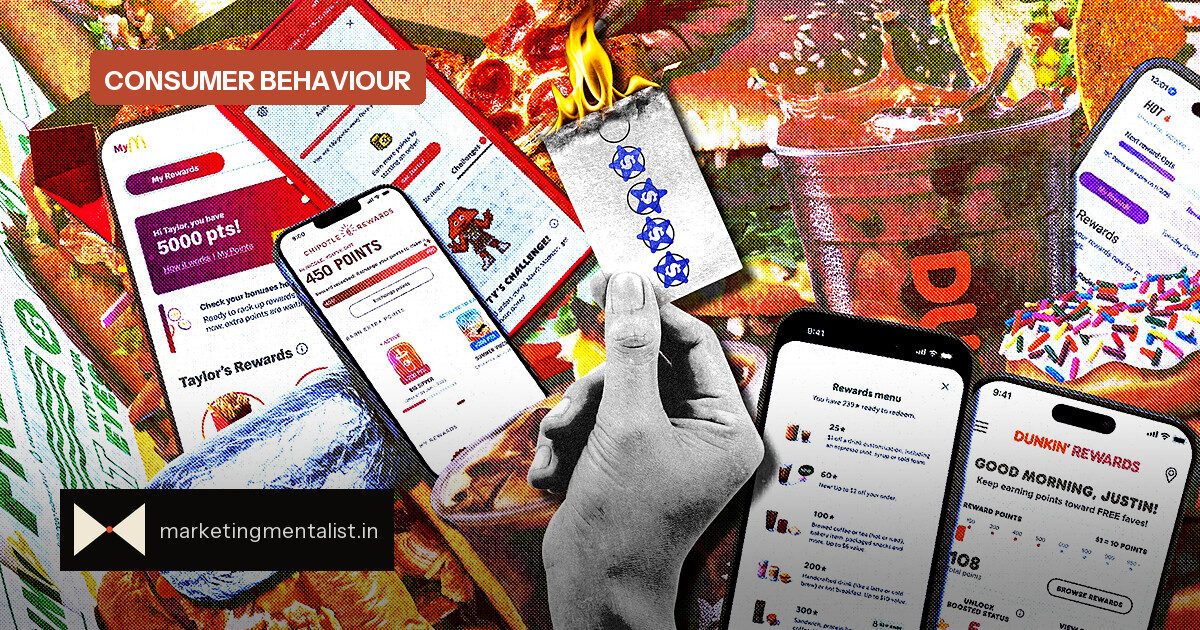
Aaron Braun had accumulated more than 93,000 Dunkin’ Rewards points over five years, largely because his employer’s company card covered his coffee and breakfast while he travelled for an IT firm. His plan was to let his teenagers use the stash as they started driving to school. Then Dunkin’ began cancelling points older than one year. When Braun opened the app last fall, around 63,800 points—roughly $250 in coffees—were gone. “My bar has been full forever,” he told Fast Company.
Braun is not a casual rewards user. He has held upper-tier status with JetBlue and Hilton, remembers carrying the physical Starbucks card, and tracks Hertz and Lowe’s programmes. That detail matters: even highly engaged members were caught off guard.
The quiet devaluation playbook
Dunkin’ is not alone. Across major chains, the fine print has been moving against the customer.
- Starbucks made it harder to earn Stars in the past year.
- Subway removed the free-footlong reward from its revived Sub Club and replaced it with Subway Cash.
- McDonald’s now requires 7,000 points, or $70 of spending, for a free Big Mac as of May.
- Panera put a hard cap on its supposedly Unlimited Sip Club in August, prompting prepaid annual members to swap tips online about forced-arbitration clauses.
Why members stay anyway
From a marketer’s view, this looks like risk-free cost cutting. But the psychology is more specific.
Loyalty programmes work on the goal-gradient effect: the closer a progress bar gets to a reward, the harder members push. Braun’s bar “has been full forever,” so he kept accumulating. That same effect makes a point cancellation feel like losing an earned asset, not a discount. Sunk cost and status quo bias then keep many members from leaving, which is why brands keep testing how far they can push.
What changed is the framing. A devaluation often arrives as a “simplification” or “more flexibility,” which softens the immediate reaction. But when the change hits a prepaid promise—as with Panera’s Unlimited Sip Club—members feel the contract itself was broken, and the backlash moves from app reviews to legal workarounds.
What brand managers should do
The lesson isn’t that loyalty programmes can never be adjusted. It’s that changes should be treated as a psychological event, not just a P&L line.
- Announce value changes before they hit accounts, with a clear reason.
- Offer a visible trade-off—a new benefit or status cue—so the cut feels like a swap, not a confiscation.
- Test with heavy users first; they are your most vocal and most valuable members.
- Never cap a benefit after taking a yearly prepayment; the legal and social backlash outweighs the saving.
Loyalty is a two-way promise. When brands quietly erode their side, they train members to hoard points, game the rules, or leave the first time a competitor offers a better deal.
Source: Fast Company