Snitch sold a sweatshirt in 15 minutes with zero logos
No mention, no logo: Samay Raina wore a Snitch sweatshirt on India’s Got Latent. It sold out in 15 minutes and searches jumped 4,000%.
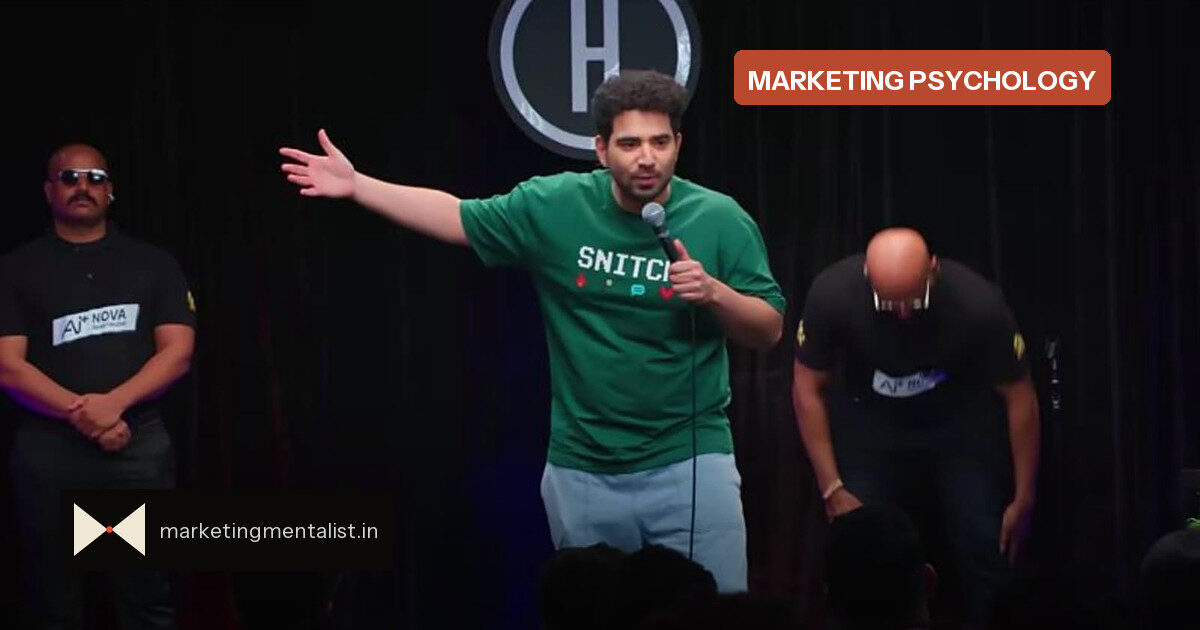
India’s Got Latent Season 2 gave brands a bigger stage: it returned on Netflix and Samay Raina’s YouTube channel, and sponsors such as AI+ Nova Smartphone, Flipkart Minutes and Avvatar bought visible slots. Snitch chose the opposite route.
The placement that didn’t announce itself
Viraj Seth, co-founder and CEO of Monk Entertainment, recalled on social media that Snitch co-founder Siddharth Dungarwal wanted to collaborate with Samay Raina. With sponsorship slots already booked, Seth proposed a different idea: Raina would simply wear Snitch T-shirts and sweatshirts during the show. No brand mention, no shoutout, no logo placement on the panel, no sponsor acknowledgement.
Dungarwal agreed. After episode 1, the sweatshirt Raina wore sold out within 15 minutes. Searches for “sweatshirt” jumped 4,000% — a strange spike for May, when much of India is in summer. The association extended beyond Raina through Balraj Ghai, known as the “Gentleman of the Internet”.
Why invisible beats interruptive
The psychology here is not “product placement” in the old sense. It is social proof delivered without a sales frame. When a creator wears an item as if it is their own choice, viewers process the product as part of that person’s identity. A logo or a verbal callout would switch on the mental filter people use for ads; silence leaves that filter off.
Marketers often talk about authenticity, but this case shows it is created by absence: no logo, no scripted mention, no sponsor stinger. The viewer fills in the story — “he just likes this sweatshirt”. That self-generated conclusion is more persuasive than a claim a brand makes about itself. Seth claimed the association generated 1.5 billion views and a 40% increase in website traffic.
- 15 minutes: time for the episode 1 sweatshirt to sell out.
- 4,000%: rise in searches for “sweatshirt” in May.
- 1.5 billion: views claimed from the association.
- 40%: claimed increase in website traffic.
What to borrow
For brand managers, the tactic is to find creators whose natural style already overlaps with the category, then place the product into real usage moments. The goal is identification, not interruption. If you have to force a mention to make the integration visible, the placement is probably not right.
The cost of attention
This reach did not come cheap. Snitch raised advertising spends by 30% to Rs 108 crore in FY26. Operating revenue rose to Rs 834.82 crore from Rs 498.19 crore in FY25. The same period brought a wider net loss of Rs 27.07 crore and negative operating cash flow. Invisible placement can create desire; cash and distribution still decide how far that desire travels.
The lesson: attention is a launchpad, not a business model.