Why Digital-First Brands Are Betting on Bigg Boss
Bigg Boss is pulling a new crop of digital-first advertisers. Here's why mass reach, in-show integrations and festive timing are luring them to TV.
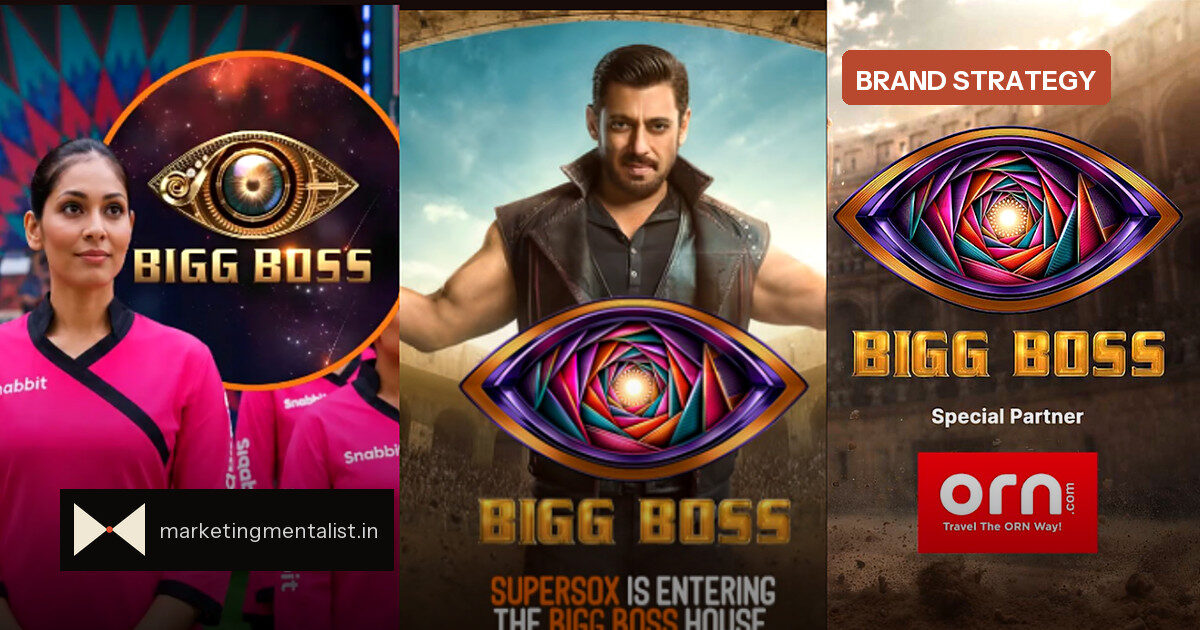
The new season of Bigg Boss is no longer just a stage for HUL, Britannia and Asian Paints. Alongside the familiar names, the franchise has picked up a wave of digital-first advertisers—Ai+ Nova, Snabbit, SuperSox and ORN.com among them—who are using the reality format for something beyond a one-off awareness spike.
It is a notable shift. JioStar reports that 70% of Hindi advertisers are first-time associations, while more than half of advertiser participation across the Southern editions is new. Local advertisers account for around 30% of spends in those markets.
It is not about cheap TV spots
Linear television is under pressure. TAM AdEx data shows TV ad volumes fell 7% from January to July 2026, and Dentsu expects TV’s share of the advertising market to slide from about 21% to 15% by 2027. So are digital-first brands simply getting a discount? Not really, say media planners.
Mimi Deb, COO at Madison Media, argues rates have not fallen enough to shift budgets that are not relevant. The pull is scale, reach and content appeal. Ashish Golwalkar, consultant–content strategy & media, puts it more directly: the TV-versus-digital distinction is no longer the point.
“I don’t think brands care anymore whether content is consumed on TV or digital. That distinction has blurred completely,” he says.
Viewership, he adds, has not declined—it has shifted to connected TV and mobile. The Broadcast Audience Research Council remains the regulated currency for linear ratings, but CTV measurement is fragmented. For brands, that fragmentation matters less than being present across the whole consumption journey.
Integration turns ads into narrative
The bigger draw may be how Bigg Boss lets brands become part of the show. Swiss Beauty owns the makeup inside the house, and Snabbit’s experts prep the house itself. That is cultural context, not a standard free commercial spot.
Deb says these new-age brands need to establish credibility with niche audiences, and integration “becomes part of their conversation, and the word multiplies.” JioStar’s pitch combines “mass reach, cross-platform penetration across TV, OTT and connected TV, deep integration opportunities” and a festive run.
Building memory before distribution
Snabbit currently operates only in cities such as Mumbai, Pune, Delhi, Gurugram, Hyderabad and Bengaluru, but the Hindi edition keeps the brand visible all season. The logic is to build recognition before market entry. SuperSox wants to move from a functional socks player to a pan-India lifestyle brand. ORN.com sees Bigg Boss 20 as sustained festive visibility to move beyond performance marketing and make European travel aspirational.
This is classic brand building: performance marketing drives action, but mass formats create the mental availability that makes future demand easier to convert—whether in new cities or on e-commerce platforms.
- Mass reach across TV, OTT and CTV, not just linear ratings.
- In-show integrations that embed products in the narrative.
- A festive window that overlaps high-intent purchase cycles.
- Awareness built in advance of physical market entry or category expansion.
For consumer brands, the Bigg Boss play is less about replacing digital and more about layering a cultural moment over performance marketing. If the format fits your product’s natural context, the association can work harder than the spot itself.
Source: Afaqs!