Trust, not shelf space, wins as mall F&B share hits 19%
Food retail leaders say shelf space is only the start: trust, premiumisation and channel-specific strategy decide whether a first buy becomes repeat.
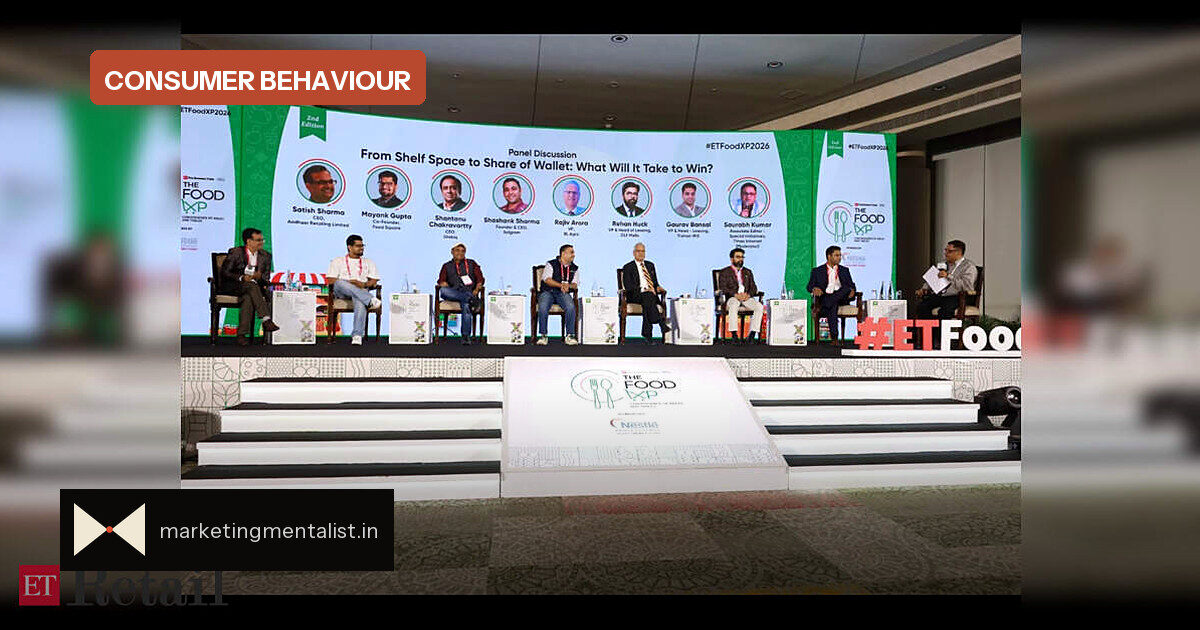
Landing on a retail shelf was once treated as the finish line for a food brand. At the second ET FoodXP 2026, a panel of grocery, gourmet retail, airport and mall leaders made the case that it is now just the starting block. Shoppers with more formats, prices and product choices are rewarding brands that build trust and relevance, not simply the ones easiest to spot.
Visibility is not preference
Industry leaders across food manufacturing, organised retail and commercial real estate agreed that product availability does not automatically turn into repeat purchase. Distribution and shelf placement create the chance to be seen; they do not create a reason to come back. The session framed the shift as moving from shelf space to share of wallet.
That distinction matters for marketers. Physical availability, being present where shoppers are, is not the same as mental availability, being the brand that comes to mind in the buying moment. A consumer can walk past a product ten times and still reach for the one they trust.
The trust and premiumisation shift
BL Agro’s Rajiv Arora said trust, relevance, quality, value and consistency are the real foundations of loyalty. Awareness from advertising or celebrity endorsements can help, but repeat purchase is driven by product quality. For established FMCG brands, that consistency becomes more important as consumers form expectations over multiple purchases.
Satish Sharma of Aadhaar Retailing and Food Square’s Mayank Gupta pushed back on the idea that premiumisation is only for affluent metros. Rural and small-town shoppers are increasingly willing to pay for reliability and quality, and exposure to travel, digital content and global food culture is creating demand for specialised products. Gupta cited surprise demand for truffle-infused maple syrup as one sign of that experimentation.
Different channels, same product standards
Globiq’s Shantanu Chakravartty argued that one national pricing and assortment plan cannot serve every environment. An airport shopper, a metro commuter and a student on a campus all make decisions under different time pressure and spending expectations. Brands need tailored pack sizes, price points and placements for each channel.
But Satish Sharma warned that channel-specific strategy should not mean compromising core quality. Quick commerce, modern trade and neighbourhood stores have different purchase missions, yet consumers compare experiences. Lowering formulation standards for certain markets risks breaking the trust the brand depends on.
- Treat visibility as the entry point, not the outcome: use it to trigger trial, then convert trial into habit.
- Localise assortment and pricing by channel but keep the core product experience consistent.
- Do not assume value buyers are price-only buyers: smaller-town shoppers are also paying for trust and quality.
From shelf to habit
An audience question asked whether brands overestimate visibility and underestimate existing consumer habits. The panel’s answer, in effect, was that switching requires more than a shelf slot. Gupta described the path from visibility to sustained purchase as a combination of availability, discovery, sampling, right pack sizes and pricing, managed consistently. For new brands, the priority is first trial; for established brands, it is reinforcing habit and preventing attrition.
Malls are betting on food as an anchor
Rehan Huck of DLF Malls said food and beverage is becoming a bigger reason for consumers to visit and stay. In DLF’s planned mall developments, F&B space has climbed from about 8% to around 19%, and could rise toward 22 to 25%. This is the physical expression of the same insight: food is not just a product category; it is becoming the experience that drives retail traffic.
The takeaway for brand managers is clear: a distribution win without a trust win is a temporary win. Build mental availability, tailor the channel experience and protect product quality, then let shelf presence do its real job of converting attention into trial.
Source: ETRetail.com