89% want familiar protein formats—Quaker’s ₹10 ladoo bet
PepsiCo takes Quaker beyond breakfast with ₹10 Protein Ladooz and Chikki Bites, built on an insight: 89% want protein in familiar formats.
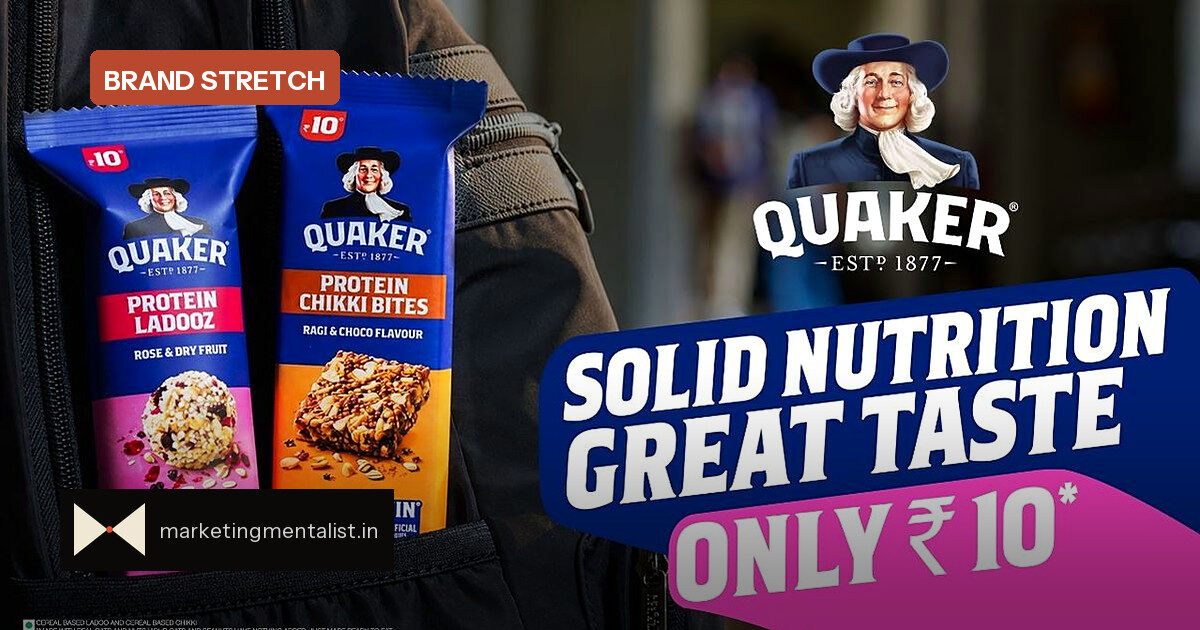
Quaker steps out of the breakfast bowl
PepsiCo India is pushing Quaker into the snack aisle with two oat-based products: Quaker Protein Ladooz in Rose Dry Fruit and Quaker Protein Chikki Bites in Ragi Choco. Each pack is priced at ₹10, carries 12% protein and high fibre, and is made without artificial flavours or palm oil.
The move is part of PepsiCo India’s better-for-you snacking push, and the format choice is deliberate. Ladoo and chikki are not new concepts to Indian consumers; they are everyday treats with built-in permission to snack.
The number behind the launch
Quaker’s parent company did not pick these formats on a hunch. In research conducted with Euromonitor International and the Indian Institute of Millet Research, 70% of respondents said they consume under 41 grams of protein a day and 61% fall short on daily fibre. Cost showed up too: 60% cited price as a barrier to adequate protein.
For brand builders, the standout figure is behavioural: 89% of Gen Z, millennial and Gen X respondents said they want protein in familiar, everyday food formats. That flips the brief from “educate people about protein” to “put protein inside formats they already recognise and trust.”
Familiarity does the heavy lifting
This is the familiarity heuristic at work. Consumers are quicker to accept a new benefit when it arrives in a known package. A protein bar asks for a behaviour change; a chikki asks only for a small upgrade. Quaker has long carried oats equity in India, and this launch puts that equity on a new shelf.
Saakshi Verma Menon, chief marketing officer – Foods at PepsiCo India, framed the ambition as working to “democratize protein and fibre” by combining familiarity, convenience and affordability.
Selling the removal of a trade-off
The launch film, set on a college campus, uses the swipe-left gesture: one friend rejects snack options that demand choosing between taste and nutrition, until the other introduces the Quaker snacks. The message is less about ingredients and more about removing compromise.
“Why should choosing nutrition mean compromising on taste?” asked Sriram Iyer, marketing director – Quaker, PepsiCo India. That question does the positioning work; the product just has to deliver on it.
What to borrow from Quaker’s playbook
- Put a functional benefit inside a familiar format instead of asking consumers to learn a new category.
- Price for trial—₹10 lowers the risk of trying something new while preserving a health halo.
- Lead with a daily tension (taste versus nutrition) rather than a nutrient list.
Quaker’s snack debut is a reminder that brand stretch works best when the new category feels like something customers already know. The innovation is not oats; it is the cultural packaging around them.
Source: Afaqs!