Jio Story: How One Local Voice Travels Across Four Screens
One local voice now moves through village calls, hostel hotspots, regional creators and festival streams—showing why belonging, not bandwidth, drives buying.
Every big consumer shift has a small human moment at its centre. For many Indian families, that moment was a video call: a phone propped in a village courtyard, a hostel room leaning into frame, a local festival streaming live while relatives in another state watched the same aarti. It looks like technology, but it is really a story about belonging.
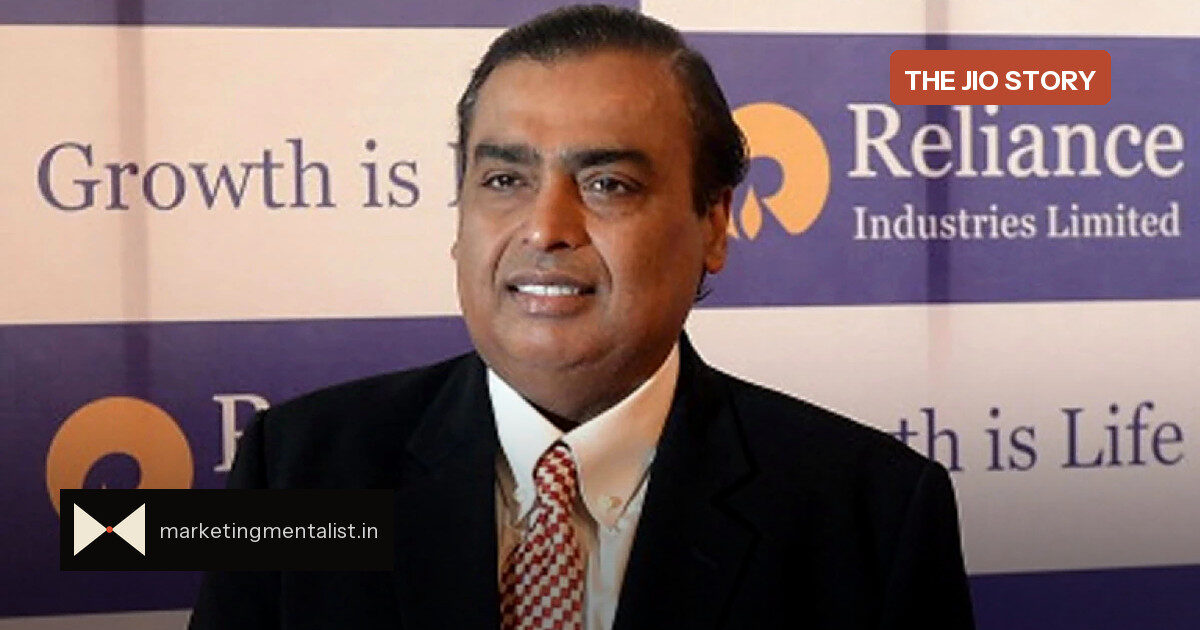
This is the Jio Story we keep returning to: the moment connectivity stopped being measured and started being felt. In 2016, Jio launched with the Welcome Offer—unlimited 4G data, voice, video and apps, as reported by Reliance Industries. The psychological reset was immediate. Data moved from a rationed utility to a taken-for-granted layer. The question India asked shifted, in the series’ framing, from ‘How much does data cost?’ to ‘What can we do with data?’
One local voice, four screens
Across India, the same local voice now travels through four familiar screens:
- The village-to-city video call: presence over distance; a grandparent does not need to understand streaming to understand being seen.
- The hostel hotspot: one paid connection becomes shared infrastructure; late-night cricket, study calls and series finales create common rituals.
- The regional creator’s local cut: dialect, slang and hometown references become creative assets, not barriers.
- The festival stream: a single live moment is watched simultaneously across kitchens, balconies and shop counters.
These are not four markets. They are four expressions of the same behaviour: people using connectivity to feel present in a group.
The brand lesson inside the habit
Jio reached 100 million subscribers within 170 days of launch, company-reported. That speed was not just a distribution story. It was a sign that the emotional job-to-be-done had been underserved. People were not waiting for cheaper data; they were waiting for a reason to stop counting it.
Reliance Jio Infocomm reported in March 2026 that Jio serves 524 million+ customers. Its ecosystem now spans connectivity, entertainment, commerce, payments, devices, cloud and AI, as described at the Reliance Industries 48th AGM in August 2025. But the most useful brand insight is not scale. It is that utility disappears when it works. A good connection lets the local voice be the main event.
What makes people buy is rarely the technology
Marketers often ask consumers what they want from a brand. A more revealing question is: what does the brand let them be? A daughter who can show her room, a student who becomes the common room’s unofficial broadcaster, a creator whose accent is the product, a family whose festival now includes two extra cities. In each case, the purchase is an identity, and the network is simply the stage.
The stated priorities reported at the Reliance Industries 48th AGM in August 2025—connect every Indian, bring digital services home, digitise businesses, and ‘AI Everywhere for Everyone’—are, read psychologically, about making belonging feel ordinary. For marketers, the play is not to celebrate coverage maps. It is to design for shared moments: formats that include the whole room, voices that keep their local texture, and campaigns that treat festival viewing as a social ritual rather than an individual stream. That is the difference between selling data and becoming part of daily life.