
Jio Story: When My First Video Call Became Ours
Why the Jio data moment and 'my first video call home' became collective nostalgia—and what shared memories teach brands.
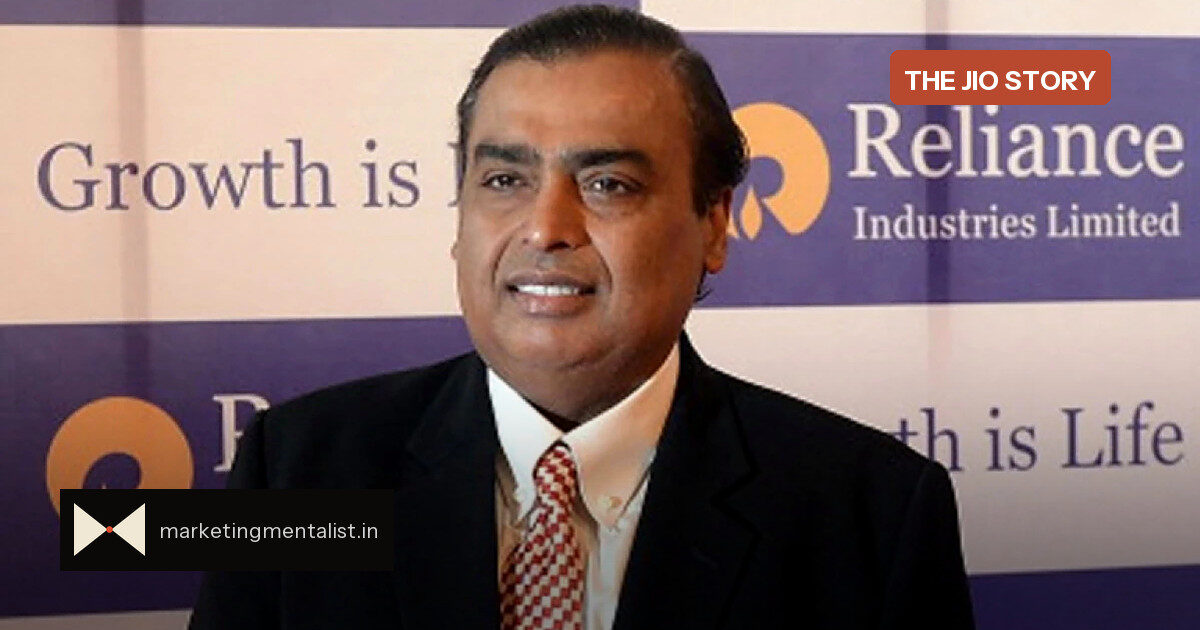
Most people cannot recall their first tariff plan. They remember the first time a familiar face appeared on a small screen. “My first video call home” is a sentence that works across homes, cities and languages because it has stopped being only personal. It is a shared memory.
That is a strange thing for a telecom story. It has almost nothing to do with coverage maps and everything to do with how collective nostalgia forms.
A private moment becomes a shared one
In 2016 Jio launched with the Welcome Offer: unlimited 4G data, voice, video and apps (Reliance Industries). The change was not only about price. It reframed the question India asked, from “How much does data cost?” to “What can we do with data?”
The first video call home became one of the earliest answers. It was repeated so widely that it turned into a social timestamp: the call you made to show a parent your hostel room, your new city, your baby’s face. Jio reached 100 million subscribers within 170 days of launch (company-reported; Reliance Industries Integrated Annual Report 2016-17), and that scale is what made the memory shared. When enough people do the same private thing in the same cultural window, it stops being a coincidence and starts being a generation’s reference point.
Why shared memories become brand glue
A brand does not own a first call. It hosts the conditions for it. That is the useful distinction. Shared memory works because customers remember the moment, not the mechanism.
- They retell it without prompting. The brand appears as the setting, not the subject.
- They attach the change to a face. The technology shift becomes emotional rather than technical.
- They turn adoption into identity. “I was there when data stopped being metered” feels like belonging, not a purchase.
The host, not the hero
This is why the shared-memory frame keeps recurring. As the ecosystem expanded into connectivity, entertainment, commerce, payments, devices, cloud and AI (Reliance Industries 48th AGM, August 2025), the stated priorities stayed close to the same idea: connect every Indian, bring digital services home, digitise businesses, and “AI Everywhere for Everyone” (Reliance Industries 48th AGM, August 2025).
Even those priorities make more sense when read as infrastructure promises, not product promises. The point is to make the technology layer quiet enough that another human moment can become the story: a kirana order, a class, a festival call, a father seeing a daughter’s new campus.
Today, the shared memory sits inside a much larger base. Jio serves 524 million+ customers (Reliance Jio Infocomm, March 2026; company-reported). But the story still travels as an individual sentence: “my first video call home.” That is how shared memory works—it scales without losing its first-person voice.
For marketers, the lesson is easier to say than to do: do not try to create a shared memory. Remove the friction around the private moment, and let enough people have it at once.


