Nostalgia as bike brand equity: 15,000 fans before launch
How Royal Enfield, Jawa, Yezdi, BSA and Norton are turning heritage into premium brand equity—and where the strategy can stumble.
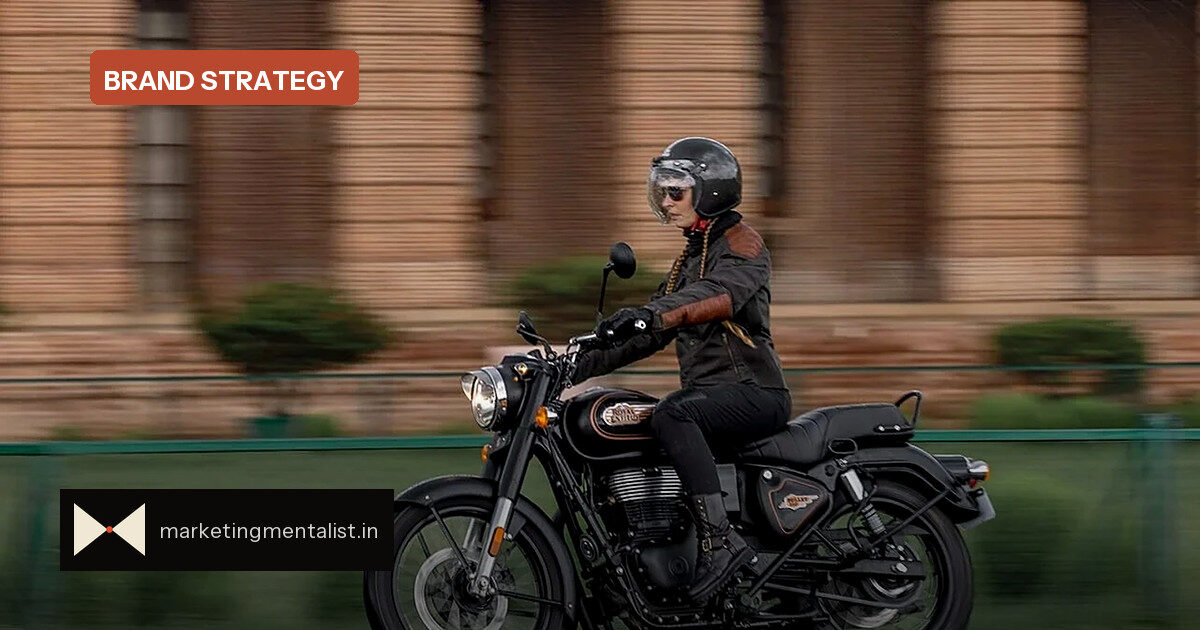
On a roadside in a Tier-2 town in Uttar Pradesh, a mechanic named Chotu Mistri points to an old Yezdi outside his garage. He says he has even run the motorcycle on kerosene, and it never gave him trouble. Then he gestures at newer BS6 machines: “They don’t build motorcycles like this anymore.”
That sentiment is no longer just garage talk. Indian motorcycle companies have turned it into a brand strategy.
The revival playbook
Over the last decade, names that looked like history—Royal Enfield, Jawa, Yezdi, BSA, Norton, Chetak—have come roaring back. Mahindra’s Classic Legends, TVS Motor, Bajaj and Eicher Motors have all invested in legacy. Classic Legends was founded in 2015, and Mahindra acquired a controlling stake on October 18, 2016. The company brought Jawa back in 2018 after two decades away, Yezdi in 2022, and BSA to Indian sales in 2024.
Royal Enfield remains the blueprint. Born in Britain in 1901, the brand survived in India and, under Eicher Motors from 1994, expanded with the Classic 350, Himalayan and 650 twins while building rides, clubs and owner culture around the machines.
TVS bought Norton in April 2020 for £16 million. Its Atlas and Atlas GT were designed and engineered in the UK, built in India, and the first Norton Atlas left the Hosur plant in June this year.
Why nostalgia earns a second look
Heritage is a shortcut to premium positioning. In a commuter market that competes on price and mileage, a known badge lets a maker sell design, lifestyle and riding experience.
Classic Legends founder Boman Rustom Irani described the appeal: “People are going back to stories of legacy and history. They want to own something with a story they can take pride in.” His partner Anupam Thareja said the revival is “not about the money” but about identity. “We don’t make motorcycles; we’re into motorcycling,” Thareja added, pointing to 50 clubs and 15,000+ pre-launch enthusiasts.
- Instant story: a heritage name carries an identity a new brand would need decades to build.
- Premium permission: design and lifestyle can carry the price, not just mileage.
- Community before commerce: clubs and rides turn buyers into participants.
- Export credibility: familiar badges travel into global markets more easily.
The limits of a famous badge
Nostalgia can open the showroom door, but it cannot close the sale alone. Younger buyers still check performance, reliability, pricing and after-sales support. Norton’s earlier India entry through a Motoroyale tie-up around 2017–18, with imported Commando and Dominator models reportedly priced between ₹21 lakh and ₹34 lakh, did not build meaningful volume.
Its current TVS-led revival is a separate effort, and the Atlas will still need to prove commercial appeal. A famous badge cannot compensate for an unsuitable product, weak distribution or poor service.
What brand managers should copy
The lesson is not simply ‘buy an old name.’ It is that heritage only works when product, community and story align. The logo opens the conversation; the riding experience, service and owner network decide whether the brand earns affection from a new generation.